By Cai Siyun
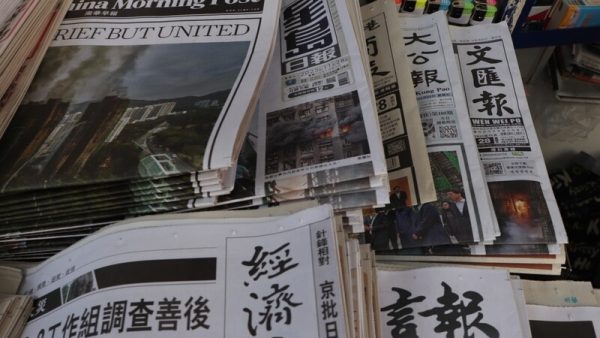
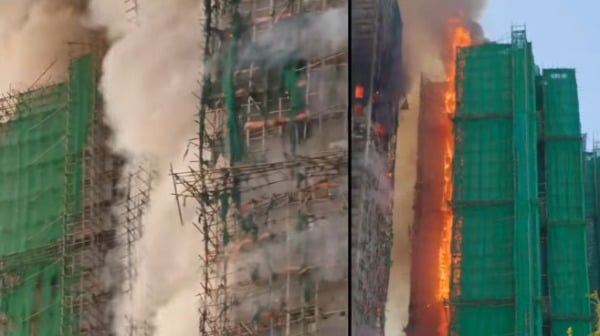
On the afternoon of Nov. 26, a fire ripped through Hong Kong’s Hung Fuk Court, igniting not one but seven residential towers in rapid succession.
Even in a city accustomed to high-rise hazards, the scale and synchronicity of this blaze were staggering, leaving residents and officials stunned by how quickly the disaster unfolded.
Officials reported at least 159 fatalities. Individuals with direct knowledge of the aftermath quietly suggested the number could be far higher—perhaps in the thousands. As details emerged, the disaster began to feel less like an accident and more like an event shrouded in unanswered questions.
Success
You are now signed up for our newsletter
Success
Check your email to complete sign up
The blaze no one expected—and few believe was accidental
Firefighters arrived within six minutes. At that moment, only one tower was burning.
Yet as the crews concentrated on containment, six neighboring buildings—each separated by enough space to slow natural spread—also erupted in flames. Meteorological conditions offered no convincing explanation. The sequence seemed too coordinated to dismiss as chance.
That suspicion revived older predictions and whispers.
A British psychic had warned last year of a politically tied fire in Hong Kong involving multiple towers. Feng shui practitioners had spoken of urban “formations” quietly reshaping the city’s energy. Even a popular film released months earlier depicted a multi-building inferno—its timing now unsettling in hindsight.
But speculation took a darker turn after a British metaphysics practitioner offered her analysis.
RELATED: Beijing Threatens Critics Following Hong Kong Fire
The ‘seven-pillar’ theory
Using Zi Wei Dou Shu, a traditional Chinese astrological system, the practitioner concluded that the blaze aligned with what she described as a “Seven-Pillar Incense Offering”—a ritual sacrifice intended to redirect fate for a mainland official of considerable rank.
Seven, in Taoist ritual practice, is the highest living number used in petitions involving destiny. The fire ignited during the Wei hour, a time traditionally associated with ritual potency.
None of this, she argued, was coincidence.
One of her more troubling claims centered on the building alarms. According to residents and her own interpretation, alarms in all eight towers failed simultaneously—not because of malfunction, but because they had been deliberately disabled.
Her reading further suggested the involvement of a middle-aged woman—short, slightly heavy, educated—who had a hand in shutting down the alarms or initiating the fires.
But the person she described as directing the ritual was someone else entirely.
A power struggle hidden behind the flames
Her charts placed the mastermind north of Hung Fuk Court: a tall, broad-built official tied closely to China’s central leadership, a man she said had been under political strain and was seeking a dramatic shift in fortune.
Then, as she revisited the divination, she said something unexpected emerged—a betrayal.
According to her interpretation, the official who orchestrated the ritual had redirected its karmic burden upward, letting the spiritual “debt” fall on his superior while attempting to keep any metaphysical gain for himself.
Whether one credits divination or not, the political backdrop added fuel to public suspicion, especially amid recent high-level reshuffling.
A senior official’s abrupt disappearance
Media reports showed that a senior mainland official had accompanied Xi Jinping to Meizhou on Nov. 8. The next day, during the highly visible opening ceremony of the National Games in Guangzhou, he was absent — unexpectedly replaced by three other top leaders.
His disappearance extended into the following week.
He missed Xi’s meeting with the King of Spain on Nov. 12.
He missed the meeting with the King of Thailand on Nov. 14.
He had already traveled south—so why vanish from events where protocol demanded his presence?
Observers proposed a simple explanation: he had been urgently diverted.
The metaphysics practitioner suggested something more pointed—that he had gone to Hong Kong to oversee the ritual she believes took place.

A city reacts with fear, anger, and grim familiarity
Public reaction online was swift and visceral:
“Of course it was a sacrifice.”
“This is evil beyond imagination.”
“Seven buildings don’t burn at the same time unless someone makes them burn.”
“People are being used as offerings.”
Some referenced earlier alleged “ritual events,” arguing that the Hong Kong fire marked an escalation—an act carried out not for symbolic power but for personal political survival.
Across forums, one sentiment repeated itself: Hong Kong is no longer a place where disasters feel accidental.