By Quchi
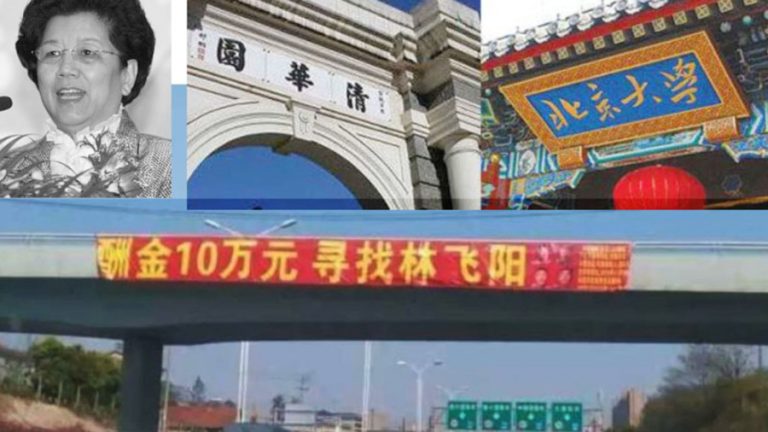
China’s Communist Party has spent decades reshaping the nation’s schools, universities, historical memory, and moral consciousness. Few officials embodied the Party’s corrosive influence over education more clearly than Chen Zhili. Rising through Jiang Zemin’s factional networks, and chosen not for her educational expertise but for her political loyalty, Chen presided over a period that many scholars regard as one of the most destructive eras in the history of Chinese education. Under her tenure, classrooms became political instruments, culture was distorted to serve ideology, corruption flourished openly, and the education system was weaponized against innocent citizens targeted by the regime.
Her career illustrates a defining truth of CCP rule: once political power becomes the only credential that matters, institutions decay, culture erodes, and human beings become expendable in service of the Party’s ambitions.
Chen Zhili’s rise through CCP loyalty networks
Chen Zhili’s rise was not driven by scholarship, professionalism, or dedication to education. Like many CCP officials elevated during Jiang Zemin’s rule, her ascent was a product of factional loyalty and political usefulness. Beginning in Shanghai’s bureaucracy after the Cultural Revolution, she aligned herself with Jiang’s circle and was moved into ideological work—roles designed to shape public thought and suppress dissent.
When Jiang solidified national control after Deng Xiaoping’s death, he advanced Chen to the top of the country’s educational apparatus. She was appointed to lead the State Education Commission and then, in 1998, to serve as Minister of Education. These appointments reflected the Party’s governing philosophy: institutions exist not to serve the public, but to serve the CCP; qualifications matter less than allegiance; public trust is expendable.
Success
You are now signed up for our newsletter
Success
Check your email to complete sign up
From the beginning, Chen’s leadership faced fierce criticism from educators. Professors, university presidents, and reform advocates viewed her tenure as an era of decline—one in which the CCP’s political priorities suffocated the purpose of education itself.
The CCP’s transformation of schools into corrupt revenue centers
Under Chen’s watch, China’s education sector drifted far from its mission. Schools and universities increasingly became money-making operations, exploiting families who had little power to resist. Arbitrary fees multiplied; diploma fraud spread; academic integrity collapsed. Institutions that once held moral authority became entangled in illicit business dealings driven by bureaucrats and local officials.
By 2003, official audits identified over 2.1 billion yuan in illegal charges in a single year. Across Jiang Zemin’s decade in power, state figures suggested cumulative abuses amounting to hundreds of billions of yuan. These numbers were not statistics—they were evidence of the CCP’s deep administrative rot, in which corruption spreads downward from the top and ordinary citizens are left to shoulder the consequences.
Educators across the country pushed back. More than a thousand professors from over 80 universities signed petitions demanding reform. University presidents criticized Chen’s detachment from the crisis. Parents protested fees. Yet Chen remained protected by the political machinery that elevated her—another reminder that the CCP values control above competence, and loyalty above public service.
The CCP’s attempt to rewrite history through schools
Ideological control extended beyond administration. Chen’s ministry oversaw curriculum revisions that struck at the heart of Chinese cultural identity. Draft guidelines proposed removing national heroes such as Yue Fei and Wen Tianxiang—symbols of integrity, resistance, and patriotism. In Shanghai, Party-aligned academics floated the idea of “rehabilitating” Qin Hui, the historical villain responsible for Yue Fei’s death.
To many Chinese citizens, these changes were not minor edits but assaults on the nation’s moral foundation. The CCP has long manipulated historical narratives to reinforce its own legitimacy, suppress competing loyalties, and weaken cultural touchstones that stand outside Party control. Chen’s reforms fit neatly into this pattern: dismantling traditional values and reshaping collective memory to serve a political agenda.
Public outrage forced the ministry to abandon some proposals, but the episode revealed the CCP’s ongoing project: to reconstruct China’s past, values, and heroes according to Party needs, not historical truth.
Schools turned into instruments of persecution
Chen’s most consequential role emerged in 1999, when Jiang Zemin ordered the eradication of Falun Gong. The CCP mobilized every state organ—police, courts, media, hospitals, and schools—to carry out a campaign of suppression unprecedented in its scope and cruelty.
According to the independent China Tribunal, chaired by Sir Geoffrey Nice KC, Falun Gong practitioners suffered mass arbitrary detention, torture, sexual abuse, and extrajudicial killing. The Tribunal concluded that forced organ harvesting occurred on a significant scale, targeting detained practitioners among other vulnerable populations. These findings align with years of research by human rights organizations.
As Minister of Education during the launch of this campaign, Chen Zhili made the education system an obedient component of the state’s repression. Under her direction, schools and universities were instructed to identify and monitor Falun Gong practitioners, report any practitioners to Party authorities and the 610 Office, conduct ideological denunciation campaigns against them, incorporate anti–Falun Gong propaganda into textbooks and assemblies, and to discipline or expel students and teachers who refused to renounce their beliefs
These policies did not exist in isolation. They were part of a nationwide machinery of persecution that removed practitioners from their homes, workplaces, and schools, funneling them into the state security system—the same system the China Tribunal found responsible for torture and forced organ harvesting.
Chen’s directives clearly formed one link in the chain of repression that enabled widespread abuses. Her role in this system represents the broader moral failing of the CCP: institutions meant to educate and protect citizens were transformed into tools of ideological violence.
The CCP protected Chen despite public outrage
Despite mounting criticism from educators and deepening public anger, Chen remained untouchable. When state leaders debated appointments to the State Council in 2003, a majority of representative groups reportedly opposed elevating her. Dozens of universities objected as well. Yet Jiang Zemin’s backing ensured her survival. Within the CCP, political protection shields loyalists from consequences—regardless of public harm or institutional damage.
This episode mirrors the broader authoritarian pattern: in a system without transparency, oversight, or public accountability, failure is rewarded if it serves the Party.
Chen Zhili’s tenure reflects the CCP’s corrosive impact on Chinese society. Under her watch, education became commercialized, cultural foundations were distorted, and the persecution of innocent people was woven into the fabric of school life. Students and teachers—individuals who committed no crime—were marked, monitored, punished, and delivered to a system that human rights bodies found guilty of horrific abuses.
Her story is not an aberration.
It is the predictable outcome of a political system built on repression, secrecy, and ideological control.
When the CCP captures an institution, whether it is a school, a ministry, or a nation’s collective memory, it bends that institution toward its own survival—no matter the cost to culture, truth, human dignity, or life itself.