By Li Jingyao, Vision Times
On Dec. 8, China’s year-end Politburo meeting convened to review the country’s 2026 economic agenda and discuss new Party regulations. Featuring a series of irregularities rarely seen in official top-level proceedings, the meeting saw the attendance of usual high-ranking Chinese Communist Party (CCP) officials, except Li Xi. Though Chinese President Xi Jinping presided over the gathering, reports quickly circulated claiming that Li, the Politburo Standing Committee member overseeing the powerful Central Commission for Discipline Inspection (CCDI), was absent from the meeting.
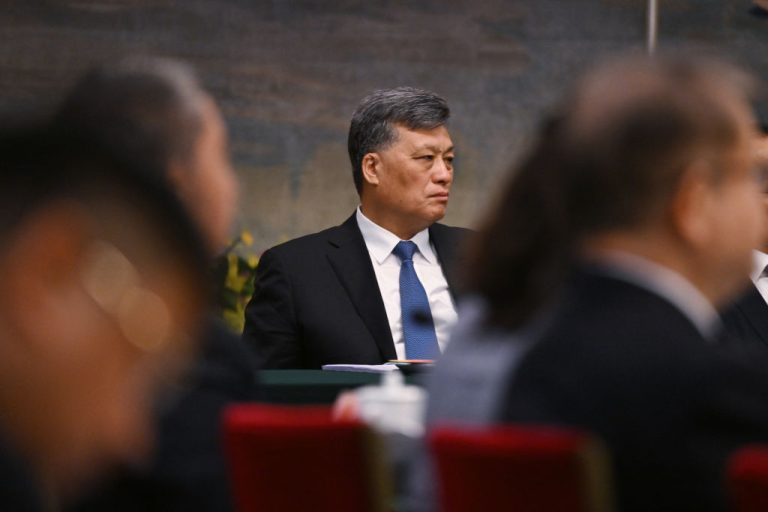
Also reportedly missing was Politburo member and former Xinjiang Party chief Ma Xingrui. The meeting comes at a moment when Li, long regarded as one of Xi’s closest enforcers, has faced intensifying rumors and appears increasingly politically exposed. The Politburo serves as China’s top ruling body.
RELATED: Unfiltered Xi Jinping Video Sparks Health Rumors and Wave of Public Anger
A notable silence
The Politburo communiqué reaffirmed loyalty to “Xi Jinping Thought” and the decisions of the Party’s 20th National Congress. It also highlighted the need to strengthen centralized authority. Yet the readout contained a striking omission: It made no mention of the “Two Establishes” and “Two Upholds” — slogans that in recent years had become mandatory demonstrations of allegiance to Xi.
Success
You are now signed up for our newsletter
Success
Check your email to complete sign up
In both 2023 and 2024, the Politburo emphasized these terms as foundational to discipline work and Party unity. Their disappearance this year marks the first such break in tone since Xi consolidated his third term.
RELATED: Leaked Claims Tie Ma Xingrui’s Corruption Case to Xi Jinping’s Wife Peng Liyuan
Another deviation from recent precedent was the absence of any reference to CCDI reporting. For the past two years, Xi received annual briefings from the CCDI before the Politburo met. This year’s communiqué made no mention of such a briefing, prompting close scrutiny from analysts who see the omission as an indicator of shifting internal dynamics.
Signs of turmoil inside the CCDI
A third anomaly was the communiqué’s lack of reference to anti-corruption work, normally a staple of year-end Politburo messaging. Nor was a date set for the CCDI’s annual plenary session, typically held every January.
These omissions follow a series of unusual signs pointing to instability within Xi’s discipline apparatus. On November 28, CCTV footage of the Politburo’s “collective study” session showed two conspicuously empty seats: those of Li Xi and Ma Xingrui. While Politburo meetings are usually covered only in written form, state media aired extensive video of the study session, making Li’s absence even more visible.
RELATED: Xi Jinping’s ‘Self-Revolution’ Doctrine Backfires Amid Sweeping Corruption Probes
Rumors surrounding Li have proliferated, analyts note. Commentator Jiang Wangzheng claimed that Li Xi has become implicated in Ma Xingrui’s case. The two worked side by side for four years in Guangdong, where Li served as provincial Party secretary and Ma as governor. Jiang further alleged that both men again missed the December 8 meeting, and that Ma’s investigation is now being handled exclusively by Liu Jinguo, the CCDI’s highest-ranking deputy secretary.
A tangled web
According to Jiang, the case “has reached half of Xi Jinping’s power base,” with Li and his family reportedly entangled alongside 51 other senior officials. Media veteran Guo Jun likewise noted that Ma’s influence spans key political and industrial sectors, Jiangsu, Zhejiang, Hainan, Sichuan, Xinjiang, Beijing’s aerospace system, and China’s equipment manufacturing sector, posing significant risks for Xi’s network.
RELATED: Hu–Wen Bloc Dismantles Xi’s Power Base as the ‘Zhejiang Faction’ Faces Collapse
Earlier reports claimed Ma’s corruption case involves more than 300 billion yuan, making it one of the largest scandals in CCP history. Li Xi’s wife was rumored to have partnered with Ma’s wife, Rong Li, on major Hong Kong projects, forming what some sources describe as a political “wives’ circle” alongside Peng Liyuan.
Further allegations assert that Ma and Chen Weijun skirted Xinjiang’s Finance Department by directing vast sums, which were labeled as project start-up funds, to shell companies controlled by their proxies. The diverted money, Jiang said, was ultimately funneled to individuals tied to Ma’s circle, including relatives of Li Xi, Peng Liyuan, Chen Quanguo, and Wang Zhonglin. These arrangements effectively allowed Ma to treat Xinjiang’s heavily subsidized annual budget as a personal cash reservoir.
RELATED: Xi Jinping’s Inner Circle Under Scrutiny as Key Loyalists Disappear From View
Jiang argued that “Ma had no choice but to pull Li Xi down with him,” noting claims that both families extracted at least 20 billion yuan. Once Li became implicated, Jiang said, the CCDI’s oversight capacity was compromised.
U.S.-based commentator Chen Pokong observed that CCTV repeatedly highlighted Li Xi’s empty seat during the November 28 session, suggesting intentional emphasis. “Li Xi is the highest-ranking potential target within the Politburo Standing Committee,” he said. “If Xi moves against a Standing Committee member during his tenure, his fellow Shaanxi native could be the first to fall.”
A potential prelude to a major storm
Commentator Li Yanming noted that as a core member of Xi’s Shaanbei faction, Li Xi has risen steadily throughout the Xi era, consistently echoing loyalty slogans even as other allies have grown more restrained. But with key Xi loyalists, such as Xi’an Party secretary Fang Hongwei and Xinjiang executive vice chairman Chen Weijun, recently taken down, and with allegations surrounding Ma Xingrui intensifying, political danger for Li Xi now appears far greater.
Li argues that the omissions in this year’s Politburo communiqué, including the silence on loyalty slogans, the lack of CCDI reporting, and the absence of a CCDI plenary date, reflect unmistakable irregularities within the regime’s highest ranks.
Together, he said, they may signal “the early stages of a major political upheaval inside Zhongnanhai.”