For years, claims that Chinese leader Xi Jinping has lost effective control over the military have circulated in political circles. Now, observers say new evidence has surfaced—evidence so striking that it raises serious questions for anyone who examines it closely.
What makes this development unusual is not only its content, but its source. The material in question does not originate from grassroots commentators or so-called “satirical criticism” within China’s system. Instead, it comes from two places traditionally regarded as tightly controlled pillars of the Chinese Communist Party’s propaganda apparatus: the military’s own official media channels and China Central Television’s flagship Xinwen Lianbo (News Broadcast).
A video few expected to see
In recent days, a one-minute video clip has become the focus of intense discussion among Chinese and overseas audiences alike. Many who watched it said the footage was something CCP authorities would never normally allow the public to see.
The clip shows Xi Jinping and his wife, Peng Liyuan, preparing to receive French President Emmanuel Macron. As cameras roll, Xi is seen glancing nervously toward the doorway and gesturing for a subordinate—who is crouched unusually low near him—to withdraw. The body language appears awkward and tense, as if Xi is keenly aware that the scene could be perceived as demeaning if broadcast.
To many viewers familiar with China’s political culture, the footage looked like precisely the sort of material that would be edited out or suppressed. Yet contrary to expectations, it was not only aired—it was distributed openly.
The military channel behind the footage
Success
You are now signed up for our newsletter
Success
Check your email to complete sign up
The video was published on December 4 via a YouTube channel named Chinese Presence (华人风采). A review of the channel’s content shows that it primarily features material related to China’s armed forces, strongly suggesting an official military background.
The channel’s own description lists its address as No. 34 Fuwai Street, Xicheng District, Beijing, and identifies itself as part of the National Defense News and Communication Center, an entity directly subordinate to the Political Work Department of the Central Military Commission (CMC).
This affiliation places the channel firmly within the CCP’s military propaganda system. Analysts note that such outlets do not publish sensitive material by accident.
The full video runs more than 11 minutes and retains all the moments that observers find most striking: Xi’s furtive gestures, his visibly strained expression, pronounced facial puffiness, signs of fatigue, and repeated blinking before Macron enters the room. Peng Liyuan is also shown adjusting her clothing—another detail that would normally be carefully edited out in official broadcasts.
As of now, the video remains online, unaltered and not removed, having accumulated more than 210,000 views.

Why would the military allow this?
Commentators argue that the decision to release such footage is unlikely to have been approved by Xi himself. Instead, they see it as a deliberate signal—particularly given the channel’s institutional ties to the CMC Political Work Department.
Attention has therefore turned to changes in military leadership. The former head of the Political Work Department, Miao Hua—a close ally of Xi—fell from power earlier. In recent months, General Zhang Shengmin has been widely reported as taking over key responsibilities once held by Miao.
Zhang is known to be closely aligned with Vice Chairman of the Central Military Commission Zhang Youxia, and he has overseen the downfall of multiple generals previously promoted by Xi. Observers now point out that under Zhang Shengmin’s oversight, a military-linked media platform has aired footage showing Xi and Peng Liyuan in an unflattering, highly unusual light.
For analysts of CCP elite politics, this combination is difficult to dismiss as coincidence.
A second signal from Xinwen Lianbo
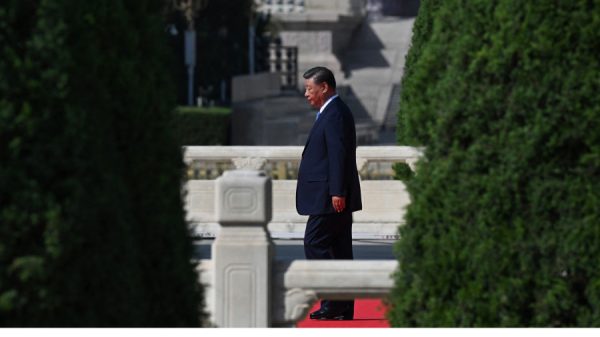
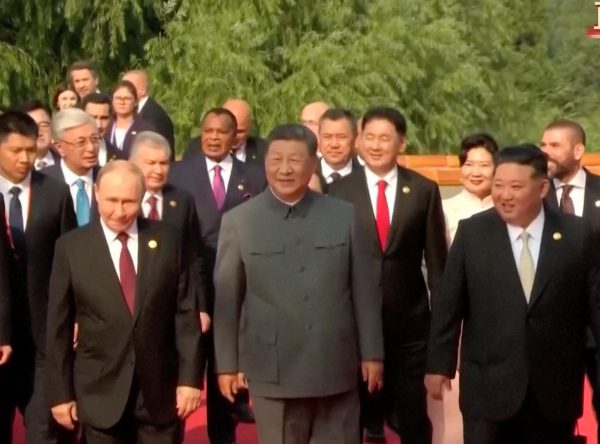
The military video is not the only development raising eyebrows. On December 8, CCTV’s Xinwen Lianbo aired footage of Xi presiding over a meeting at Zhongnanhai on economic conditions and planning.
What stood out was Xi’s appearance. His hair appeared disheveled, his expression drawn and listless, and his overall demeanor markedly different from the carefully managed image typically presented by state media. Longtime viewers noted that such visuals would previously have been edited out entirely.
Historically, CCP leaders have treated control of propaganda as a top political priority. During moments of internal upheaval, the first move has often been to secure broadcast media. Against that backdrop, the simultaneous appearance of unflattering footage from both military media and China’s most important television news program is widely seen as significant.
Interpreting the signals
Despite continued praise for Xi in official rhetoric, analysts stress that propaganda shifts often occur in subtle stages. Public displays of loyalty can coexist with quiet internal power struggles.
In this view, the recent broadcasts do not suggest an open break, but rather a controlled release of signals—enough to be noticed by insiders and attentive observers, without triggering instability.
For many watching from outside China, the episode reinforces a long-held understanding of CCP politics: when formal information is tightly sealed, informal signals, visual cues, and “accidental” disclosures often carry the most meaning.
Whether these developments point to a deeper realignment of power within the military and propaganda system remains uncertain. But few observers believe the timing, source, and content of the footage can be dismissed as random.