Shortly after Elm Tree Bookstore (榆林書店) announced its closure, another independent Hong Kong bookstore, Book Punch (留下書舍), announced on Thursday, July 14 that it will cease operations on Aug. 30.
The bookstore said that financial pressures and the difficulty of navigating “ill-defined political red lines” were the primary reasons behind its decision to close, reported Ming Pao (明報), Hong Kong’s leading Chinese newspaper on July 14.
Book Punch announces closure on August 30
In a Facebook post published on July 14, Book Punch announced that it would close its doors. The bookstore expressed its deepest gratitude to fellow independent bookstores, publishers, authors, distributors, readers, and everyone who had supported and cherished the store over the years.
The bookstore acknowledged that its decision would inevitably invite speculation given the current circumstances. It described recent developments as “the last straw that broke the camel’s back,” but stressed that the burden had been accumulating for a long time.
It cited numerous factors—including the broader social environment, uncertainty surrounding its premises, ongoing financial pressures, and the personal career development of team members—as reasons that ultimately compelled the bookstore to consider the timing of its closure.
Success
You are now signed up for our newsletter
Success
Check your email to complete sign up
Reasons for closure: Financial deficits and elusive ‘red lines’
In its statement, the bookstore said it had always operated with the modest goal of “just breaking even,” viewing any ability to sustain the space as a success in itself. However, it had been running at a financial deficit for nearly six months. Coupled with Hong Kong’s broader economic downturn, the store said it could only “pessimistically conclude that it would be difficult to carry on.”
The bookstore said it had already been considering closure before the latest wave of developments. “In a way, we are fortunate,” it wrote. “When the time comes for us to say goodbye, the greater reason is poor business performance rather than some irresistible external force. That makes it easier for us to accept.”
Beyond economic pressures, the bookstore said that “the elusive political red lines are also a reason for closing.” It noted that government officials had previously stated they would not specify which books were prohibited from being sold. As a small independent bookstore with limited resources, it said it was impossible to read every book it stocked, let alone determine which titles authorities might later deem “problematic.”
The bookstore continued: “To us, books are a space for knowledge and ideas, and that space ought to be boundless.”
It argued that even viewpoints one finds disagreeable deserve to be read, alongside other perspectives, because exposure to diverse ideas prevents people from becoming narrow-minded.
The statement went on to say: “We no longer have the capacity or the courage to fulfill our mission of using books to broadly disseminate knowledge and embrace the full diversity of ideas. For that, we feel deeply ashamed.”
The bookstore concluded on a sardonic note, addressing those it described as the “enthusiastic complainants,” “unknown individuals,” and “people hiding behind anonymous letters” who, it implied, had repeatedly targeted the store:
“If this is the kind of Hong Kong you want, then so be it—we’ll take our leave. We wish that you won’t find yourselves out of work because of it.”
READ MORE:
- Hong Kong Pro-Democracy Activist Lam Wing-Kee, Who Fled to Taiwan After Defying Beijing, Dies
- Why Beijing Won’t Let Jimmy Lai Go
- Hong Kong Hunter Bookstore Sealed Off, Two People Arrested; Multiple Human Rights Organizations Condemn
Elm Tree Bookstore announces closure next April
In addition to Book Punch, Elm Tree Bookstore (榆林書店) recently announced that it will also close next year.
In June 2026, both Elm Tree Bookstore and Loman Bookstore (樂文書店) were disqualified by the Hong Kong Trade Development Council (HKTDC) from participating in the Hong Kong Book Fair. Subsequently, on July 8, Elm Tree Bookstore announced on Facebook that it would permanently close its physical store when its lease expires in April 2027.
The bookstore said that since opening in 1997, it has been committed to promoting reading and has participated in the Hong Kong Book Fair every year. It expressed regret that it was unable to take part in this year’s fair as planned.
Elm Tree Bookstore noted that hundreds of boxes of newly arrived books had already reached Hong Kong and invited book lovers to visit the store to “hunt for treasures.”
The bookstore also announced a clearance sale ahead of its closure: Hong Kong editions are being sold at a 20 percent discount (80 percent of the original price), while Taiwan editions start at 35 percent off (65 percent of the original price).
Loman Bookstore (樂文書店), which opened in 1984, was one of the first bookstores in Hong Kong to import books published in Taiwan. The store has long regarded promoting reading and preserving knowledge as its mission.
After being barred from participating in the Hong Kong Book Fair, Loman Bookstore announced a “48th Anniversary Grand Sale” both at the entrance of its Mong Kok branch and on its Facebook page. Its Causeway Bay branch also displayed promotional signs advertising 35 percent off storewide (“65 percent of the original price”) as part of the anniversary sale.
According to Reuters, in March 2026, Pang Yiming, the proprietor of the independent bookstore One Punch Books (一拳書館), and three employees were arrested. The bookstore was accused of selling publications with seditious intent, and officers from the Hong Kong Police Force’s National Security Department seized a number of books from the premises, including a biography of Jimmy Lai.
In June 2026, Wong Man-suen, the owner of Hunter Bookstore (獵人書店), and her husband were also arrested. The two were accused of displaying items with seditious intent and selling publications with seditious intent, including materials alleged to incite hatred against the Hong Kong Special Administrative Region (HKSAR) Government, the judiciary, and law enforcement authorities.
Society increasingly marked by self-censorship
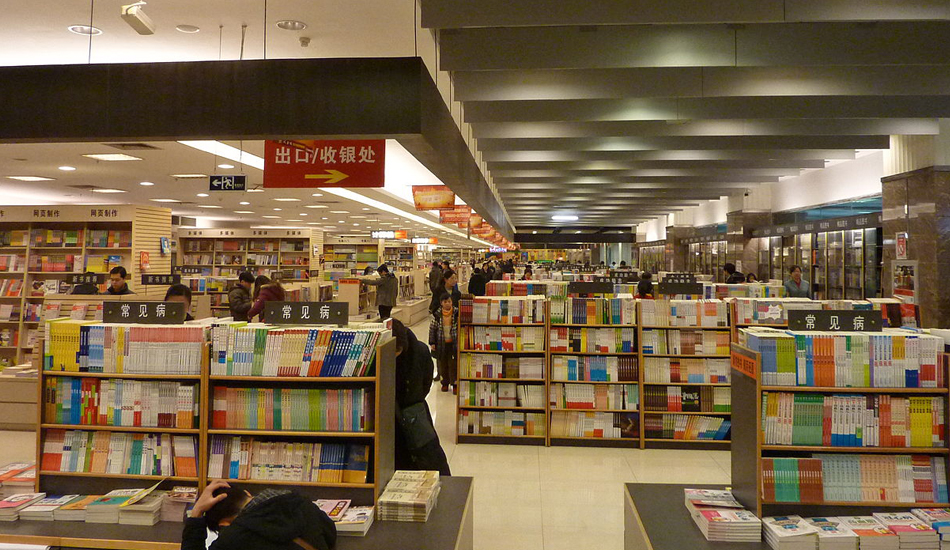
The successive closures of Hong Kong’s independent bookstores reflect the profound changes in the city’s political and social environment, the shrinking space for civil society, and broader shifts in the economy and consumer behavior.
Following the implementation of the Hong Kong National Security Law and Article 23 legislation under the Basic Law, the authorities have not issued a clear list of prohibited books. However, some bookstores have been searched by police and their operators arrested on allegations of distributing publications with “seditious intent.”
As a result, many bookstore owners say they are unable to determine which publications may pose legal risks. To protect themselves, some have chosen to close their businesses, illustrating what they describe as an environment characterized by ill-defined political “red lines” and growing pressure to engage in self-censorship.
The impact has extended beyond independent bookstores. Hong Kong’s long-running Hong Kong Book Fair has also seen repeated instances in which independent publishers and bookstores have been denied participation or asked to remove certain titles from display. Critics argue that these developments indicate a continued contraction of the space for publishing freedom and cultural expression in Hong Kong.