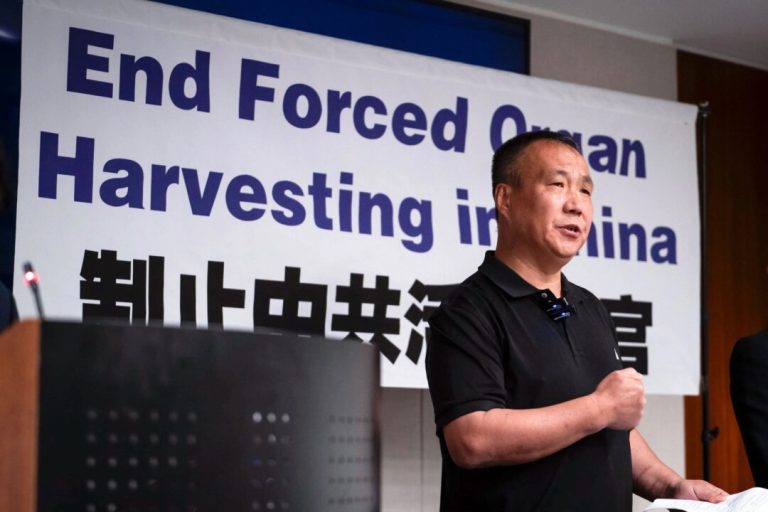
Independent media creator Edward Wenming recently observed that China’s apparent suppression of actor Yu Menglong’s name may be softening.
In a video posted to his channel, Wenming noted that Yu’s name—long scrubbed from mainland platforms—has begun reappearing in content published by official or semi-official accounts, sparking widespread discussion among netizens.
Yu Menglong’s name reemerges in state-linked media
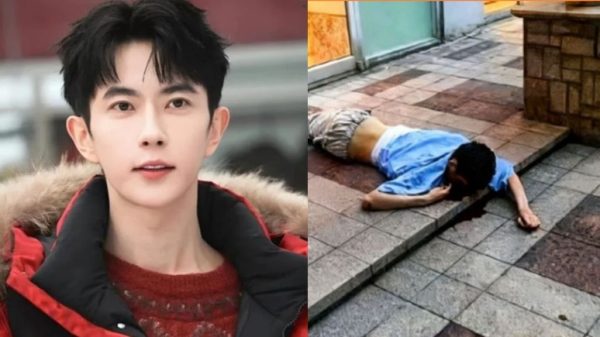
Nearly one hundred days have passed since reports alleged that Yu Menglong had been killed. In the months since, spontaneous memorials have appeared across the world.
Supporters describe his admirers as “stars in a winter night” or “candles across a dark plain.” His name and image have surfaced on petition materials in Taiwan, on public screens and vehicles inside mainland China, in streets across Australia, and even on a memorial bench in London’s Victoria Embankment Gardens—complete with plaques and flowers.
To many, Yu’s remembrance has become symbolic proof that public conscience can outlast censorship.
Online users have also noticed that major platforms—Bilibili, Douyin, Xiaohongshu, and Weibo—now appear to allow searches for “Yu Menglong.” Related images and even previously dormant accounts have resurfaced.
Success
You are now signed up for our newsletter
Success
Check your email to complete sign up
More striking are a series of posts by verified or state-affiliated Weibo accounts—such as People’s Daily Science, Hangzhou Xixi National Wetland Park, the China Meteorological Administration, and an ecological bureau in Zhenjiang—which include poetic phrases using the exact characters of Yu Menglong’s name. The posts themselves had nothing to do with the actor, but referenced ideas like “finding direction amid obscurity” or “touching history and the present through hazy light.”
Given the sensitivity of the name, some netizens argue that such usage is unlikely to be accidental. Others caution that many official accounts simply favor literary language, making the overlap coincidental.
The uncertainty has produced anxiety. Some users warn that the apparent loosening could be a trap designed to identify vocal supporters: “Who knows if this is fishing?” one commenter wrote. Others say they now avoid mainland social media entirely for safety reasons.
Edward Wenming, however, suggested that compassion exists both inside and outside the system—and that suppressed empathy, “like grass in spring,” eventually breaks through cracks.

Artists turn to symbolism as subtle signs of support
Support for Yu Menglong, observers note, has not been limited to ordinary fans. Subtle references—real or perceived—have surfaced across the entertainment world.
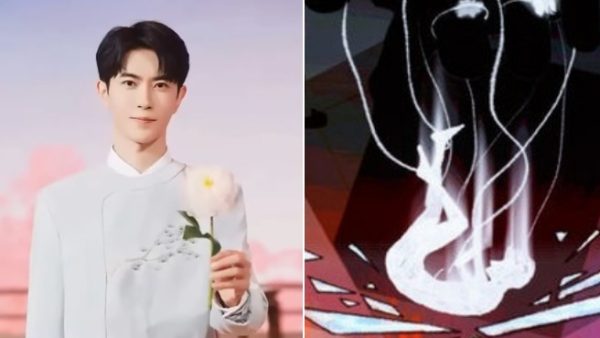
Yu’s close friend Hua Chenyu reportedly incorporated symbolic imagery following Yu’s death: falling silhouettes, broken glass, flowers, and stopped watches—motifs some viewers interpreted as metaphors.
More recently, singer Zhou Shen released two songs, Like a Human and Mercy. Performances of Like a Human feature a puppet-like figure suspended by ropes.
In Mercy, the stage centers on a giant fish hanging in deep blue space—imagery widely regarded by netizens as highly sensitive.
Lyrics from Like a Human include:
“They look at me through microscopes,
coldly enthusiastic,
trading one life for how much gold.
Like a human, yet not human at all…”
Meanwhile, Mercy maintains a dark aquatic atmosphere while describing broken vessels, repeated deaths, forced submission, and a bleak reinterpretation of “compassion.” Listeners have described the songs as layered, ambiguous, and unsettling.
Pop star Jackson Yee’s careful acknowledgment sparks debate
Actor and singer Jackson Yee (Yi Yangqianxi) addressed Yu Menglong publicly for the first time in a recent overseas magazine interview. He referred to a controversial livestream held on September 16—at a moment when speculation around Yu’s death was surging.
During that 17-minute broadcast, Jackson Yee silently stacked stones while avoiding the comment section.
He later described it as an improvised post-concert interaction and denied political intent, saying it was meant to be a quiet gesture of connection after eight years without livestreaming.
He acknowledged having professional interactions with Yu and said Yu’s death had affected him deeply, prompting him to take mental health more seriously.
Many netizens remained skeptical. Some questioned the timing of the livestream; others viewed the silence as deliberate signaling. Observers also noted that the stacked stones resembled mani stones, associated in Tibetan traditions with prayers for the deceased—fueling further speculation.
Symbolism in Jackson Yee’s performances fuels conspiracy theories
Online commentators revisited footage from Jackson Yee’s earlier concert Que Xue, describing its atmosphere as ritualistic: dark lighting, smoke, distorted imagery, oversized eyes, mannequins, and red backdrops.
Organizers denied any occult meaning and threatened legal action, though debate continued.
A self-described Qimen Dunjia practitioner known as Master Shanyun claimed the concert involved “borrowing fortune,” alleging that such practices are common in entertainment circles—where performers may unknowingly serve as conduits for “energy extraction” benefiting others.
Other YouTubers echoed similar claims, arguing that certain musical techniques are designed to draw emotional or psychological energy from audiences.
These claims remain unverified but speak to the climate of mistrust and the appetite for symbolic interpretation within a heavily censored environment.
Jackson Yee’s family ties resurface in the Yu Menglong story
Netizens have also highlighted the role of Yi Shu, Jackson Yee’s uncle and a former executive at Tianyu Media—Yu Menglong’s agency—who later founded Fuxing Media, which previously signed the late actor Qiao Renliang.
Archived footage from a 2010 awards ceremony resurfaced showing Qiao Renliang publicly criticizing an individual named Yi Shu, accusing him of manipulative behavior. Some netizens have drawn speculative links between this comment, Yu Menglong’s past references to “death as art,” and overlapping social circles, though no evidence has been produced.
Further speculation centers on a reported 17-person gathering connected to Yu Menglong’s case, with several attendees allegedly linked to Yi Shu.
The CCP’s enforced silence in China’s entertainment industry
On Dec. 8, Jackson Yee appeared in an interview with the overseas edition of People’s Daily.
He did not mention Yu Menglong, nor the stone-stacking livestream.
Commentators argue that this silence reflects a broader dynamic: even top-tier celebrities appear constrained, searching for ways to express themselves without crossing invisible lines. What emerges, critics say, is not free expression but survival language—a careful negotiation between personal conscience and systemic risk.
As one media observer put it, in today’s environment, “being allowed to live is treated as the greatest human right.”