By Li Jingyao
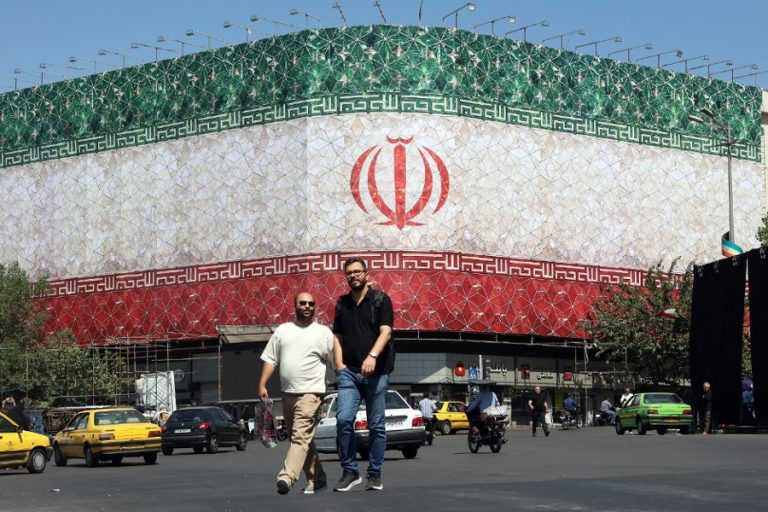
In recent weeks, observers have noticed an unusual development inside China: local authorities appear to be quietly removing public propaganda displays featuring Xi Jinping’s political phrases. These posters and banners—once promoted nationwide as part of Xi’s image-building—are now being taken down under official instructions, according to leaked notices and online reports.
The shift has prompted speculation that some within the system are seeking to reduce the prominence of Xi-centered messaging, with additional removals possibly still ahead.
Leaked directive calls for the removal of Xi Jinping propaganda displays
One online post circulated a screenshot of what appeared to be a leaked Dec. 14 notice issued by a community grid worker in a residential compound overseen by a local grain bureau. The notice instructed neighborhood committees to inspect all public-service posters and displays and remove any featuring Xi Jinping’s well-known phrase: “The country is the people, and the people are the country.”
Staff were also required to photograph and document each removal, indicating that higher-level authorities intended to verify compliance.
Success
You are now signed up for our newsletter
Success
Check your email to complete sign up
Analysts noted that such a directive was unlikely to originate from a neighborhood office acting on its own. Its tone and scope suggested a coordinated order passed down through multiple layers of the CCP’s administrative system before reaching community-level workers.
Evidence of a nationwide campaign to remove Xi Jinping propaganda displays
Around the same time, economist and writer Su Xiaohuo reported that a wide range of work units across China—including those in Beijing, Shanghai, Shenzhen, Guangdong, Hangzhou, and even military residential compounds—received similar instructions on Dec. 14.
According to Su, committees at every administrative level—communities, townships, counties, and villages—were ordered to remove wall-mounted propaganda featuring Xi’s political messages. The removals were reportedly required within 24 hours, with the entire process recorded on video and submitted to higher authorities for review.
These accounts point to a coordinated, nationwide effort rather than isolated local actions.

The origin of Xi Jinping’s phrase, ‘The country is the people’
The phrase now being removed—“The country is the people, and the people are the country”—was first introduced by Xi Jinping on July 1, 2021, during a speech marking the 100th anniversary of the Chinese Communist Party.
Xi said:
“The country is the people, and the people are the country.
The Communist Party leads the people in fighting to establish the country and in safeguarding it—and what it safeguards is the people’s hearts.”
After the speech, the phrase became a central component of official propaganda. It appeared across government offices, residential compounds, and public-service billboards, and was later included in Xi Jinping: The Governance of China, Volume III, a major ideological publication.
Its broad visibility made it one of the most recognizable elements of Xi-era political messaging—making the current removals especially noteworthy.
The internal contradiction at the heart of Xi Jinping’s signature phrase
Critics have long argued that the phrase contains a basic contradiction.
If “the country is the people,” they note, then the CCP’s frequent claim that it “fought to establish the country” implies that the Party fought the people themselves.
When the slogan was introduced, Xi’s political authority was at its peak. Some observers recognized this inconsistency privately, but few dared to speak openly. The slogan was widely praised and adopted across the propaganda system.
Commentators often point to a remark made by China’s state-run Xinhua News Agency in 2021, when it told the Taliban, “It is easy to seize power, but difficult to govern.”
Critics argue that this inadvertently captured the logic embedded in Xi’s phrase: that sacrificing the people to seize power is “easy,” while ruling over them indefinitely is the enduring challenge.
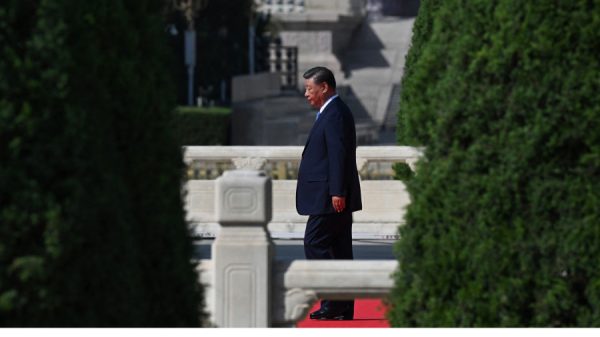
A phrase that suggests the Party fought and rules over the people
U.S.-based commentator Chen Pokong has criticized the phrase for years, citing its internal contradictions and political implications. Although the recent notice referred formally to “advertisements,” Chen said it was clearly aimed at the public propaganda displays featuring Xi’s message—symbols he associates with Xi’s revival of Cultural Revolution-style political imagery.
Chen emphasized that removing the phrase does not necessarily indicate that Xi is losing power. Rather, he suggested the CCP may now recognize the slogan as politically damaging.
According to Chen, combining the ideas that “the country is the people” and that the Party “fought to establish the country” leads to a blunt implication: the Party fought the people to seize power, and it continues to rule over them. This, he argued, exposes aspects of CCP rule that the Party prefers not to articulate.
Chen said the issue revealed further concerns. The contradiction, he argued, reflected Xi’s limited cultural and intellectual grounding, leaving him unable to perceive the problem in the first place. He also suggested that the CCP’s chief political ideologue—a senior figure responsible for shaping Party messaging—almost certainly recognized the flaw but chose silence to protect himself, allowing the contradiction to persist.
While the slogan’s removal is embarrassing for Xi, Chen stressed that it does not necessarily signal imminent political decline. He believes it may simply be the beginning of a broader, quiet rollback of politically awkward or excessively personalized messages. As an example, he noted that after last year’s Third Plenum, the military reportedly stopped promoting three extreme loyalty lines: “Follow Chairman Xi’s command,” “Be responsible to Chairman Xi,” and “Reassure Chairman Xi.”

An internal push to remove Xi-linked messaging amid rising discontent
Political commentator Li Muyang observed that although the removal notice referred only to “advertisements,” the language suggested a much wider scope. He described the directive as unusually broad and argued that it may reflect internal efforts to reduce Xi Jinping’s political imprint.
Su Xiaohuo added that several of Xi’s best-known political phrases appeared to be targeted, including:
- “The people are the country; the country is the people”
- “Fighting to establish the country, governing the country”
- “Loyalty that is not absolute is absolutely disloyal”
He noted that the first two were being removed most aggressively. “These are phrases ordinary people know well,” Su said. “It looks like something has happened involving Xi, though it still requires further observation.”
Another commentator, Li Dayu, argued that the removal orders were likely distributed across Party and government institutions at the same time and only became public because of the grain bureau leak. He said China’s economic downturn and growing public dissatisfaction had made Xi-centered propaganda politically risky. Some within the system, he suggested, now see such messaging as damaging to the Party’s broader legitimacy.
In Li Dayu’s view, the dismantling of these displays reflects a gradual erosion of Xi Jinping’s symbolic authority, though it does not necessarily point to a dramatic shift in formal power.