
By Gao Yun
FBI Director Kash Patel said in a post on X on Friday (December 19) that the Federal Bureau of Investigation (FBI) has filed charges against a Chinese postdoctoral researcher. The individual is accused of attempting to smuggle Escherichia coli (E. coli) into the United States and of making false statements to law enforcement authorities regarding the incident.
Patel stated in the post that the researcher, Youhuang Xiang (phonetic translation), is a Chinese national who entered the United States on a J-1 visa and allegedly attempted to bring E. coli into the country.
The post read: “This is yet another example of a researcher from China who, after being granted the privilege of working at a U.S. university, allegedly chose to participate in a scheme to evade U.S. law by receiving concealed biological materials from a package originating in China.”
Officials warn of threats to food supply and economy
Patel warned that E. coli and other biological materials, if not properly controlled, could have devastating consequences for the U.S. food supply and cause significant damage to the broader economy.
Success
You are now signed up for our newsletter
Success
Check your email to complete sign up
Reports note that the Xiang case is not the first incident in 2025 involving foreign students or holders of academic visas accused of smuggling research materials or related items.
Newsweek reported that border enforcement officers have long intercepted both foreign nationals and U.S. citizens attempting to bring illegal items, potentially hazardous food and beverages, and animals into the country.
During the Trump administration, law enforcement agencies increased scrutiny of visa holders affiliated with universities and research institutions. Patel also referenced a case involving Chinese researchers in Michigan last November as reflective of this trend.
Related cases
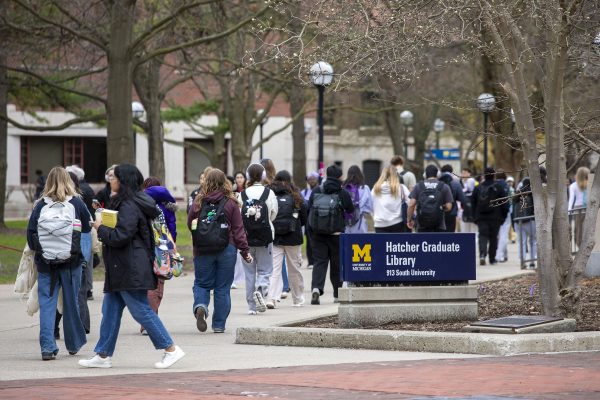
In November of last year, three Chinese nationals were charged in Michigan. They were accused of attempting to smuggle biological materials into the United States while working as researchers at the University of Michigan on J-1 visas.
The three defendants were identified as Xu Bai (28), Fengfan Zhang (27), and Zhiyong Zhang (30), all phonetic translations.
All three worked at the Shawn Xu Laboratory at the University of Michigan. They allegedly received multiple shipments of concealed biological materials related to roundworms that were mailed from Wuhan, China, by a doctoral student named Chengxuan Han (phonetic translation).
Han had previously worked at the University of Michigan but was later convicted of smuggling and making false statements, and was subsequently deported from the United States.
Additionally, in February of this year, a Russian-born scientist at Harvard University, Kseniia Petrova, was detained at Boston Logan International Airport on suspicion of smuggling frog embryos.
Her attorney stated that the samples originated in Paris and were destined for Harvard University, but that Petrova was unaware that the samples needed to be declared upon entry.
Legal requirements and enforcement data
According to the report, like other U.S. visas, the J-1 visa is subject to U.S. law. Visa holders must comply with federal regulations or risk losing their legal status. Bringing undeclared substances or materials into the United States—or attempting to do so—may result in detention, criminal charges, or deportation.
Under the current administration, border enforcement agencies have adopted a tougher stance on combating cross-border smuggling.
U.S. Customs and Border Protection (CBP) statistics show that drug seizures in November increased by 33 percent compared with October, reaching 54,947 pounds. However, there are currently no readily available statistics regarding the seizure of biological materials or similar items from J-1 visa holders.

FBI director urges universities to heighten compliance awareness
Patel urged all universities and their compliance departments to remain highly vigilant regarding this apparent trend and to ensure that researchers understand the lawful procedures for importing and exporting approved biological materials.
Patel stated: “Please make sure your researchers understand that there is a proper and legal permitting process for importing or exporting approved biological materials, and that it must be followed without exception.”