By Vision Times TV
China’s northeastern region, once hailed as an agricultural and industrial stronghold, is undergoing a quiet but profound collapse. From empty apartment blocks and shuttered factories to vanishing villages and record-low birthrates, Northeast China is experiencing what many residents describe as an “irreversible decline.”
In Heilongjiang’s Wuyiling District, rows of newly built apartment buildings stand eerily empty. “These buildings are all empty. Look at them — how are they all vacant? Not a single unit sold. Sigh. They built too many, but nobody’s buying,” said one netizen in a video.
For Northeasterners living elsewhere, the frustration is palpable. “Don’t fool us by saying the average salary in the Northeast is 8,000 yuan,” said the blogger. “That’s like a sparrow laying a goose egg — forcing it till your ass bursts. Where does 8,000 come from? Who are you averaging with? We’re poor, but we’re not stupid. Just look at how things are for us Northeastern guys,” the video continued.
RELATED: Food Prices Soar After Hainan Customs Lockdown, Online Criticism Deleted
From industrial powerhouse to economic sinkhole
Success
You are now signed up for our newsletter
Success
Check your email to complete sign up
In recent years, China’s three northeastern provinces — Heilongjiang, Jilin, and Liaoning — have consistently underperformed the rest of the country. Industrial growth has stalled, population outflow has accelerated, and local governments face mounting fiscal strain. The region has even been derided as enduring “the winter of the old industrial base.”
Yet this same region once represented the pinnacle of China’s industrial might. How did it fall so far? For many residents, the answer is blunt: Decades of policy failure under the Chinese Communist Party (CCP).
RELATED: Quiet Removal of Xi Jinping Propaganda Reported Across China
“Do you know how many people in Harbin don’t have jobs this year? And do you know where all those unemployed people go once winter comes? How many prime storefronts are being transferred? How many are for rent? The underground malls that used to be packed; go look now. Entire sections are empty. No one’s renting. Before, if you wanted a stall, you had to pay under-the-table fees.”
“Look at the small companies in Harbin — closing one by one. Even big companies are useless now. Either layoffs or pay cuts. And people like me? From morning to night, I made 20 yuan total — just one haircut customer.”
Empty cities, vanishing crowds
China’s housing surplus has become especially visible in the Northeast, where entire neighborhoods resemble ghost towns. “This is China’s real estate reality. One whole building, just one family living in it. See that? One building, one family. And these buildings here — nobody lives in them at all. This is China’s real estate situation.”
But where did everyone go? “Shenyang has over 9 million people, yet there’s no one on the streets, no one at tourist spots, no one in malls, no one in restaurants, no one in office buildings — even factories are empty. Rural areas? Even worse,” the netizen said. “When I was a kid, China had 1.2 billion people, and everywhere you went was crowded. Now we have 1.4 billion — so why does it feel like there’s nobody anywhere?”
According to the latest data, the combined permanent population of the three northeastern provinces has dropped to 95.01 million, down from 109 million in 2010 — a loss of 14.56 million people in just 14 years, equivalent to losing 1.4 Hainan provinces’ worth of people, and more than the entire populations of major cities like Wuhan, Zhengzhou, or Suzhou.
Birthrates collapse as young people opt out
Facing stagnant wages and rising uncertainty, many young Chinese — those born in the 1980s, 1990s, and even 2000s — are delaying marriage, postponing childbirth, or choosing not to have children at all. Official data shows that Liaoning and Jilin recorded just 277,000 births in 2024. Heilongjiang, meanwhile, has avoided releasing birth figures for two consecutive years. Based on its birth rate of 3.35 percent, this suggests fewer than 100,000 births in 2024, possibly even below 50,000.
That would put total births across the three provinces at roughly 350,000 for the entire year. With death rates soaring and divorce rates hitting record highs, netizens joke darkly about a “population triple curse” — no births, no marriages, no will to live. Others describe the region with the phrase “ten villages, nine empty.”
Thirty years from now, when the post-60s and post-70s generations pass on, vast rural areas may disappear entirely. “Our village is basically disappearing. Once our parents’ generation is gone, that’s it. People my age — the 80s and 90s — left the countryside, got jobs and bought homes elsewhere, and transferred their household registrations out. Their kids are all urban residents now. Rural villages have become hollow villages—just elderly people left behind. There’s a severe labor gap. I don’t even know — forget 30 years — 10 years from now, who’s going to farm this land?”
What is unfolding, observers warn, resembles not just economic decline — but a process of civilizational erosion.
On the brink of extinction
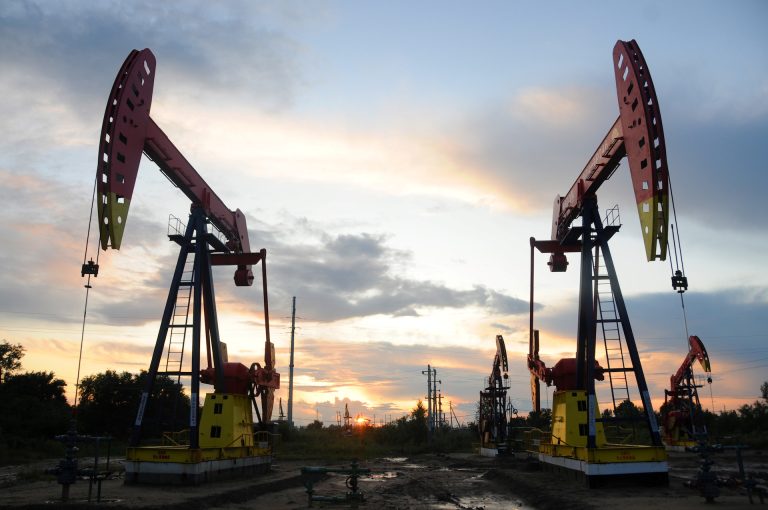
The blogger offers a structural explanation: “The Northeast is poor because of its industrial structure. Heavy industry is the absolute core — absolute. State-owned heavy industry props up the entire economy. Every city is like this. Changchun has FAW, Anshan has Ansteel, Shenyang has aviation manufacturing. Even small third-tier cities like Huludao have power plants, copper plants, shipyards, fertilizer plants, chemical factories.”
RELATED: Foreign Companies in China Retreat as Three-Decade Growth Model Falters
Heavy industry itself isn’t poor, he argues, but its workers are. “I’m not saying heavy industry is poor. The factories are rich. The directors, department heads, leaders — they’re rich. I’m saying the workers are poor.”
In the Northeast, factory workers often earn 3,000–4,000 yuan per month, leaving little savings even after a lifetime of labor. With generations tied to state-owned factories, ordinary families lack capital, suppressing consumption and entrepreneurship.
As a result, businesses are struggling to stay afloat. “Restaurants charge a bit more — no one eats there. Entertainment costs more — no one goes. Hotels cost more, so no one can afford to stay. Prices stay low, profits stay thin, and the whole system spirals downward.”
By comparison, Zhejiang’s economy is driven by light-industry private enterprises, notes the blogger. “Zhuji has textile factories. Datang makes socks. Yiwu sells small commodities. Wenzhou makes glasses and leather shoes. You can’t start your own steel plant after working 10 years at Ansteel — it takes hundreds of billions. But in Zhejiang, after 3–5 years at a sock factory, you and your friends can pool money and start one yourselves.”
‘I didn’t want to leave’
This accessibility fuels wealth accumulation and a virtuous cycle of spending and growth. Even China’s livestream e-commerce boom bypasses the Northeast. “Can you do livestream sales in the Northeast? Where’s your supply chain? Small goods are in Zhejiang. Clothing is in Guangzhou. In the Northeast, what are you going to sell — Ansteel steel? Shenyang fighter jets? Isn’t that nonsense?”
A female blogger with a second-tier university degree recounts her experience applying for nursing jobs. After graduating in 2016, she applied to a top-tier hospital in Heilongjiang. Requirements included minimum height of 1.6 meters and CET-6 English certification — a standard only one out of 38 classmates met.
Meanwhile, at a leading hospital in Tianjin where she interned, local applicants could hold associate degrees, while outsiders needed bachelor’s degrees or higher. “They told me, ‘Our director reviewed your resume and is very satisfied. When can you come interview?’ Then they said, ‘Any time before January 1, just call me—I’ll pick you up at the train station.’ That kind of attitude. In the Northeast, you push people out. With those standards, how could I stay? It’s not that I didn’t want to stay; I couldn’t.”
A structural trap
Analysts describe the Northeast’s decline as a man-made vicious cycle: High SOE dominance → low efficiency → weak private sector → lack of innovation → shrinking jobs → population outflow and aging → weak consumption → declining investment → fiscal stress → limited reform capacity.
This is not merely an economic problem; it is a systemic one, analysts note. And under leader Xi Jinping’s renewed state-centric economic direction, critics argue conditions have worsened rather than improved.
While the fate of Northeast China remains uncertain, the deeper question resonates nationwide:
If this is where China’s economic path leads, what future awaits the rest of the country — and how can ordinary people reclaim genuine well-being?