The Chinese Communist Party’s flagship journal Qiushi recently published an article titled “Expanding Domestic Demand Is a Strategic Choice,” compiling remarks made by Chinese leader Xi Jinping on economic policy between October 2015 and October this year. The article presents consumption as a central driver of economic growth, arguing that sustained expansion depends on employment growth and stronger social insurance systems.
It further emphasizes the concept of an “internally driven economic cycle,” describing it as a natural advantage of large economies. In this framework, domestic demand is intended to serve as the primary engine of growth, supplemented—but not replaced—by international trade.
This policy orientation has taken on greater urgency since the United States imposed tariffs on Chinese imports in 2018. Although China’s 14th Five-Year Plan formally prioritizes both domestic and international economic circulation, recent economic indicators suggest that the domestic component has struggled to gain momentum.

Weak consumer demand
Data released by China’s National Bureau of Statistics on Dec. 10 showed that the consumer price index (CPI) rose 0.7 percent year-on-year in November. While this represented one of the stronger increases since March 2024, it also underscored a broader trend: prolonged CPI growth below 1 percent, and at times outright deflation.
Under the goals outlined in the 14th Five-Year Plan, stronger domestic demand would normally be expected to produce moderate inflation. Most major central banks target inflation near 2 percent. By contrast, China’s CPI growth over the past three years has remained well below that level, pointing to persistently weak consumption.
Success
You are now signed up for our newsletter
Success
Check your email to complete sign up
Falling producer prices and service-sector strain
From the production side, China’s producer price index (PPI) fell 2.2 percent year-on-year in November. Between October 2022 and November 2025, producer prices declined for 38 consecutive months.
PPI reflects conditions at the factory gate and is shaped by both supply and demand. In China’s case, sustained declines point to severe overcapacity across a wide range of industries. Intense competition in downstream markets has pushed prices lower throughout supply chains, compressing margins and discouraging new investment.
Signs of weakness have also emerged outside manufacturing. In November, China’s non-manufacturing business activity index fell to 49.5, below the expansion threshold of 50 and below market expectations.
Service-sector performance is closely linked to manufacturing activity. As manufacturers cut output and employment, demand for services declines. In recent years, global supply-chain restructuring—including the relocation of Chinese production abroad—has further reduced domestic service-sector demand, in some cases tipping it into contraction.
Declining investment
Investment indicators reinforce this picture. According to data released on Dec. 15, China’s fixed-asset investment fell 2.6 percent year-on-year from January through November 2025, worsening from a 1.7 percent decline recorded over the first ten months. Fixed-asset investment has been contracting since February.
Local government investment has been particularly affected. Infrastructure investment fell 1.1 percent year-on-year during the same period, compared with a 0.1 percent decline earlier in the year. This suggests that local governments, facing mounting fiscal pressure, are scaling back spending on infrastructure and development projects.
Weak domestic demand and excess capacity reinforce each other. As shrinking markets intensify price competition, firms have fewer incentives to invest. Slower investment, in turn, reduces economic activity and tax revenues, further constraining government spending and deepening the cycle.
Foreign companies reduce exposure
Against this backdrop, China’s emphasis on boosting domestic demand contrasts sharply with economic realities. Declining investment signals weaker future demand, while persistent overcapacity erodes profitability across sectors.
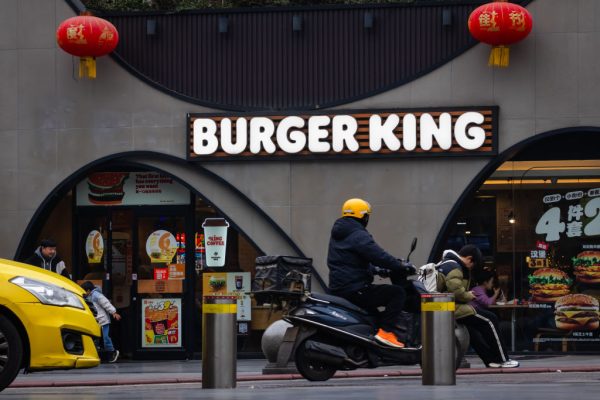
For foreign companies, these conditions reduce the appeal of the Chinese market. Rather than expanding operations, many firms are reassessing their exposure. Some have curtailed new investment, while others have moved to withdraw capital altogether.
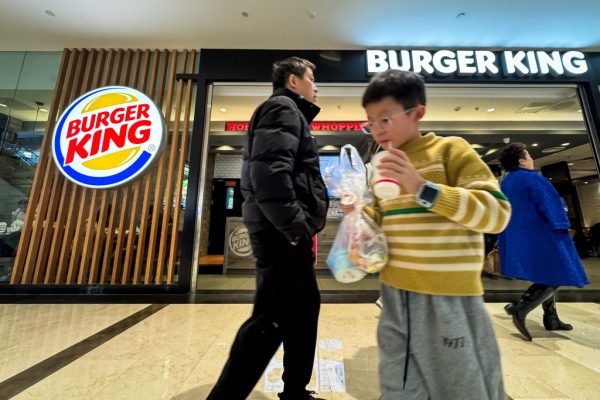
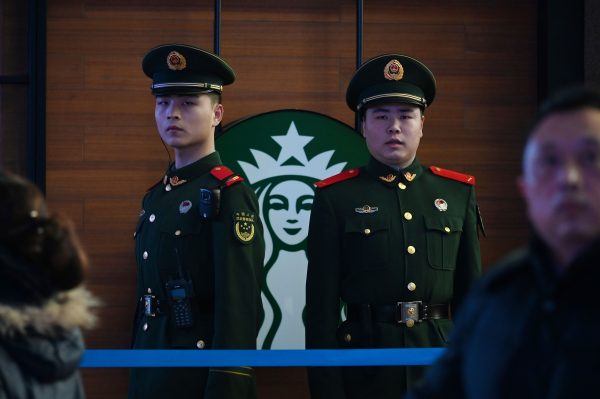
Recent examples include U.S.-based companies such as Starbucks and Burger King, both of which have sought to sell substantial equity stakes to local Chinese partners. These moves reflect a broader reassessment of risk and return in China’s consumer and service sectors.
Taken together, economic data and corporate behavior point to a downturn that is likely to persist, despite official policy commitments to stimulating domestic demand.