On Dec. 21, 2025, Peng Peiyun died in Beijing at the age of 96. Some media outlets noted that the date coincided with the winter solstice and with what is traditionally known in the Chinese calendar as a “Day of Heavenly Pardon.” For many Chinese families, however, the timing carried a different significance. Her death marked the end of a life closely associated with coercion, fear, and long-lasting social trauma.
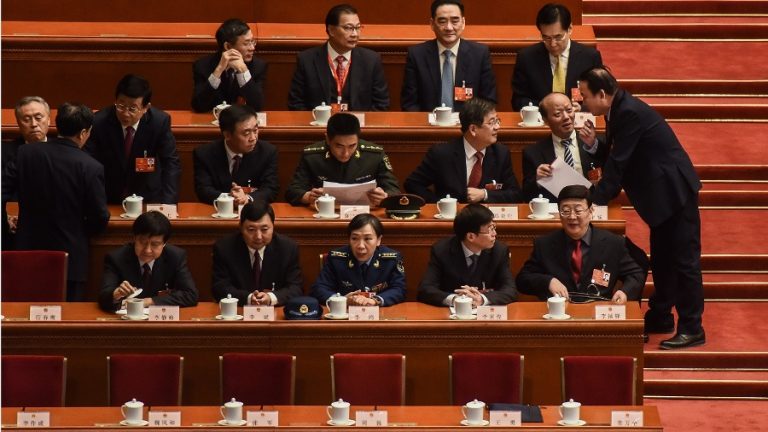
In official statements, the Chinese Communist Party (CCP) described Peng as a loyal Party member and a senior state leader. She served as director of the National Family Planning Commission and later as a vice chairperson of the National People’s Congress. Outside official narratives, her record has long been viewed far more critically. In 2013, Spain’s National Court issued an arrest warrant accusing her of involvement in crimes related to genocide. Within China, however, she was never held legally accountable.
Among the public, Peng’s name became inseparable from the human costs of China’s family planning system. It was associated with widespread forced abortions, the loss of only children in countless households, and demographic distortions that reshaped Chinese society for decades. These were not abstract policy outcomes but experiences lived in villages, homes, and women’s bodies.
Peng Peiyun did not face international justice before her death. Instead, public discussion of her legacy often centered on a personal tragedy. In 2006, her only son, Wang Jian, was killed in a car accident in Tibet. His father, Wang Hanbin, was also a senior Party official.
For many ordinary Chinese citizens, the loss was interpreted through a moral lens. Rather than being viewed simply as misfortune, it was seen by some as a form of retribution for the suffering inflicted under Peng’s authority. Such interpretations reflected the depth of resentment that had accumulated over decades.

Success
You are now signed up for our newsletter
Success
Check your email to complete sign up
A system remembered for its brutality
That resentment stemmed from Peng’s central role in a system widely remembered for its brutality. During her years overseeing national family planning, her name came to symbolize forced compliance, sudden disappearances, and the destruction of family life. She is often cited as one of the key figures behind China’s crisis of childless families and its accelerating population decline.
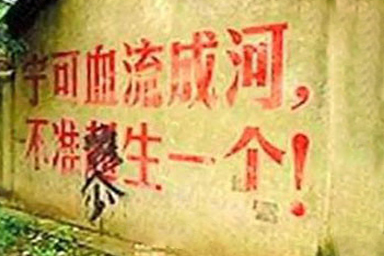
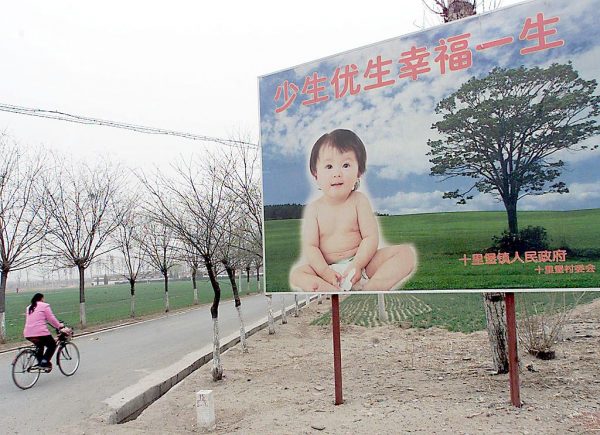
During the years Peng oversaw population control policy, slogans appeared across rural China that left little ambiguity about how the rules would be enforced. Phrases such as “One extra birth, the whole village is sterilized,” “Better ten graves than one extra child,” and “Let blood flow like a river, but allow no unauthorized birth” were widely displayed.
These slogans were not rhetorical exaggerations. They reflected the reality of enforcement at the local level.
In 2013, China’s Ministry of Health released official figures stating that more than 336 million abortions had been carried out since the introduction of family planning policies in 1971. Within traditional moral frameworks common in Chinese society, a fetus is often regarded as a human life. By that understanding, abortion was widely perceived as the killing of a child. Based on state-acknowledged figures alone, more than 336 million unborn lives were lost over four decades, with many believing the true number to be higher.
The scale becomes clearer when viewed in comparative terms. The number of abortions exceeded the total population of the United States.
Abortion was only one component of the population control system. Official data also recorded 196 million sterilizations and more than 403 million insertions of intrauterine devices.
In Western societies, such procedures are typically voluntary. In China during this period, women were often compelled to undergo them, frequently immediately after childbirth. Many suffered infections, permanent injuries, or lasting psychological trauma as a result of hurried and coercive procedures.
These measures were implemented not as isolated abuses but as part of an institutionalized system designed to meet numerical targets.
Aggressive expansion of population control
From 1988 to 1998, Peng Peiyun served as director of the National Family Planning Commission. This decade marked the most aggressive expansion of population control measures nationwide.
Under her leadership, a “one-vote veto” system was introduced, tying family planning outcomes directly to officials’ career prospects. A single unauthorized birth could nullify an official’s entire performance evaluation. Promotions, bonuses, and political futures hinged on compliance.
Under this pressure, many local officials abandoned restraint. Fear of punishment transformed enforcement from administrative oversight into cruelty.
The most infamous example occurred in 1991 in Guan County, Shandong Province.
In April of that year, county officials were summoned to an expanded party meeting after their family planning performance ranked last in the province. The county party secretary, Zeng Zhaoqi, issued a blunt order: from May 1 to Aug. 10, not a single child was to be born anywhere in the county.
Local accounts recall Zeng declaring, “If a single child is born during those one hundred days, I will call that child my father.”
When two township party secretaries hesitated, Zeng ordered them handcuffed and detained for fifteen days on the spot. The message was unmistakable. From that moment, fear replaced conscience throughout the local bureaucracy.
To carry out the campaign, local authorities recruited enforcement teams composed of individuals with no ties to the communities they policed. They were issued uniforms, ropes, and batons and paid far above standard government wages. To prevent resistance rooted in kinship, teams were rotated across distant villages. Pregnant women were treated as fugitives.
Participants later described scenes of extreme violence. One former cadre recalled enforcers kicking pregnant women in the abdomen until blood covered the ground. During the hundred-day period, slogans filled the streets urging absolute compliance. When asked what should be done if a child was born alive, one official reportedly replied, “Kill it.”
Because 1991 was the Year of the Goat, residents later referred to the campaign as “Slaughtering the Lambs.” In just one hundred days, more than 20,000 forced abortions and induced labor procedures were reportedly carried out. Hospitals were overwhelmed. Temporary operating spaces appeared in public buildings and along roadsides. With too many infant bodies to dispose of, some were thrown into abandoned wells. Residents later reported seeing stray dogs carrying infant remains through the streets.
(Image: Secret China)
Families collapse
Families collapsed under the pressure. Public shaming practices reminiscent of the Cultural Revolution reemerged. Pregnant women fled to fields and forests, giving birth in hiding. When women could not be found, relatives were punished instead. Homes were demolished, and elderly family members were beaten or humiliated.
Zeng Zhaoqi acted with impunity because he was protected. Peng Peiyun’s system rewarded results, not restraint. The deaths of tens of thousands of infants were treated as evidence of loyalty and effective governance.
In 1992, Zeng was promoted. He later rose through provincial ranks and held posts related to youth and family affairs.
What occurred in Guan County was not an isolated case. Under Peng Peiyun’s leadership, similar campaigns spread across rural China. Forced abortions and sterilizations became routine. Many women were left disabled. Some died during procedures.
Even after Peng left office, the system she built continued to function. Its mechanisms hardened into institutional practice. Within that structure, violence became normalized, and killing became routine.