By Li Deyan
As 2025 came to a close, internal power struggles within the Chinese Communist Party (CCP) showed no sign of easing. Despite repeated pledges by the top leadership to intensify anti-corruption efforts in 2026 and renewed calls for what it termed “self-revolution,” the number of centrally managed officials removed in 2025 reached a record high. At the same time, corruption cases within the People’s Liberation Army expanded sharply, with an unusually large number of senior officers implicated.
On Dec. 29, 2025, the CCP’s official newspaper People’s Daily published an article titled “Deeply Studying and Implementing Xi Jinping Thought on the Party’s Self-Revolution,” authored by the Central Commission for Discipline Inspection and the National Supervisory Commission. The article, running more than 4,000 words, focused on promoting Xi Jinping: The Governance of China, Volume V and repeatedly praised Xi Jinping’s leadership.
The term “self-revolution” appeared at least 50 times in the article, which claimed the Party had eliminated “serious hidden dangers” within the Party, the state, and the military. It asserted that lax governance had been fundamentally reversed and called on Party members to align themselves with Xi as the “core” in thought, politics, and action. The language implicitly acknowledged persistent problems within both Party and military institutions.
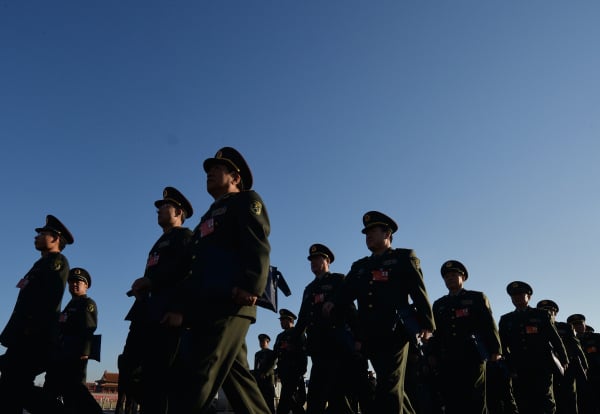
The CCP’s anti-corruption work
At a Politburo meeting on Dec. 25, Chinese leaders said they would push forward comprehensive Party discipline in 2026 “with higher standards and more concrete measures,” while formally reviewing plans for next year’s anti-corruption work.
Success
You are now signed up for our newsletter
Success
Check your email to complete sign up
Days later, authorities announced another investigation. On Dec. 30, the CCDI and National Supervisory Commission said Zhang Shiping, former secretary of the Secretariat and vice chairman of the All-China Federation of Trade Unions, was under investigation for “serious violations of discipline and law.”
With Zhang’s case, the number of centrally managed officials investigated in 2025 reached 65, surpassing the 58 recorded in 2024 and marking the highest annual total since the anti-corruption campaign began. Chinese media referred to Zhang as the “65th tiger” to fall that year.
Commentator Li Linyi said the leadership’s rhetoric about tougher anti-corruption measures in 2026 suggested internal political struggles were likely to intensify, with more senior officials expected to be targeted.
U.S.-based commentator Wang Youqun wrote in overseas Chinese-language media that Xi Jinping launched the anti-corruption campaign in 2013 and declared in 2021 that it had achieved a “crushing victory” and was fully consolidated. Wang argued that if corruption had truly been brought under control, the number of cases should have declined rather than continued to rise.
Official CCDI data show that 87 centrally managed officials were investigated in 2023 and 92 in 2024. Based on publicly released case lists and official announcements, at least 110 such officials had been placed under investigation by Dec. 27, 2025. Including Zhang Shiping’s case announced on Dec. 30, the total for 2025 reached at least 111, the highest figure recorded since 2012.
Corruption cases involving senior military officers also mounted in 2025. While the exact number remains unclear, official disclosures indicate that the scale of investigations involving generals was unusually large.
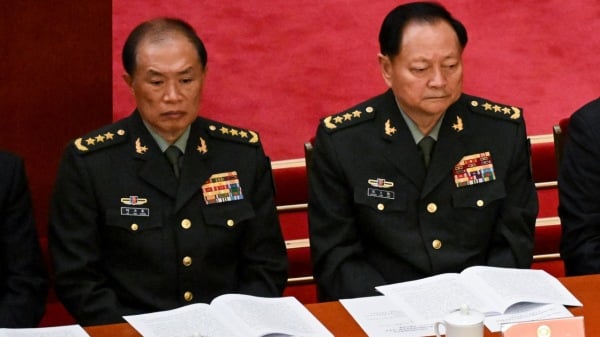
Eight individuals stripped of their status
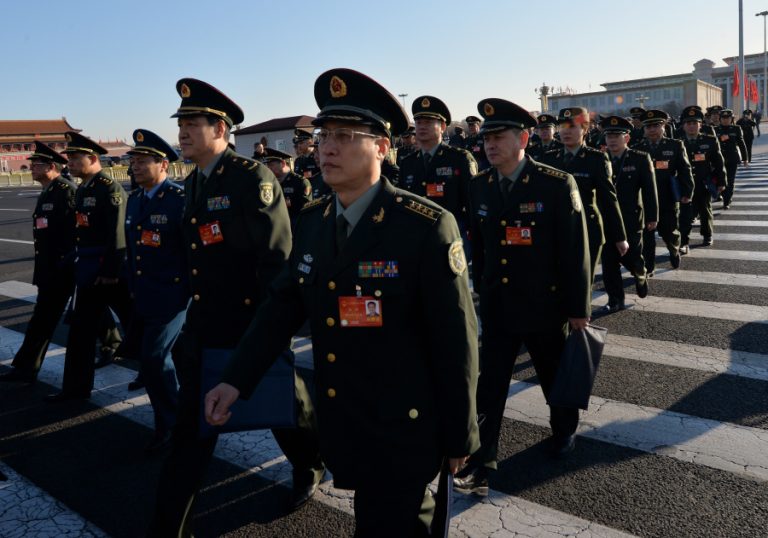
An announcement issued after a meeting of the Standing Committee of the National People’s Congress on Dec. 27 showed that eight individuals had been stripped of their status as deputies to the 14th NPC. Those named included former Central Military Commission vice chairman Gen. He Weidong; Gen. He Hongjun, executive deputy director of the CMC Political Work Department; Gen. Zhang Hongbing, political commissar of the People’s Armed Police; Gen. Wang Renhua, head of the CMC Political and Legal Affairs Commission; and Lt. Gen. Wang Peng, head of the CMC Training and Management Department. For Wang Renhua, Zhang Hongbing, and Wang Peng, this marked the first official confirmation of their removal.
To date, 11 PLA generals have been stripped of their NPC delegate status, all of whom were promoted during Xi Jinping’s tenure. In addition, 13 lieutenant generals and three major generals were removed, including senior figures from the logistics, joint support, and rocket force systems.
Beyond those publicly removed, reports circulated that several serving or former generals had gone missing or were under investigation, including senior figures from the equipment development, air force, navy, and military education systems.
Wang Youqun noted the number of PLA generals investigated in 2025 was the highest not only since 2012 but possibly even since the beginning of China’s reform era in 1978.
On Oct. 17, 2025, China’s Ministry of National Defense announced that nine generals, including Politburo member and CMC vice chairman He Weidong, had been expelled from the Party and the military and transferred for judicial review. At the Fourth Plenum held days later, 22 generals were absent. Apart from those already announced, others were widely believed to be under undisclosed investigation.
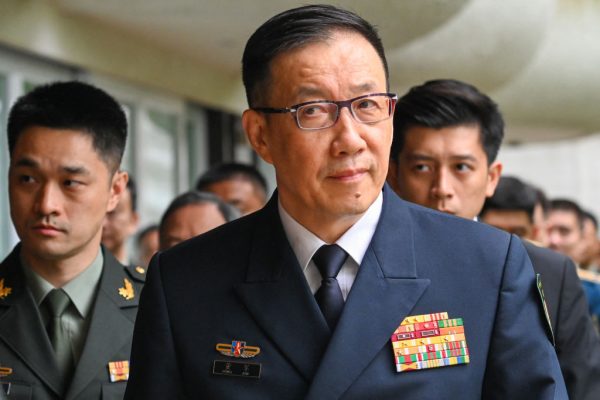
Two new theater commanders
On Dec. 22, the Central Military Commission promoted two new theater commanders to the rank of general. Only four existing generals attended the ceremony. Subsequent reports said Defense Minister Dong Jun was also under investigation by military discipline authorities.
Analysts noted that during Xi Jinping’s 13 years as CMC chairman, three directors of the CMC General Office encountered serious problems in 2025. Most of the implicated officers, including several of Xi’s former military aides, were linked in reports to corruption cases.
Independent commentator Cai Shenkun said Zhong Shaojun, one of Xi’s former military aides, was widely viewed as a key figure within networks associated with senior officers Miao Hua and He Weidong, citing long standing personal ties and overlapping patronage networks.
Wang Youqun concluded that despite years of high-profile anti-corruption campaigns, many of Xi Jinping’s closest military confidants had fallen amid corruption allegations, underscoring persistent structural problems within the system.