By Yang Tianzi
In early January 2026, the United States launched a meticulously planned military operation in Venezuela at lightning speed, successfully arresting the country’s long-time president, Nicolás Maduro. This event not only marks a major shift in the political landscape of Latin America but also symbolizes the U.S., under Trump’s second term, redefining its global position with unprecedented assertiveness.
From the Delta Force raid to Secretary of State Marco Rubio’s stern ultimatum to Venezuela’s new government, and Secretary of Defense Hegseth’s hardline declaration at a shipyard, these events form a complete strategic picture, signaling a profound restructuring of the international order.
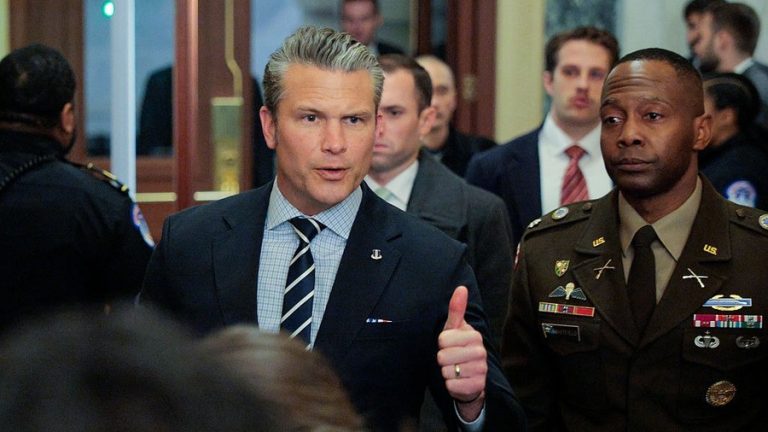
Hegseth: After US shows military power in Venezuela, China and Russia dare not test America
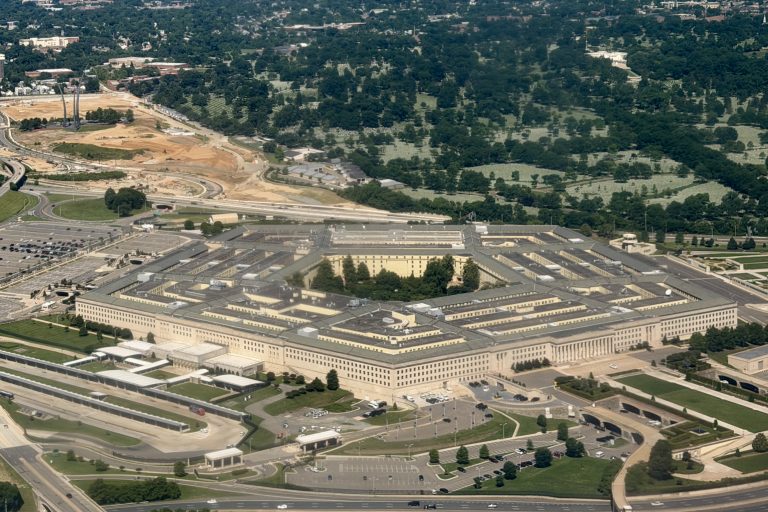
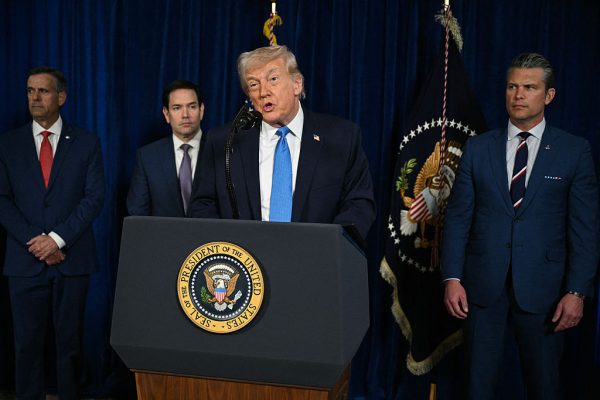
On Jan. 5, U.S. Secretary of Defense Hegseth delivered a major speech at the Huntington Ingalls Industries shipyard in Newport News, Virginia. This shipyard is the largest military shipyard in the U.S. and a symbol of American naval power. The choice of venue carried deep strategic significance.
In his speech, Hegseth clearly stated that the U.S. is rebuilding its absolute and unquestionable military deterrence. He noted that during previous administrations, the world began to doubt whether the U.S. still had enough strength to lead globally, but such doubts have now been dispelled. The Venezuela operation is proof — the U.S. not only has the capability to execute precise military strikes in distant locations but also demonstrates overwhelming technological superiority.
Success
You are now signed up for our newsletter
Success
Check your email to complete sign up
Notably, Hegseth mocked Russia’s air defense systems, joking: “It seems Russia’s air defense didn’t do much.” This statement not only belittles Russian military technology but also sends a message worldwide: countries relying on Russian weapons should not have high expectations of their actual effectiveness. For nations long purchasing Russian arms, this is a clear warning.
Hegseth defined the current international situation as a “new era of great power competition” and a “generation of struggle to maintain peace through strength.” He emphasized that the U.S. goal is not passive response but proactive action, deterring any enemy from challenging America. This reflects the Trump administration’s foreign policy philosophy, maintaining peace through overwhelming military power rather than diplomacy or compromise.
Regarding China and Russia, Hegseth stated that after the U.S. demonstrated military strength in Venezuela, these two countries would not dare to “test” America. This confidence stems from the U.S.’s multiple advantages in this operation: intelligence gathering, special operations capability, technological suppression, and most importantly — the political will to act decisively. In recent years, China and Russia have become increasingly active internationally, challenging U.S. global leadership. But the Venezuela incident may make them reassess U.S. resolve and capability.
Rubio’s clean-up ultimatum
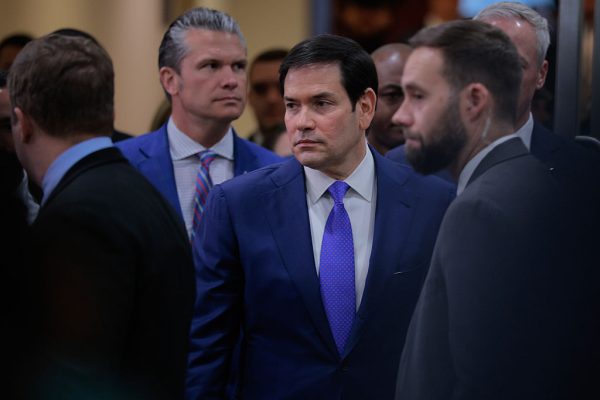
Just minutes after Maduro was brought aboard a U.S. warship, Secretary of State Rubio called Venezuela’s acting president, Rodríguez. The timing and content of the call were highly symbolic—it made clear that the U.S. aimed not only to remove the Maduro regime but to completely reshape Venezuela’s political and economic landscape.
Rubio presented two core demands. First, the immediate expulsion of all official advisors, military personnel, and intelligence staff from China, Russia, Cuba, and Iran. These four countries have long supported Maduro and built extensive influence networks in Venezuela. China has major oil investments and infrastructure projects; Russia provided military equipment and technical support; Cuba sent security advisors and intelligence personnel; and Iran cooperated closely in energy and military fields.
The U.S. demand effectively uproots these countries’ long-standing influence networks. In a confidential briefing to senior Congress members on January 6, Rubio made clear that only a small number of diplomats from these nations would be allowed to remain, while all intelligence and military personnel must leave immediately. The severity of this demand is unprecedented, essentially requiring the new Venezuelan government to sever ties with its long-term allies.
The second demand concerned Venezuela’s oil industry. Rubio conveyed Trump’s explicit intent: Venezuela must resume oil trade with the U.S., relax or end nationalization policies, and even compensate American energy companies for previously seized assets. Venezuela holds the world’s largest oil reserves, but under Maduro, mismanagement, sanctions, and technological backwardness caused production to plummet. The U.S. aims to regain economic benefits and influence in global energy markets through control of Venezuelan oil.
Deep geopolitical implications
The Venezuela incident’s impact extends far beyond the country itself. It marks a major shift in U.S. foreign policy, from cautious multilateralism over past decades to a more unilateral and assertive hegemony. The effects on global order are profound.
First, the operation redefines America’s role in the Western Hemisphere. Latin American countries have long been wary of U.S. interventionism. The Venezuela incident may deepen this caution but also sends a clear warning to other leftist governments: cozy up to U.S. adversaries, and you might face the same fate.
Second, the operation directly challenges China’s Belt and Road Initiative. China has invested heavily in Latin America to build economic and political influence, with Venezuela as one of its most important partners. The U.S. demand to expel all Chinese personnel signals that Chinese influence is unacceptable in America’s backyard.
For Russia, the event is also a heavy blow. Russia has long considered Venezuela a key foothold against U.S. influence in the Western Hemisphere. Venezuela purchased large amounts of Russian weaponry, and the two cooperated deeply in military and energy sectors. But this operation shows Russia cannot protect its allies from U.S. military action, likely shaking confidence in other states relying on Russian support.
Lightning raid: Delta Force’s precision strike
According to Hong Kong’s South China Morning Post, on the evening of Jan. 3, U.S. special forces Delta Force carried out a high-risk raid on Venezuela’s capital, Caracas. The target was the presidential palace, guarded not by Venezuelan troops but by Cuban security personnel long employed by Maduro. This detail revealed the regime’s vulnerability—a leader who does not trust his own military must rely on foreign mercenaries for protection.
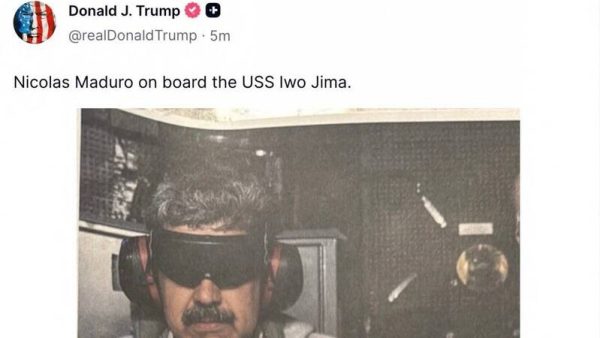
During the raid, intense gunfire broke out. Cuban personnel tried to resist, but against the well-trained and equipped Delta Force, their defense was ineffective. U.S. forces ultimately suppressed all resistance and forcibly removed Maduro and his wife, Flores, placing them on a U.S. warship off Venezuela’s coast. The operation’s success demonstrated not only Delta Force’s combat capability but also U.S. intelligence’s precise knowledge of Maduro’s location and security arrangements.
Notably, the operation bypassed Venezuela’s air defense systems. Despite years of purchasing advanced Russian air defense systems, including S-300VM and Buk-M2E, these systems failed to intercept the operation. This fact later formed the basis for Hegseth’s mockery of Russian air defense technology.

Judicial trial: the dictator in a New York court
After being brought to the U.S., Maduro and his wife were quickly sent to federal court in New York. This marks a historic moment in international law—a sitting head of state from a sovereign nation arrested militarily and brought to trial abroad. The U.S. government had long prepared charges including drug trafficking, corruption, and human rights violations. These accusations existed in the U.S. legal system for years but only now could be enforced.
The incident has sparked complex international law debates. Critics argue that the U.S. violated the principle of sovereign immunity, flagrantly infringing on Venezuela’s sovereignty. However, the U.S. maintains that the Maduro regime is itself illegitimate, due to electoral fraud in 2024 and refusal to recognize opposition victories. From this perspective, the action can be seen as a just move supporting the Venezuelan people’s democratic will.
Despite U.S. tactical success, Venezuela’s future remains uncertain. Acting President Rodríguez faces a difficult choice: fully comply with U.S. demands and risk being seen as a traitor by domestic nationalists, or resist and face further U.S. pressure, possibly meeting Maduro’s fate.