By Yang Tianzi
In a military and intelligence operation that has shocked the world, U.S. President Donald Trump, on Jan. 3, publicly announced that American special forces have successfully captured Venezuelan President Nicolás Maduro and his wife, Cilia Flores. The couple is currently being escorted out of Venezuelan territory. The move marks a dramatic turning point in the long-standing tense relations between the U.S. and Venezuela and delivers a geopolitical shockwave across Latin America.
US strike operation
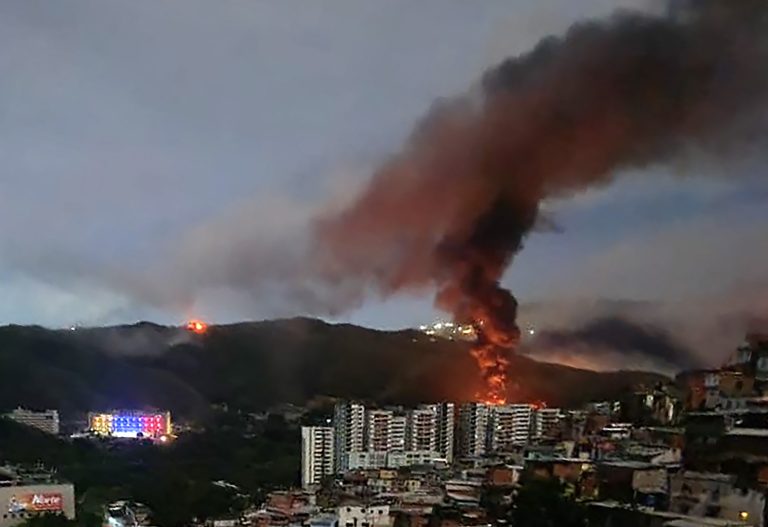
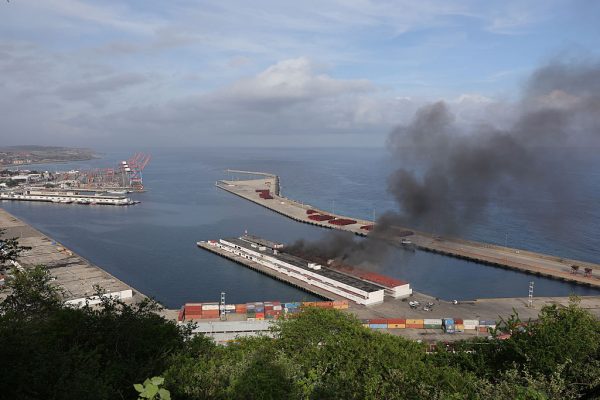
The meticulously planned decapitation strike took place in the early hours of Jan. 3, local time in Venezuela. According to foreign media reports and eyewitness accounts in Caracas, multiple massive explosions shattered the city’s quiet in the dead of night. Witnesses reported hearing the roar of low-flying jets during the explosions, highlighting the key role of air superiority in the operation.
Following the explosions, several critical areas in Caracas, including multiple military facilities, experienced widespread power outages. Such precise infrastructure disruption is typically used in modern special operations to sever the enemy’s command and control (C2) systems.
CBS News cited senior U.S. government officials, reporting that the ground capture mission was executed by one of America’s most elite special operations units—the Delta Force. Known for high-risk counterterrorism and hostage rescue missions, the unit previously participated in the 2019 operation that killed ISIS leader Abu Bakr al-Baghdadi. This operation once again demonstrated their high tactical proficiency, successfully penetrating enemy lines and securing the targets.
Trump confirms and praises the operation
Success
You are now signed up for our newsletter
Success
Check your email to complete sign up
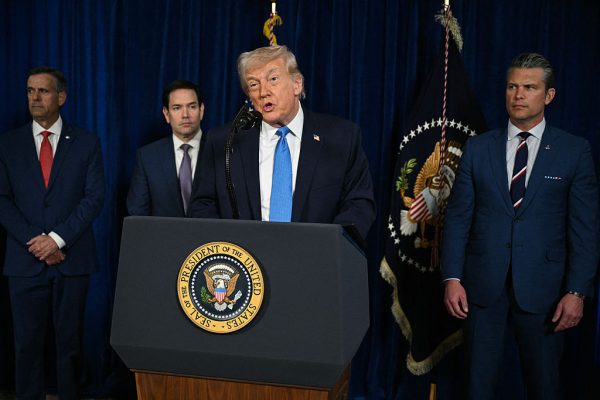
Shortly after the operation, President Trump confirmed the news on his social media platform, Truth Social, stating: “The U.S. has successfully conducted a large-scale strike against Venezuela and its leader, President Maduro. Maduro and his wife have been captured and are being escorted out of the country. The operation was carried out jointly by U.S. law enforcement agencies.”
Trump praised the operation in a brief phone interview with The New York Times, calling it “a very well-planned operation involving many, many outstanding units and personnel. Honestly, it was a very brilliant mission.”
To provide further details and outline follow-up measures, Trump announced a formal press conference at his Mar-a-Lago estate in Florida on Jan. 3 at 11 a.m. EST (midnight Jan. 4, Taipei time). He is expected to discuss the decision-making process, legal justifications, and the implications for Venezuela’s future.
Chaos and response in Venezuela
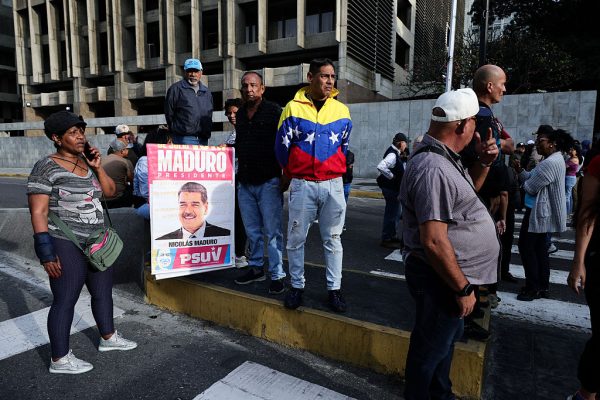
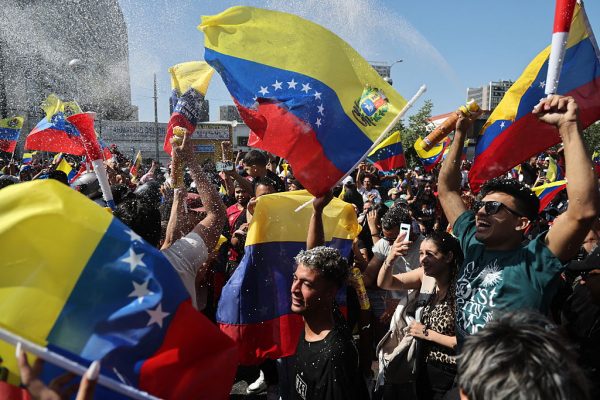
In the early stages of the U.S. operation, the Venezuelan government appeared in clear disarray. Following the explosions and power outages, the Ministry of Communications was only able to broadcast an official statement read by a journalist via television and radio, accusing the U.S. of “extremely serious military aggression.”
Venezuelan Defense Minister Vladimir Padrino López later appeared publicly, strongly condemning the U.S. attack and reaffirming the military’s loyalty to the constitution. On the eve of his capture, Maduro had declared a state of emergency, attempting to mobilize the military and militia to resist foreign aggression, but failed to prevent the penetration and raid by U.S. special forces.
Currently, Venezuela’s power vacuum has raised concerns about its political future. The New York Times notes that under the Venezuelan constitution, presidential powers should transfer to the vice president—in this case, Delcy Rodríguez, who oversees economic policy. However, given Maduro’s longstanding legitimacy crisis and the highly interventionist nature of the U.S. operation, it remains uncertain whether power can smoothly transition to the vice president.
Meanwhile, the Venezuelan opposition has long argued that the true winner of the 2024 election was Edmundo Gonzalez, who currently lives in exile. Maduro’s capture could provide the opposition, with U.S. backing, an opportunity to reassert influence—an unfolding development to watch closely.
Background: Drug wars and long-term confrontation
The military operation was not without warning. The Trump administration had repeatedly warned of taking strong action against drug trafficking networks in Venezuela. In October last year, Trump revealed he had authorized the CIA to conduct covert operations in Venezuela to cut off the flow of drugs into the U.S.
Trump repeatedly accused Maduro’s regime of transforming the state into a narco-state. This operation appears to fulfill Trump’s promise to strike ground targets “soon,” combining anti-drug enforcement with regime change objectives.
As the operation unfolded, regional security risks sharply increased. The FAA issued four flight notices (NOTAMs) in the early hours of Jan. 3 for San Juan, Piarco, Maiquetía, and Curaçao flight information regions, warning of “ongoing military operations posing safety risks.” U.S. civilian aircraft were prohibited from flying in Venezuelan airspace at any altitude, highlighting both the danger and the likely continued U.S. military presence to prevent counterattacks.
Venezuela faces an uncertain future
Although Trump hailed the operation as a success, the capture of a sitting head of state is certain to spark intense debate in the U.S. over war powers and legal authorization. When asked if Congress had authorized the action, Trump said he would address it at the upcoming press conference.
Under U.S. law, the president, as commander-in-chief, may act in emergencies, but long-term or large-scale war typically requires congressional authorization (AUMF). This operation, involving the invasion of sovereign territory and the arrest of a sitting president, may rely legally on past U.S. indictments of Maduro for narco-terrorism. In 2020, the U.S. had offered a $15 million reward for his capture, accusing him of leading the “Cartel of the Suns.”
The capture of Maduro and his wife marks the potential end of the Chavismo era in Venezuela, but also opens a highly unstable chapter. The international community is closely monitoring several key developments:
- Maduro’s fate: Will he be extradited to the U.S. or an international tribunal? This will determine whether his trial is criminal or political.
- Venezuelan military response: Will the army resist the U.S., support Vice President Rodríguez, or side with the opposition? The military’s stance could determine the outbreak of civil war.
- International reaction: How will long-time allies such as Russia, China, and Cuba respond? Could this trigger broader geopolitical conflict?
- Humanitarian crisis: Political instability may worsen Venezuela’s already severe economic collapse and refugee crisis, increasing pressure on neighboring countries like Colombia and Brazil.
The bold U.S. operation demonstrates its military reach and political will in the Western Hemisphere, but the resulting political and regional fallout is likely to persist for some time. Global attention now turns to the upcoming Mar-a-Lago press conference, where Trump is expected to reveal further details of this shocking mission.