By Xiao Ran
The year 2026 had barely begun when the international landscape started to change shape. Within a single week, a series of events unfolded that at first glance appeared disconnected: decisive U.S. action against Venezuela, mounting military and political pressure on Iran, and the seizure of Russian oil tankers operating in international waters. Taken individually, each could have been dismissed as situational. Viewed together, they suggested something else entirely.
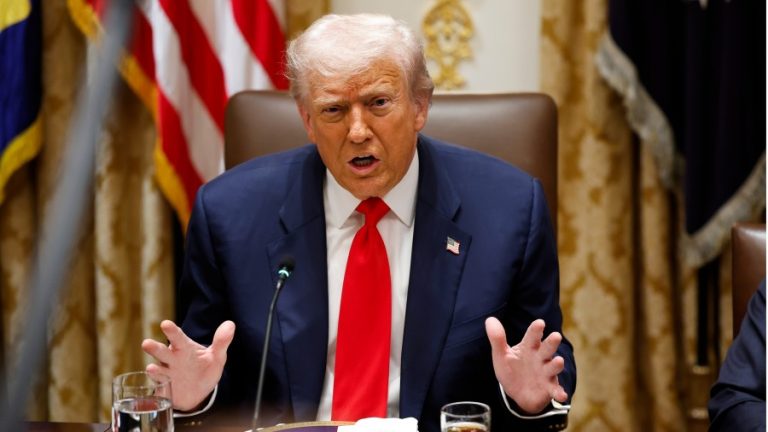
Observers began to describe these moves as deliberate signals rather than isolated reactions. Under President Donald Trump, the United States appeared to be reasserting a far older logic—one that placed visible strength above procedural restraint. Commentators have begun referring to this approach as “Donroism,” borrowing from Trump’s given name. Its premise is simple and unapologetic: global order is enforced, not negotiated.
In this emerging environment, one reality has become increasingly difficult to ignore. The Chinese Communist Party (CCP) stands out as one of the primary casualties of this shift.
The end of a comfortable system
For decades after World War II, the United States presided over an international system grounded in rules, institutions, and multilateral coordination. Organizations such as the World Trade Organization embodied a shared belief that common standards would govern behavior, that governments would limit their direct economic role, and that markets would serve as the primary mechanism of competition.
Success
You are now signed up for our newsletter
Success
Check your email to complete sign up
That assumption, many Chinese dissident commentators argue, began to unravel in 2001, when the CCP joined the WTO. Political analyst Fang Wei has described the moment in blunt terms: a system built for rule-following merchants suddenly had to accommodate an actor that did not share its premises. Through state capitalism, heavy subsidies, and political direction of the economy, the CCP learned how to exploit the system without ever being meaningfully constrained by it.
Over time, the gap widened. The rules remained in place, but their enforcement weakened. Trump’s response was shaped by that reality. Rather than attempting to rehabilitate a system he viewed as structurally compromised, he shifted toward direct assertion of power—placing American leverage visibly at the center of the stage. This approach is what he has repeatedly framed as “peace through strength.”
To many observers, this was less a novelty than a return. The Monroe Doctrine, articulated in 1823, had long treated the Western Hemisphere as a core U.S. security space. That principle faded after the Cold War, but the steady expansion of Chinese and Russian influence over the past two decades—particularly in Latin America and the Middle East—brought it back into focus.
Commentator Tang Jingyuan has described Trump’s approach as a modernized version of that doctrine. It avoids long-term nation-building or value export, relying instead on short, highly visible actions designed to establish boundaries quickly and force adversaries to reassess their position.
Venezuela as a test case
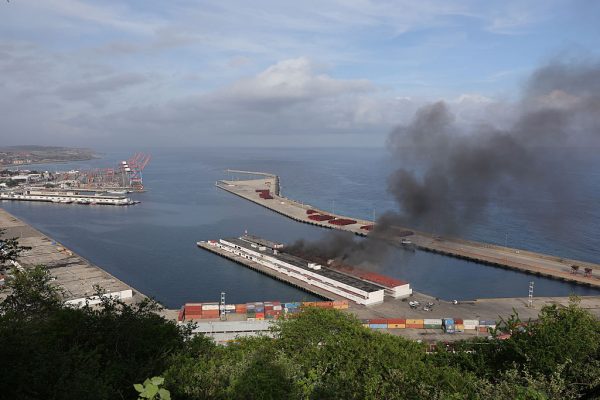
Venezuela became the first place where this logic was applied in full.
For years, the country’s oil sector had been deeply entangled with China. Roughly eighty percent of Venezuela’s crude exports flowed eastward, while Venezuela and Iran together supplied more than a third of China’s oil imports. Because of U.S. sanctions, this trade operated through discounted and opaque channels that proved enormously profitable for actors within the CCP system.
The Trump administration moved against that structure rather than against Venezuela alone. By tightening control over export routes, financial settlement mechanisms, and gray-market trade corridors linking China and Russia, Washington effectively placed Venezuela’s fiscal lifeline under American supervision.
Tang Jingyuan has noted that this form of control can be more effective than traditional military occupation. When a country’s salaries, budgets, and export revenues are managed externally, compliance follows naturally.
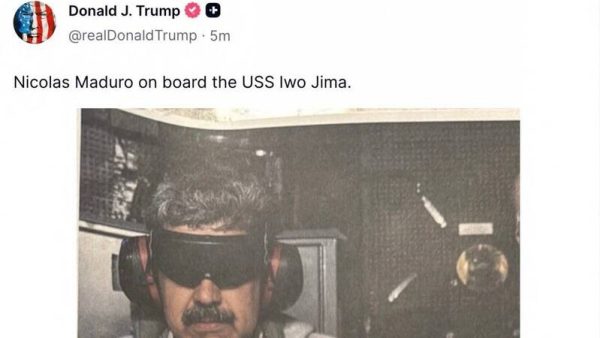
The arrest of Nicolás Maduro and the transfer of control over oil assets brought two decades of Chinese investment to a sudden halt. Public estimates place Beijing’s direct and indirect exposure in Venezuela at roughly $60 billion—assets that rapidly shifted from strategic leverage to political liability.
Political commentator Wen Zhao has argued that the significance of these events extends well beyond Venezuela itself. In his view, the episode functioned as a stress test of the CCP’s ability to sustain global influence under pressure.
He draws a parallel to the 1989 U.S. operation against Panama’s Manuel Noriega, which revealed the Soviet Union’s inability to protect allies within America’s immediate sphere. Beijing’s response to the Venezuelan crisis, Wen observes, has followed a similar pattern: formal condemnation, symbolic rhetoric, and little else.
The deeper damage, he argues, lies in perception. When a state that presents itself as a global power proves unable to shield distant partners or impose reciprocal costs, its deterrent image erodes. Other countries aligned with Beijing are forced to take notice. If China cannot absorb losses in Venezuela, expectations of protection elsewhere diminish accordingly. Over time, this reassessment threatens to hollow out the CCP’s international support network.

Pressure builds in Iran
In the Middle East, Iran has been facing a parallel, though more complicated, set of pressures. U.S. reconnaissance flights have intensified, military deployments have expanded, and Israeli strikes have degraded key elements of Iran’s air defense and missile capabilities.
Under these conditions, rare signs of internal strain have surfaced. Iran’s president publicly cautioned against suppressing peaceful protests, a statement widely interpreted as an attempt to distance himself from Supreme Leader Ali Khamenei. Wen Zhao has suggested that such moments of visible division reflect deeper instability. Once the leadership begins signaling uncertainty, the regime’s psychological cohesion weakens.
Any substantive change in Iran’s political trajectory would represent another strategic setback for Beijing, particularly in terms of energy security.
Another signal arrived on the high seas. U.S. forces intercepted Russian-flagged oil tankers operating as part of Moscow’s so-called “shadow fleet,” a network used to evade sanctions and transport energy to buyers including China.
Although Russian naval vessels appeared in the vicinity, they did not intervene. Fang Wei has described the incident as intentionally illustrative. The seizure of a single tanker mattered less than the precedent it established for the hundreds of similar vessels still in operation. Once the risk environment shifts, many participants withdraw on their own.
The logic is familiar: supply lines rarely need to be severed completely. Increasing their cost and uncertainty is often enough.
Counting the costs
Former Chinese entrepreneur Hu Li-ren has attempted to quantify what these developments mean in concrete terms. His conclusion is that the losses are structural rather than episodic.
He identifies four major areas of damage. Control over trade has weakened, not because volumes vanished, but because influence over pricing, logistics, financing, and settlement rules has been stripped away. Policy loans across Central and South America—estimated at $80 to $90 billion—now carry significant default risk. Infrastructure and energy projects face reduced future cash flows. Most critically, strategic footholds in ports, power grids, communications, and security infrastructure have been lost, often irreversibly.
Hu estimates that over the next three to five years, quantifiable losses may reach $110 to $180 billion, with longer-term impacts potentially far higher.
Few commentators believe Venezuela will be the last case. What appears to be coming undone is not a single client regime, but a broader model the CCP has relied on for years: trading debt for loyalty, resources for silence, and authoritarian stability for strategic access.
Such arrangements expand quickly when external conditions are favorable. When those conditions reverse, they tend to collapse just as quickly.
Trump’s return does not point toward a calmer world. It suggests a narrower one, where gray zones shrink and leverage is applied openly. In that environment, the CCP finds itself confronting an unfamiliar position—not as an emerging challenger shaping the system, but as an actor whose accumulated methods are being steadily unwound.