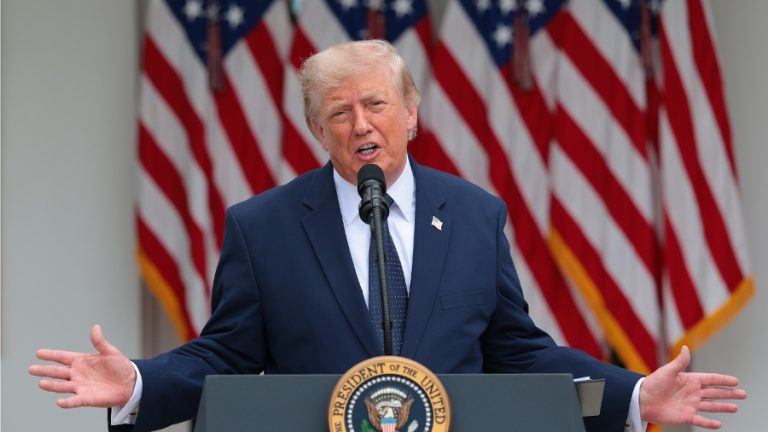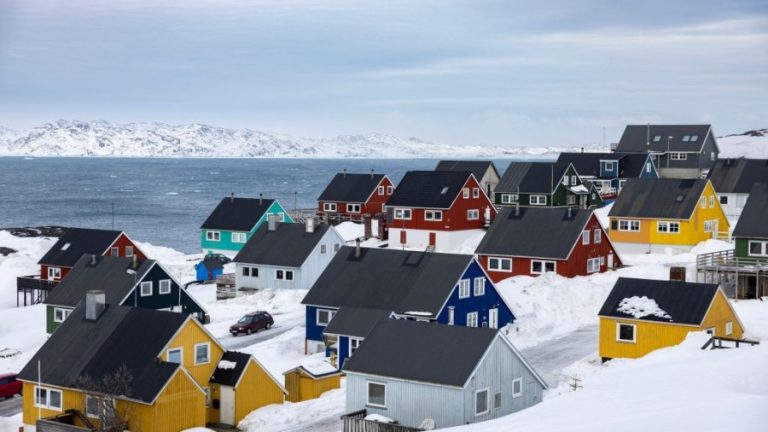
President Donald Trump has once again declared that Greenland—a self-governing territory under Danish sovereignty—must ultimately become part of the United States. This time, however, the statement landed differently.
According to Reuters, which cited four people familiar with internal discussions, U.S. officials have begun considering a concrete incentive plan: one-time cash payments to Greenland residents as a means of encouraging separation from Denmark and eventual integration into the United States. The figures under discussion range from $10,000 to as much as $100,000 per person.
Taken together, Trump’s renewed public statements and these reported deliberations suggest that Washington’s interest in Greenland has moved beyond symbolic provocation. What once sounded like political theater is now being treated, at least internally, as a question of policy.
In a recent interview with U.S. media, Trump expressed dissatisfaction with the current arrangement governing U.S. access to Greenland. Under a 1951 defense treaty with Denmark, the United States already has the right to establish and operate military bases on the island, including the ability to reactivate facilities that were previously closed.
For Trump, this is not enough.
Success
You are now signed up for our newsletter
Success
Check your email to complete sign up
When asked why the United States must own Greenland rather than rely on treaties or leases, he offered a revealing explanation. Ownership, he argued, creates psychological and strategic conditions that contractual arrangements cannot replicate. Leases and agreements may grant access, but sovereignty delivers permanence, control, and leverage that paperwork alone cannot guarantee.
The distinction reflects a broader pattern in Trump’s thinking: strategic assets are most secure when they are possessed outright.
Greenland’s strategic weight
Greenland’s importance is rooted in its geography. Situated at a critical junction linking North America, Europe, and the Arctic, the island occupies a position of growing importance for naval operations involving the United States, Russia, and China. As Arctic ice continues to recede, new shipping routes are gradually opening, shortening transit times between major markets and reshaping global trade patterns.
At the same time, Greenland’s natural resources—particularly rare earth minerals and fisheries—have drawn increasing attention. Control over access to these assets, combined with the island’s role as a gateway between the North Atlantic and the Arctic Ocean, has elevated Greenland from a peripheral territory to a strategic focal point.
Reuters reports that U.S. officials have begun discussing a financial inducement plan in concrete terms. While details remain unsettled, two sources indicated that the range of proposed one-time payments—between $10,000 and $100,000 per resident—has been seriously examined by senior officials, including White House staff.
With Greenland’s population standing at roughly 56,000, payments at the upper end of that range would bring the total cost close to $6 billion. According to those familiar with the discussions, this figure has already been described internally as a “realistic option,” suggesting that the proposal is no longer purely hypothetical. The scale of the numbers underscores how far the conversation has progressed.
People familiar with the matter say Trump’s team has explored the idea of acquiring Greenland for years. Even before Trump returned to office, staff had examined multiple legal and political pathways that might make such a move possible.
Recent events, however, have added urgency. The U.S. operation that led to the capture of Venezuelan President Nicolás Maduro appears to have emboldened parts of the administration. One source told Reuters that White House aides are eager to extend the sense of momentum generated by that operation to other long-standing geopolitical objectives, with Greenland high on the list.
Another source noted that internal discussions around direct payments have intensified in recent weeks, with officials becoming more willing to consider higher figures as part of a broader strategy.
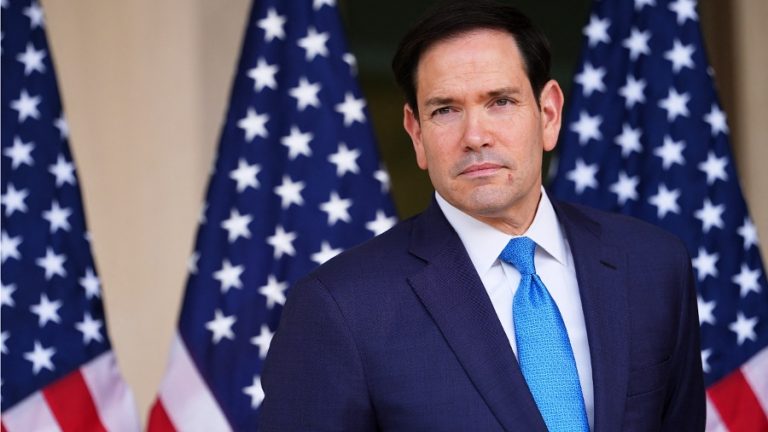
When asked directly about the possibility of purchasing Greenland or offering payments to its residents, the White House declined to deny the reports. Instead, it referred journalists to public remarks made earlier in the week by White House spokesperson Karoline Leavitt and Secretary of State Marco Rubio.
The response suggested deliberate ambiguity—neither confirmation nor dismissal—leaving room for further maneuvering and public reaction.
Denmark, by contrast, has remained guarded. The Danish Embassy in Washington declined to comment, while Greenland’s representative office did not respond to inquiries. Their silence reflects both the sensitivity of the issue and the complexity of a sovereignty question that implicates Copenhagen, Nuuk, and Washington simultaneously.

A long and unsettled history
Greenland became a Danish colony in 1721 and gained home rule in 1979. Today, it exercises broad autonomy over domestic affairs, while foreign policy and defense remain under Danish authority.
Trump’s interest in the island is not new. During his first term, he openly floated the idea of purchasing Greenland, triggering sharp backlash from Denmark and widespread international criticism. At the time, the proposal was widely dismissed as unserious.
No formal policy documents have yet been released outlining changes to Greenland’s status, nor have Denmark or Greenland entered official negotiations with Washington. Still, Trump’s renewed insistence and the emergence of detailed internal discussions point to a reassessment underway.
For now, Greenland’s future remains unresolved. The preferences of its residents and political leaders, Denmark’s response, and the reactions of other major powers will all shape how far Washington can realistically push the issue.
Whether these discussions remain confined to staff-level planning or evolve into formal diplomatic engagement is uncertain. What is clear is that Greenland has moved from the margins of U.S. strategic thinking to a place much closer to its center.