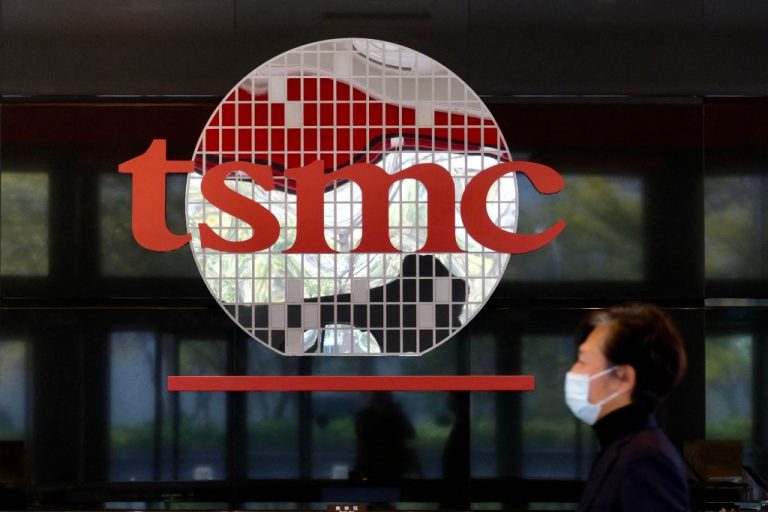
The New York Times, citing several informed sources, reported that Taiwan and the United States are close to reaching a trade agreement. Under the deal, U.S. import tariffs on Taiwanese goods would drop to 15 percent, and TSMC would increase its investment in the U.S., building at least five more semiconductor factories. This is expected to further strengthen Taiwan-U.S. relations.
Professor Yeh Yao-yuan, a lecturer in international studies at the University of St. Thomas in the U.S., said this is a major victory in Taiwan’s tariff negotiations (since South Korea and Japan did not secure similar conditions). TSMC’s increased investment in the U.S. will make Taiwan-U.S. relations closer.
Professor Yeh analyzed that the Lai administration successfully maintained Taiwan’s current basic import restrictions on the U.S. In other words, previous concerns that fully opening the market to U.S. products at zero tariffs—especially in agriculture—would cause major shocks will not materialize. This is a major victory in Taiwan’s tariff negotiations (as South Korea and Japan do not have such conditions).
Professor Yeh believes that what U.S. President Trump cares about most is TSMC’s productivity in the U.S. Therefore, as long as TSMC increases investment in the U.S., the tariff agreement can move forward. Investments by other industries in the U.S. seem less important. Nevertheless, since the U.S. is the world’s largest market, the trend of Taiwanese businesses moving significant operations to the U.S. is likely to continue.
Professor Yeh emphasized again that TSMC increasing investment in the U.S. will not turn it into “U.S. TSMC,” because TSMC’s core resource is engineers trained in Taiwan, many of whom “simply do not want to live in the U.S.”
Success
You are now signed up for our newsletter
Success
Check your email to complete sign up
The U.S. education system cannot currently replicate Taiwan’s electrical engineering training model, so conceptually, there is no need to worry. Moreover, increased talent exchanges and interaction between the two countries will further strengthen Taiwan-U.S. relations.
Financial Supervisory Commission (FSC) assesses risks to the financial sector as controllable
According to FSC statistics, as of the end of November 2025, the financial sector’s exposure to the U.S. totaled NT$14.0275 trillion. Life insurance exposure was NT$9.6824 trillion, domestic banks’ exposure was NT$4.2384 trillion, and securities, futures, investment trust, and advisory firms’ exposure was NT$106.7 billion.
Wang Yun-chung, Deputy Director of the FSC Banking Bureau, explained that the FSC conducted regular supervisory stress tests last year. Under severe scenarios considering domestic and international economic growth, rising default rates, and declines in real estate and stock markets, banks’ capacity to withstand U.S. tariffs and financial market uncertainties was examined. The results show that banks remain robust under stress scenarios. Regardless of whether tariffs are 20 percent or 15percent, the impact on banking risks is controllable.
Huang Zhong-hao, Deputy Director of the FSC Securities and Futures Bureau, pointed out that U.S. tariff measures are still uncertain. The total exposure of the securities, futures, and investment trust/advisory sectors to the U.S. is NT$106.7 billion, mainly from proprietary investments, accounting for about 12.47 percent of total net assets, which is within a controllable range. The FSC also reminds industry participants to respond prudently to changes in the international situation and geopolitical developments.
Gu Kun-rong, Secretary of the FSC Insurance Bureau, explained that current U.S. tariff measures have no direct potential impact on the insurance industry. The FSC continues to monitor the effects of tariff policies on insurance and assist the industry in facing systemic risks. Life and non-life insurance associations are conducting surveys to see if the insurance sector can assist industries—for example, by offering rent reductions to real estate tenants or extending loans to property borrowers.