
By David, Vision Times
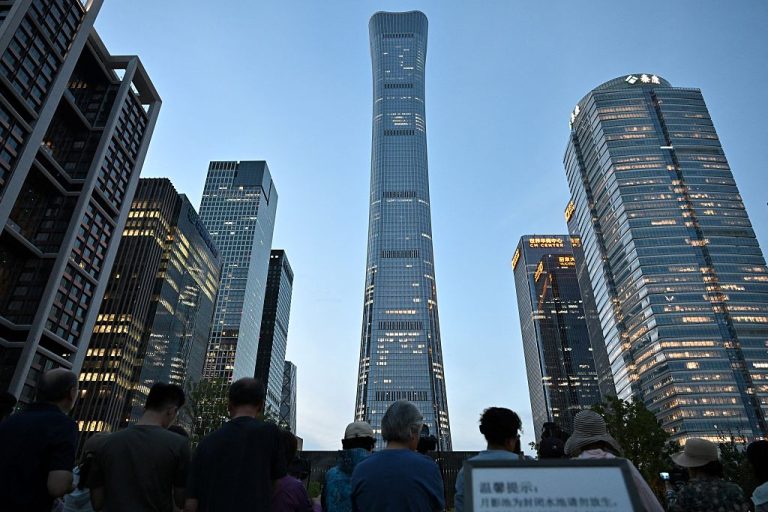
On the evening of June 26, an Aurora SA60L light sport aircraft reportedly deviated from its intended flight path before losing contact with air traffic control. The aircraft then flew uninterrupted into central Beijing, ultimately crashing into CITIC Tower (China Zun), the tallest building in the Chinese capital.
The rare low-altitude aviation incident reportedly left one person dead and several others injured while sending debris cascading through one of Beijing’s busiest commercial districts. More significantly, the aircraft remained airborne over the capital for an extended period despite flying only a few kilometers from China’s political center.
Though authorities have not publicly explained how the aircraft was able to enter the restricted airspace, the incident has fueled discussion and backlash among observers about whether the crash exposed deeper weaknesses within China’s security apparatus. Three possible explanations have emerged.
RELATED: China Audit Finds 56 Counties Diverted $3.9 Billion in Rural Funds to Repay Debt
1. Bureaucratic paralysis
Success
You are now signed up for our newsletter
Success
Check your email to complete sign up
One possibility is that China’s highly centralized decision-making structure delayed or prevented an effective response. Beijing’s political core is widely believed to be protected by multiple layers of sophisticated air defense systems. Yet a slow-moving civilian aircraft reportedly flying at little more than 100 kilometers per hour encountered no visible interception before impact.
Critics argue that within a system where major decisions are concentrated at the highest levels, officials may hesitate to authorize the use of force without explicit approval from senior leadership. The political consequences of mistakenly engaging a civilian aircraft would be enormous, making lower-ranking commanders reluctant to act independently.
Emergency situations require decisions within seconds or minutes. If information must travel through multiple layers of command before authorization is granted, valuable response time can disappear. In such a scenario, bureaucratic caution rather than technical limitations could become the primary obstacle to action.
2. Institutional weaknesses
A second explanation focuses on the possibility of declining operational readiness despite China’s substantial investment in modern air defense capabilities. On paper, Beijing possesses advanced missile systems, close-range defense weapons, and electronic countermeasure technology. However, analysts have long noted that equipment performance during real-world emergencies can differ significantly from capabilities demonstrated during carefully choreographed exercises.
Questions have also been raised about maintenance standards and operational preparedness. Some observers speculate that equipment may be maintained primarily to satisfy inspections rather than ensure genuine combat readiness, while procurement inefficiencies or budget constraints could reduce effectiveness.
Personnel readiness presents another challenge. Responding to a slow-moving civilian aircraft differs significantly from defending against conventional military threats. Operators may have limited practical training for these unconventional scenarios, potentially leading to hesitation, system failures, or unsuccessful attempts to identify and track the aircraft.
3. Security blind dpots
A third possibility centers on structural weaknesses created by China’s highly restrictive security model. During politically sensitive events, Beijing enforces extraordinary security measures, including strict controls over drones, pigeons, open flames, and even activities along major thoroughfares. Such extensive controls might suggest that contingency plans exist for nearly every conceivable threat.
However, some analysts argue that this emphasis on maintaining political stability has historically concentrated resources on monitoring people and suppressing perceived domestic risks, particularly during major events. By comparison, low-altitude civilian aviation threats requiring coordination among military, civil aviation, and local authorities may have received far less attention.
Critics further contend that rigid bureaucratic culture discourages agencies from establishing cross-departmental coordination without explicit direction from senior leadership. If no standing protocol existed for a rogue light sport aircraft entering restricted airspace, officials may have been reluctant to improvise out of concern for political accountability.
Political fallout
Regardless of the official findings, the incident has intensified scrutiny of China’s security establishment. The aircraft struck a commercial skyscraper rather than a government compound. Had its course continued toward Zhongnanhai, the leadership compound housing China’s top officials, the consequences could have been far more serious.
Whether the ultimate cause proves to be bureaucratic paralysis, institutional shortcomings, or gaps in emergency planning, the incident represents an unusually high-profile challenge to the image of absolute security surrounding China’s capital.
In addition, analysts note the crash is likely to trigger extensive political accountability measures across China’s civil aviation authorities, air defense forces, the Beijing Garrison, and municipal security agencies as officials seek to identify responsibility and prevent a similar breach from occurring again.
Editorial note: Views expressed in this article are the opinions of the author and do not necessarily reflect the views of Vision Times.