New flight-tracking data suggests that the light aircraft which crashed into Beijing’s landmark CITIC Tower (China Zun) on June 26 narrowly avoided colliding with a commercial airliner just minutes before impact, adding another alarming dimension to one of China’s most closely watched aviation incidents.
According to a June 30 report by Bloomberg, flight data from Flightradar24 shows the aircraft briefly entered the flight path of a Hainan Airlines passenger jet while approaching Beijing. At their closest point, the two aircraft were separated by just 457 meters (1,500 feet).
The passenger aircraft reportedly executed an evasive maneuver, avoiding what could have become a catastrophic midair collision. Bloomberg noted that the near miss had not been previously reported. Neither Hainan Airlines, the Civil Aviation Administration of China (CAAC), nor Beijing Capital International Airport immediately responded to requests for comment.
RELATED: Beijing Plane Crash Exposes Cracks in China’s Air Defense and Crisis Response
Slew of flights disrupted
Analysis of the aircraft’s flight path indicates that the light plane entered the arrival corridor for Beijing Capital International Airport, one of China’s busiest aviation hubs, where aircraft typically take off or land every 30 seconds.
Success
You are now signed up for our newsletter
Success
Check your email to complete sign up
As a result, at least two incoming flights were forced to abort their landing approaches, while several others were redirected after air traffic controllers instructed arriving aircraft to alter their approach paths.
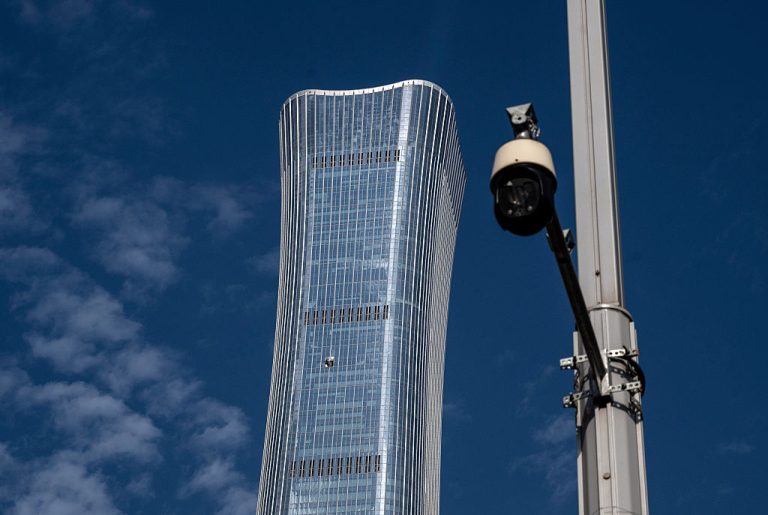
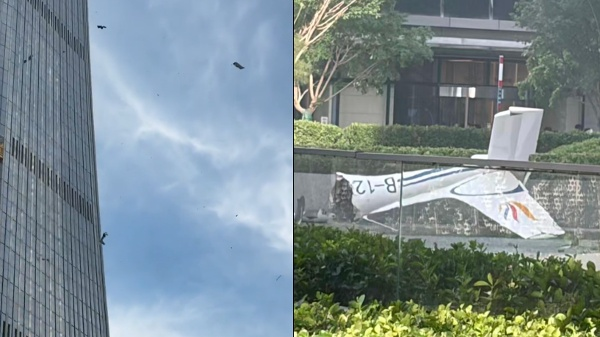
The new details have intensified questions over how the aircraft was able to enter one of China’s most tightly controlled airspaces before ultimately crashing into the 528-meter-tall CITIC Tower, leaving the pilot dead and 13 people on the ground injured.
The incident has already had significant repercussions for China’s general aviation industry. According to Hong Kong’s Ming Pao, flight clubs across China said nearly all general aviation operations, except emergency rescue missions, had been suspended following the crash.
Nationwide restrictions
The Financial Times reported that operators nationwide had been instructed to halt flights involving privately operated fixed-wing light aircraft. Several operators told the newspaper their aircraft had remained grounded since the evening of June 26.
A skydiving club in Danzhou, Hainan Province, said it suspended parachuting and paragliding activities after receiving notice of a nationwide airspace control order affecting recreational aviation. The employee, who requested anonymity, said no timetable had been provided for lifting the restrictions.
Meanwhile, an aviation club in Chengdu said its fleet would remain grounded until receiving authorization from the CAAC, while a glider operator near Beijing cited the same nationwide directive suspending glider flights. The CAAC did not immediately respond to requests for comment.
The impact has not been uniform across all sectors. A drone training school in Beijing’s Yanqing District said it had suspended all outdoor flight activities and shifted instruction indoors after receiving official notice on June 28.
However, a drone hobbyist in Shenzhen reported encountering no restrictions while flying on June 27, and drone training schools in Shenzhen, Guangzhou, and Foshan said classes were continuing as scheduled.
Information vacuum
Several days after the crash, authorities had yet to explain what caused the accident. Beyond a brief statement from Beijing’s Chaoyang district government, later reposted by the state-run Beijing Daily, officials released little additional information. Major state media outlets, including Xinhua and China Central Television (CCTV), did not report on the incident, while discussion of the crash was removed from Chinese social media altogether.
The BBC also reported that at least three aviation companies said they had been instructed to suspend light aircraft operations but declined to provide further details, saying they had been directed not to discuss the incident publicly. The limited official disclosure has fueled growing speculation over how a small civilian aircraft was able to enter the airspace of one of the world’s most heavily guarded capitals.
Carnegie China nonresident scholar Ja Ian Chong compared the incident to the 1987 flight by West German amateur pilot Mathias Rust, who landed a small aircraft near Moscow’s Red Square, exposing serious weaknesses in the Soviet Union’s air defense network. “His flight and landing exposed severe weaknesses in the Soviet air defense system,” Chong said. “That incident led to the dismissal of several senior officers responsible for air defense and security.”
He suggested the Beijing crash could have similar political consequences. “A small aircraft crashing into CITIC Tower means a drone or missile could potentially do the same,” Chong said. “That’s an embarrassing prospect for the agencies responsible for Beijing’s security.”