By Tian Jingxin
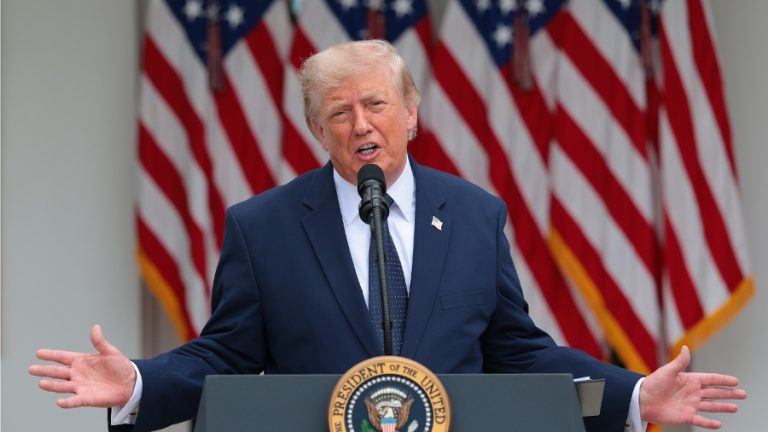
On Wednesday, Jan. 14, U.S. President Donald Trump reiterated that the federal government will, starting Feb.1, 2026, stop allocating federal funds to all so-called “sanctuary cities.” The move aims to compel local jurisdictions to cooperate with federal efforts to deport illegal immigrants.
According to the executive order signed by Trump, any “sanctuary city,” county, or state that restricts local law enforcement from cooperating with the federal Immigration and Customs Enforcement (ICE) or refuses to provide information on detained illegal immigrants will lose eligibility for multiple federal funding programs starting Feb. 1.
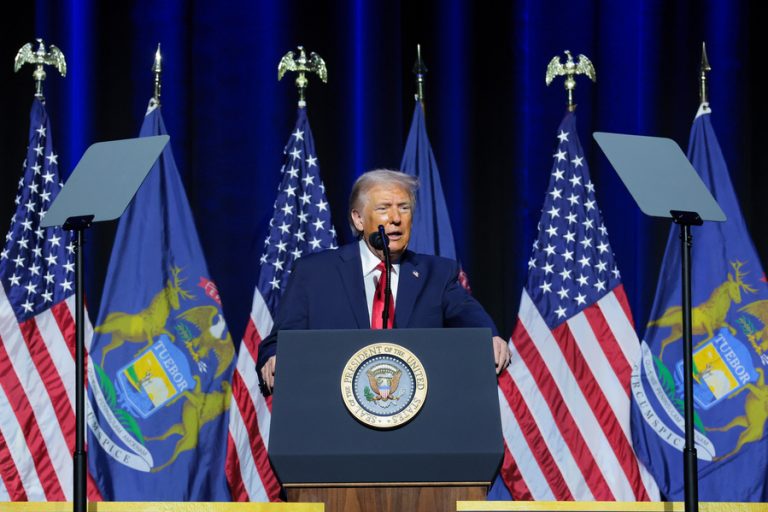
In a speech on Tuesday at the Detroit Economic Club, Trump said: “Starting Feb. 1, we will no longer make any payments to sanctuary cities or states with sanctuary cities because they go to great lengths to protect criminals and harm the interests of American citizens, fostering fraud, crime, and a variety of other problems.”
He added, “Therefore, we will not make any payments to any person or institution that supports sanctuary cities.”
Success
You are now signed up for our newsletter
Success
Check your email to complete sign up
Back in Washington, when reporters asked Trump what types of funds would be affected on Feb.1, he replied: “You’ll know very soon. The impact will be huge.”
Reports indicate that affected funds include not only the Department of Justice’s public safety grants but also key allocations from the Department of Homeland Security and other funding related to local infrastructure. Cities that have long implemented sanctuary policies, such as New York, Chicago, Los Angeles, and San Francisco, will face the most immediate financial impact.
Funding cuts hit sanctuary jurisdictions amid fraud claims
Currently, the White House has not released a detailed list of the funds affected by this order, but emphasized that Feb. 1 is a hard deadline for stopping fund disbursements. Last year, the Department of Justice published a list including more than 30 states, cities, and counties identified as sanctuary jurisdictions. The vast majority of these areas are controlled by the Democratic Party, including California, Connecticut, and New York; cities like Boston and New York; and counties such as Baltimore County in Maryland and Cook County in Illinois.
In recent weeks, the federal government has already halted funding for multiple programs and has faced legal challenges.
The U.S. Department of Agriculture warned states that refuse to provide data on recipients of the Supplemental Nutrition Assistance Program (SNAP) that their administrative funding will be withheld but did not provide many details.
Last week, the U.S. Department of Health and Human Services announced that it would suspend funds for child care subsidies and other assistance for low-income children in five Democratic-led states due to suspected fraud.
Minnesota recently experienced a major national scandal known as the “Feeding Our Future” fraud case, primarily involving Somali community operators in the state who submitted false claims under federal COVID food subsidy programs. The federal government has increased financial pressure on Minnesota, following the deployment of a large number of federal law enforcement officers to the state to combat illegal immigration.
Last week, the Centers for Medicare & Medicaid Services (CMS) notified Minnesota that it would cut a quarter (25 percent) of federal funding for related healthcare programs. CMS stated that due to allegations of fraud in these programs, it had previously requested corrective plans, which were rejected by the program operators. Therefore, CMS deemed these programs “high-risk” and decided to implement funding reductions as a penalty.
Minnesota officials publicly stated on Tuesday that the state government does not accept the allegations or determinations and has formally filed an appeal against the funding reduction decision.