By Yang Tianzi
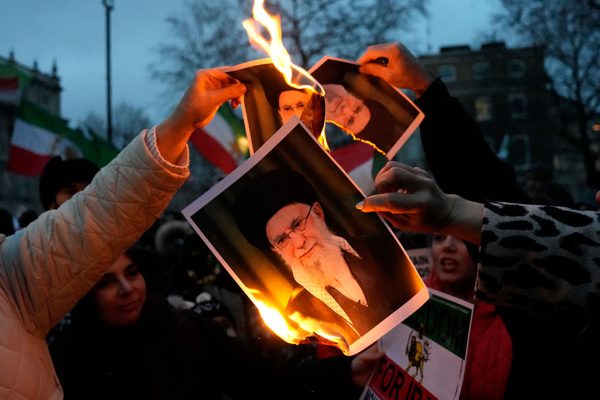
Iranian protests have reached a fever pitch, and the question of when the United States might deploy troops has become the focus of international attention in recent days. On Jan. 14, Iran’s state television publicly aired a provocative video threatening U.S. President Trump, claiming, “This time the bullet will not miss.” At the same time, the U.S. began preemptively evacuating some personnel from key military bases in the Middle East. The convergence of these two events not only highlights that U.S.–Iran relations have deteriorated to a dangerous edge but also signals the possibility of a new round of military confrontation in the region.
Iran state TV sends assassination message against Trump
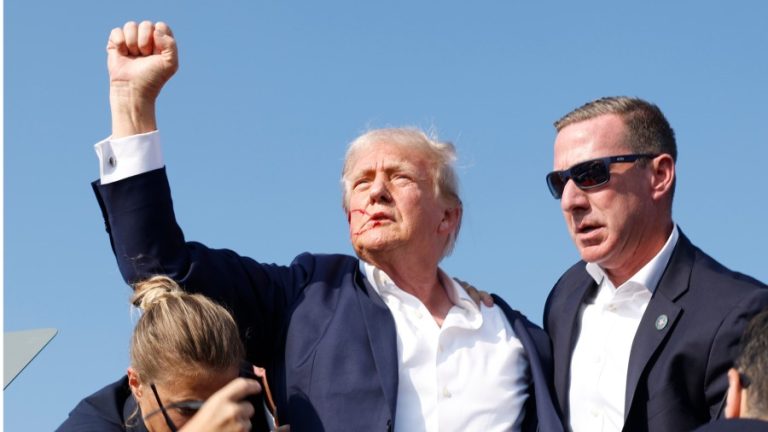
To understand the severity of the current crisis, one must recall the shocking assassination attempt in Butler, Pennsylvania, in July 2024. At the time, Trump was holding an outdoor campaign event in the city when a gunman attempted a rooftop sniper attack. In that life-or-death moment, a bullet grazed Trump’s right ear, causing bleeding, but miraculously he avoided a fatal shot. Even more remarkable, Trump, bloodied, raised his fist and shouted “Fight” under the protection of Secret Service agents—a scene that quickly became one of the most iconic images in U.S. political history.
However, the attack came at a cost. An innocent bystander was killed at the scene, and several others were injured. The event not only shocked American society but also became one of the most influential incidents during the 2024 presidential election, adding dramatic momentum to Trump’s eventual return to the White House. Now, Iran has chosen to replay this footage with added threatening text, clearly engaging in an extremely provocative psychological operation.
On Jan.14, Iran’s state television aired the video, showing Trump surrounded by Secret Service agents after the shooting. More importantly, it included a line of Persian text. According to translations by Israel’s i24NEWS and correspondent Stein of the Jerusalem Post, the English meaning is: “This time the bullet will not miss.” Such a direct and blatant threat is extremely rare in international diplomacy, especially coming from a state-run media outlet.
Success
You are now signed up for our newsletter
Success
Check your email to complete sign up
US preemptively evacuates some personnel from Middle East bases
In response to Iran’s escalating threats, the U.S. quickly took concrete defensive measures. Multiple sources confirmed that some U.S. military personnel stationed at Al Udeid Air Base in Qatar received orders to evacuate by the evening of Jan. 14. The significance of this decision should not be underestimated, as Al Udeid is one of the U.S.’s most important military facilities in the Middle East and a key hub for Central Command operations in the region.
An unnamed U.S. official told the Associated Press that the measure is a “preventive action” based on operational safety considerations. The official declined to provide specific details about the number of personnel, categories, or the evacuation method. However, the requirement for personnel to leave the base in a very short time indicates that U.S. intelligence agencies assess the threat as imminent and credible.
This U.S. action can be interpreted on multiple strategic levels. First, it is a standard risk-management measure aimed at reducing exposure of non-combat-essential personnel to enemy attacks and protecting valuable forces to respond to potential escalation. Second, the evacuation itself sends a strong diplomatic signal to Iran, showing that the U.S. is prepared for the worst and has taken concrete defensive steps.

Iran’s regional threat strategy
Alongside the personal threat to Trump, Iran has extended its intimidation to the broader regional level. According to Reuters, a senior Iranian official stated that Tehran has warned neighboring countries hosting U.S. forces that if Washington takes military action against Iran, Tehran will target U.S. bases on those allies’ soil.
This statement effectively delivers a three-layered threat: to the U.S., signaling that any military action would face regional retaliation; to Gulf allies, warning them not to serve as staging grounds for U.S. operations against Iran; and domestically, projecting an image of Iran standing strong against multiple adversaries. This strategy of making neighboring countries “hostages” aims to put immense pressure on the U.S. alliance system in the Middle East.
The current crisis did not erupt suddenly but is the culmination of decades of U.S.–Iran confrontation. Since the 1979 Iranian Islamic Revolution, relations between the two countries have been hostile. The 2015 Iran nuclear deal once offered hope for easing tensions, but the Trump administration’s unilateral withdrawal in 2018 pushed the relationship back onto a path of confrontation.
The U.S. killing of Qasem Soleimani in January 2020 marked a turning point in U.S.–Iran relations. Soleimani was seen in Iran as a national hero and anti-U.S. symbol. His “decapitation-style assassination” by the U.S. was viewed in Tehran as a profound national humiliation and act of war. Iran has repeatedly vowed revenge for Soleimani, often explicitly naming Trump as a primary target. Therefore, when Iran’s state media aired footage of Trump’s assassination attempt with threatening text, it effectively tied the blood feud from four years ago to the current tense situation.
The current crisis has pushed U.S.–Iran confrontation into a new and more dangerous stage. Iran’s death threats broadcast through state media, coupled with the U.S.’s rapid military adjustments, indicate that both sides now regard the possibility of military conflict as a real threat.
However, full-scale war would be disastrous for both. For the U.S., renewed large-scale military operations in the Middle East would consume immense resources and could divert attention from strategic priorities in the Indo-Pacific. For Iran, a full-scale war with the U.S. would almost certainly severely weaken or even collapse the regime.