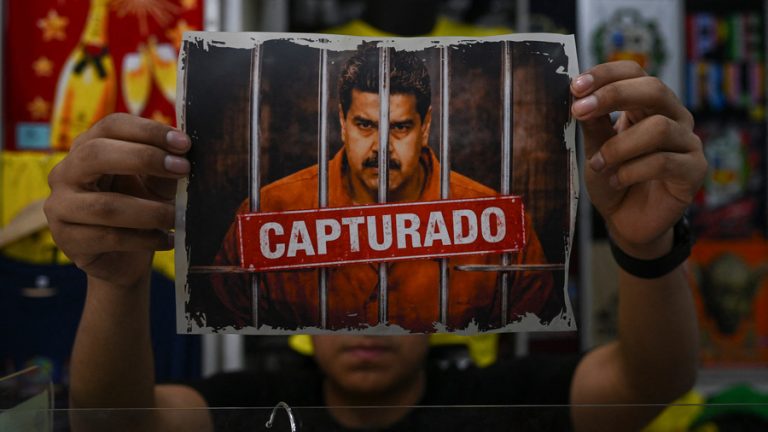
Politico reports that for U.S. federal prosecutors, securing convictions against ousted Venezuelan leader Nicolás Maduro and his wife will be a long and risky legal journey. It could take years before the case even reaches jury deliberations.
Before that, the court must first resolve a series of highly complex legal and geopolitical issues, including whether Maduro’s arrest and transfer to the United States were lawful, and whether he was still Venezuela’s legitimate president at the time of the alleged conduct.
Maduro and his wife, former “first lady” Cilia Flores, are charged with conspiring to smuggle cocaine into the United States, illegal possession of machine guns and explosive devices, and related conspiracy offenses. Maduro himself is also separately charged with “narcoterrorism conspiracy.” Both have pleaded not guilty to all charges.
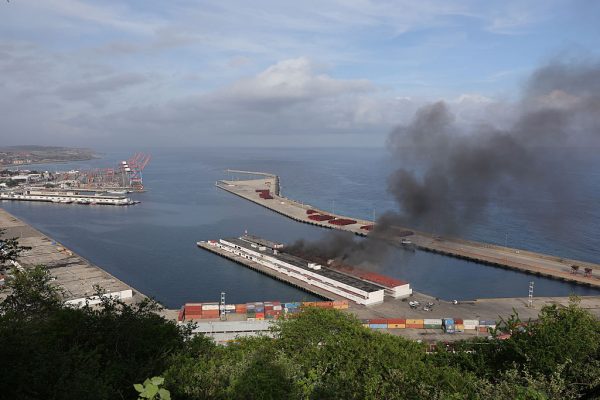
Legality of a ‘military capture’ becomes the first battleground
At an arraignment last week lasting about 30 minutes, Maduro’s attorney, Barry Pollack, made clear that he would mount a “large-scale” pretrial legal fight. He emphasized that Maduro is the head of a sovereign state and is therefore entitled to corresponding privileges and immunities, and that there are serious disputes over whether a “military kidnapping” was lawful.
Maduro himself described himself in court as a “kidnapped president” and a “prisoner of war.”
Success
You are now signed up for our newsletter
Success
Check your email to complete sign up
However, legal precedent does not favor him. A 1989 opinion by the U.S. Justice Department’s Office of Legal Counsel—written by then–Assistant Attorney General Bill Barr—stated that the United States is not necessarily prohibited from carrying out “forcible abduction” abroad to enforce domestic law.
In December last year, the Justice Department’s Office of Legal Counsel during the Trump administration also stated in a partially redacted public opinion that even forcibly removing Maduro through military action (so-called “irregular extradition”) would not automatically undermine the legality of subsequent criminal prosecution.
Several legal experts note that the closest precedent is former Panamanian dictator Manuel Noriega. After being captured by U.S. forces and brought to the United States in 1989, Noriega challenged jurisdiction on the grounds of “illegal capture,” but ultimately lost and was convicted.

Head-of-state immunity dispute: Is he still president?
Maduro insisted in court, “I am still the president of this country.” Flores likewise stated that she remains the “First Lady of the Bolivarian Republic of Venezuela.”
Under long-standing principles of international law, foreign heads of state generally enjoy immunity in the courts of other countries—a principle recognized by the U.S. Supreme Court as early as 1812. Prosecutors, however, appear to have planned ahead.
The indictment repeatedly describes Maduro as a “de facto but illegitimate ruler,” noting that he remained in power after the disputed 2018 election and that since 2019, more than 50 countries—including the United States—have refused to recognize him as Venezuela’s lawful president.
Manhattan federal prosecutor Jay Clayton publicly cited statements by U.S. Secretary of State Marco Rubio, saying that the United States, the European Union, and their allies do not recognize Maduro as a legitimately elected leader—directly weakening the legal basis for his claim of head-of-state immunity.
Reuters also noted that the key to the immunity question may lie in whether the acts Maduro is accused of were carried out “in the exercise of presidential duties.” Many legal scholars believe prosecutors are ultimately more likely to prevail.
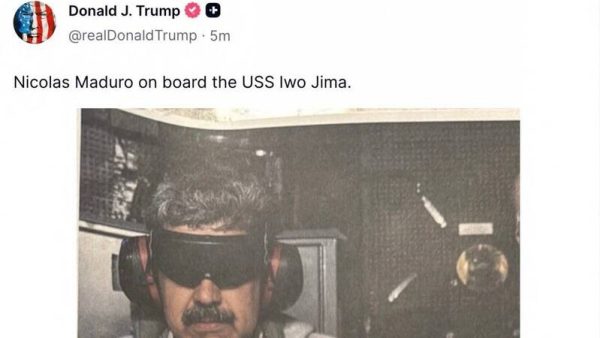
‘Narcoterrorism’ charges carry timing and evidence risks
In the narcoterrorism charges, the indictment lists several organizations alleged to have “collaborated” with Maduro, including the Revolutionary Armed Forces of Colombia (FARC), the National Liberation Army (ELN), the Sinaloa Cartel, the Zetas cartel, and the Tren de Aragua gang.
The problem is that these groups were designated by the United States as “foreign terrorist organizations” at different times. FARC was designated in 1997 but removed from the list in 2021; the Sinaloa Cartel, Tren de Aragua, and the rebranded Zetas group were not formally designated until February 2025.
Former federal prosecutor Jeffrey Brown, who handled similar cases, noted that this “overlap and gap in timing” could pose real obstacles for prosecutors, potentially triggering legal challenges and affecting factual findings.
In addition, some defense attorneys have pointed out that the indictment contains relatively few details directly linking Maduro to specific drug trafficking or terrorist acts. Prosecutors may ultimately need to strike a balance between protecting the safety of informants and strengthening the evidentiary record.