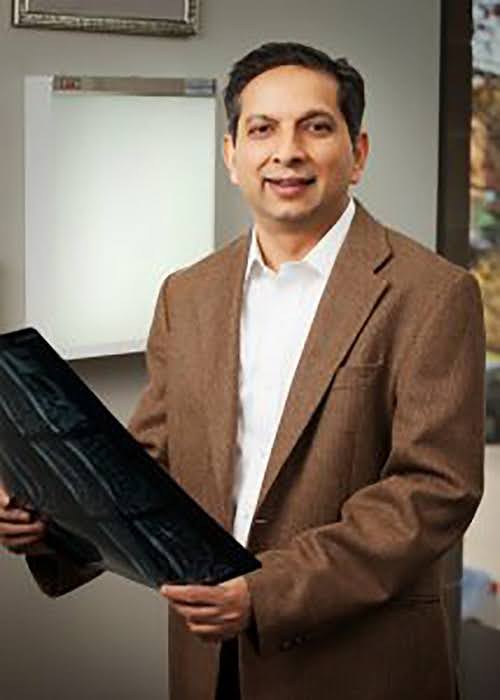
For many people living with chronic back or leg pain, the fear of surgery can be overwhelming. Dr. Ajay Kumar, MD, a pain management specialist with more than three decades of medical experience, says surgery is often not the first—or necessary—solution.
Dr. Kumar practices at New Jersey Advanced Pain Management, with offices in Matamoras, Pennsylvania; Hackettstown, New Jersey; and Warwick, New York. He has served patients in the region for nearly 20 years.
“I did my MD in India, and I was an orthopedic surgeon there,” Dr. Kumar said. “When I came to the U.S., I trained in pain management and physical medicine. Now I do interventional pain—we treat acute and chronic pain, mostly chronic pain.”
Common causes of back and leg pain
Dr. Kumar explained that the cause of pain often depends on age.
“In younger patients, it’s often a disc herniation pressing on a nerve,” he said. “That can happen from daily activities, lifting something heavy, or sports.”
Success
You are now signed up for our newsletter
Success
Check your email to complete sign up
For older patients, arthritis is more common. “In elderly patients, arthritis causes narrowing of the spine—we call it spinal stenosis,” he explained. “These are the two most common causes of back and leg pain.”
Many of his patients are in their 30s and 40s. “They get injured at work, they fall, or something from earlier in life gradually gets worse,” he added.
Avoiding surgery whenever possible
Helping patients avoid surgery is a central goal of Dr. Kumar’s practice.
“We try non-narcotic medications, physical therapy, and minimally invasive injections,” he said. “I would say 80 to 90 percent of people can avoid surgery with these methods.”
While surgery is sometimes necessary, “the majority of patients do get better without it,” he noted.
Personalized care and advanced treatments
Dr. Kumar emphasized that pain management is never one-size-fits-all.
“Each patient is different,” he said. “We examine the patient, take their history, and usually order an MRI. That helps us determine whether the problem is a disc issue, arthritis, or spinal stenosis. From there, we develop an individualized treatment plan.”
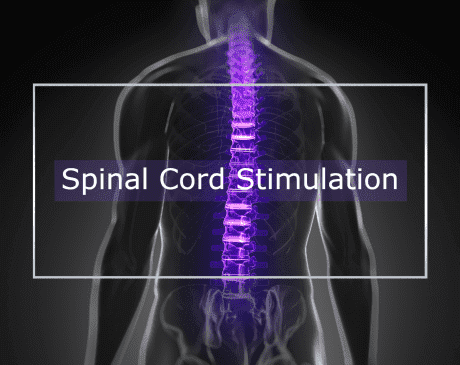
For more complex cases, Dr. Kumar incorporates advanced technologies such as spinal cord stimulation and ultrasound-guided procedures. He also performs endoscopic disc procedures, which allow doctors to remove damaged discs without opening the back.
“Spinal cord stimulation is used for patients who have had surgery and are still in pain, or for those with severe nerve damage who haven’t responded to other treatments,” he explained.
“These procedures are very minimally invasive,” Dr. Kumar added. “Patients often go home the same day,” a reflection of how modern technology has significantly improved outcomes for people with severe or long-term pain.
When to seek help—and how to prevent pain
Dr. Kumar advises patients not to delay care. “Any pain that doesn’t improve in three to four weeks should be evaluated,” he said. “You don’t want it to become chronic. The sooner, the better.”
He also stressed the importance of lifestyle habits. “Maintaining a healthy weight reduces pressure on the spine,” he said. “Smoking is very bad for the spine—it degenerates the disc.”
Regular exercise, flexibility training, and good blood sugar control for diabetic patients can also help prevent pain.
A message to the community
For those hesitant to seek treatment, Dr. Kumar offered reassurance.
“They should not be fearful,” he said. “Once patients understand their condition, they’re in a much better position to make decisions and help themselves.”
About Dr. Ajay Kumar
Dr. Ajay Kumar, MD, is board certified in Physical Medicine and Rehabilitation and a diplomate of the American Board of Pain Medicine. He earned his medical degree from the All India Institute of Medical Sciences in New Delhi and completed his residency at Temple University Hospital in Philadelphia. He speaks Hindi, Punjabi, Spanish, and Urdu and is currently accepting new patients.