By Gao Yun
U.S. President Donald Trump’s latest statements on Greenland have triggered acute concern across Europe, prompting several governments to plan an emergency summit this week to assess possible countermeasures, including the activation of the European Union’s so-called “trade bazooka” mechanism.
According to two European officials who spoke to the Associated Press on Monday, Jan. 19, Trump recently wrote to Norwegian Prime Minister Jonas Gahr Støre indicating that he no longer believes he must think about international affairs “only from a peaceful angle.”
Although the letter has not been made public, multiple media outlets—citing individuals familiar with its contents—reported that Trump wrote: “In light of your country’s decision not to award me the Nobel Peace Prize, despite the fact that I stopped eight wars and many more conflicts, I no longer feel obligated to always think from a peaceful perspective. Peace remains important, but I will now also consider what actions are most beneficial and most appropriate for the United States.”
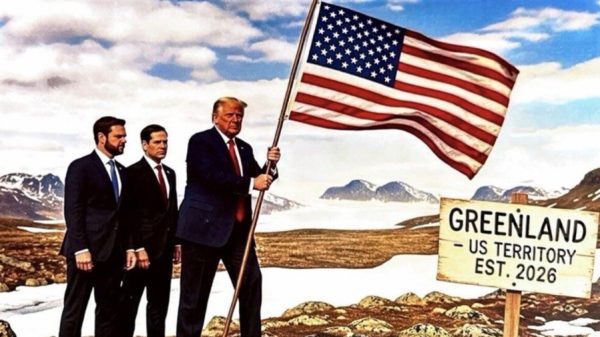
Trump subsequently reiterated his long-standing position that the United States should control Greenland, declaring: “Unless we have complete control over Greenland, the world is not safe.”
Success
You are now signed up for our newsletter
Success
Check your email to complete sign up
When asked by NBC News whether he was considering the use of military force, Trump replied, “No comment,” declining to rule out any option.
Trade Pressure and Security Rhetoric
On the economic front, Trump pointed to what he described as the symbolic deployment of European forces to Greenland last week, linking the move to the U.S. “Golden Dome” missile defense system. He stressed that Greenland occupies an “irreplaceable position” within America’s national security architecture.
Trump also announced on Saturday that beginning in February, the United States would impose a 10 percent import tariff on goods from eight European countries. He explicitly tied the decision to those countries’ opposition to U.S. control over Greenland.
At the same time, Trump warned that both Russia and China harbor ambitions to dominate Greenland. He argued that the growing presence of Moscow and Beijing in the Arctic leaves the United States with no choice but to strengthen its leadership in the region to prevent strategic vulnerabilities.
Europe Moves to Coordinate a Response
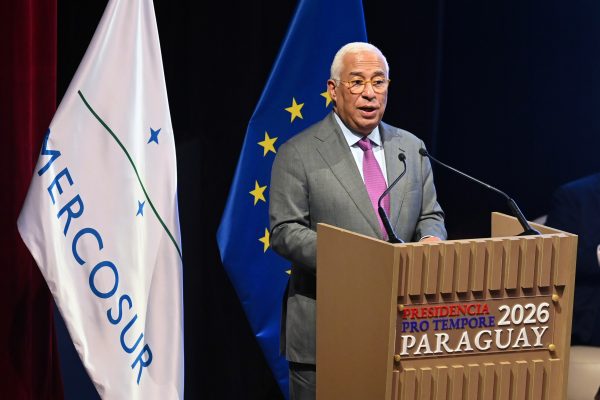
As tensions escalate, European Council President António Costa announced that a special meeting would be convened on Thursday to align member states’ positions and evaluate further responses.
Within NATO, the issue is being closely monitored. On the same day, NATO Secretary General Mark Rutte met with officials from Greenland and Denmark. Following the meeting, Rutte wrote on social media: “We discussed the Arctic, including Greenland, and its importance to our collective security.”
The European Parliament also held discussions on Monday regarding Denmark’s sovereignty over Greenland. Parliament President Roberta Metsola warned that imposing tariffs on the European Union would do nothing to enhance Arctic security and could instead prove counterproductive.

Why Greenland matters to Trump
For decades, Greenland rarely featured at the forefront of global strategic debates. But as polar ice melts, opening new shipping routes and making resources more accessible, the island’s geopolitical and economic significance has risen sharply—something Trump recognized earlier than many other world leaders.
Greenland is a semi-autonomous territory of Denmark and hosts a major U.S. military installation. Located off Canada’s northeastern coast, the island occupies a uniquely strategic position and sits at the core of Arctic defense planning.
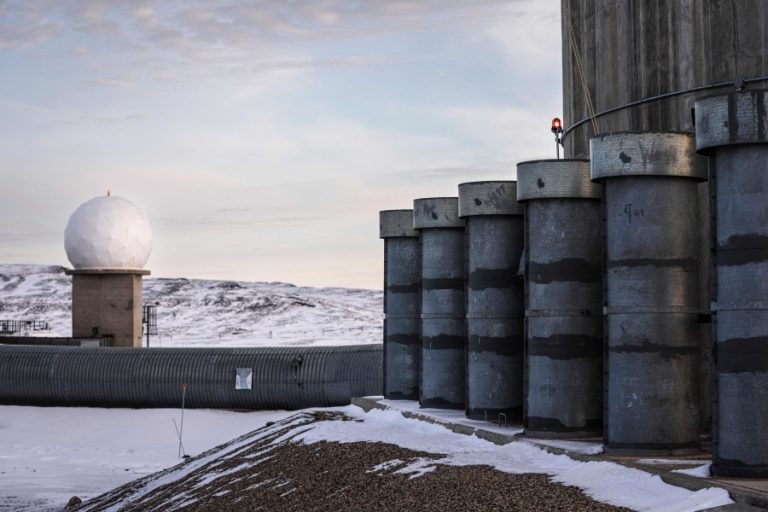
Since 1953, the United States has operated the Pituffik Space Base—formerly known as Thule Air Base—in northern Greenland. The facility is now managed by the U.S. Space Force and plays a critical role in missile warning and space surveillance.
Meanwhile, Russia has established multiple military facilities across the Arctic, while China—since declaring itself a “near-Arctic state” in 2018—has steadily expanded its influence in the region.
As the polar ice cap retreats, new shipping lanes around Greenland could dramatically shorten transit times between North America, Europe, and Asia, reshaping global trade flows. This shift underscores the island’s growing importance in the world’s logistics and transportation systems.
Greenland is also rich in rare earth elements and other critical minerals essential to modern technology and military systems, including electric vehicles, wind turbines, satellites, and missile guidance equipment.
Global rare earth supply chains are currently dominated by China, which accounts for roughly 60 percent of global extraction and more than 90 percent of processing capacity. By contrast, the United States lacks a complete domestic supply chain, making Greenland a potentially vital alternative source.
Geographically, Greenland is vast—nearly equal in size to Alaska and Texas combined—but home to only about 56,000 people, most of whom live in small coastal communities. Roughly 80 percent of the island is covered by an ice sheet formed more than three million years ago, rendering much of the land uninhabitable.
Yet despite its sparse population, Greenland’s immense territory is becoming ever more central to the strategic calculations of major powers. Beyond shipping lanes and resource competition, the island now sits at the heart of intensifying geopolitical rivalry among the United States, Russia, and China in the Arctic.