By Yang Tianzi
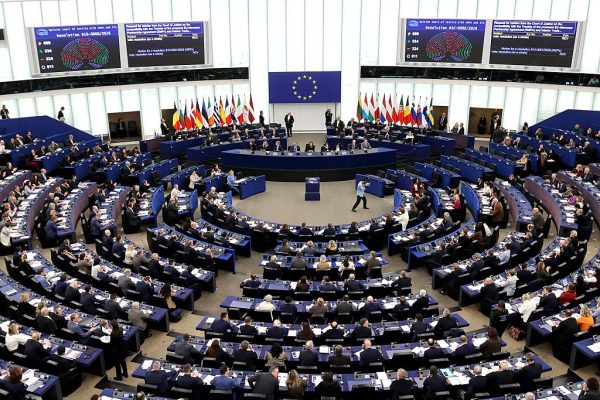
The global trade landscape has once again encountered a major shock. According to sources close to the European Parliament’s International Trade Committee, the European Parliament plans to suspend the ratification of a major trade agreement reached with the United States last July. The decision is expected to be officially announced Wednesday in Strasbourg, France, marking a sharp deterioration in U.S.-EU relations after a brief period of easing.
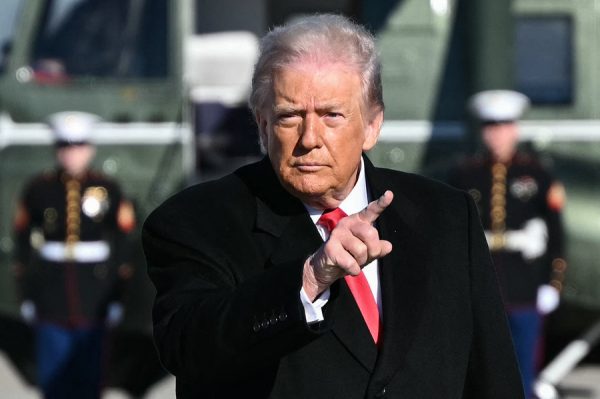
The current crisis was triggered by U.S. President Donald Trump’s recent pressure on Europe over Greenland acquisition issues, threatening new tariffs on European goods if his objectives were not met. Europe views this move as a direct challenge to international law and the sovereignty of member states, infuriating Brussels.
Transatlantic relations hit rock bottom, markets in turmoil
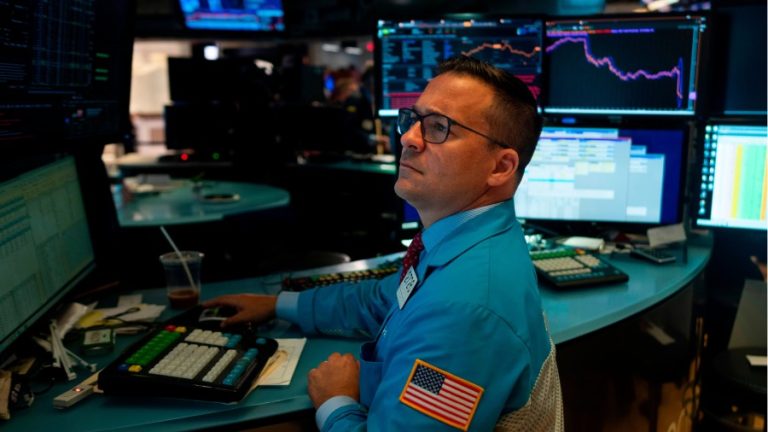
The political deadlock quickly spilled over into global financial markets, triggering panic selling among investors. On Tuesday, stock markets on both sides of the Atlantic fell sharply, with European markets declining for a second consecutive day. In the U.S., the three major indices were hit hard: the Dow Jones Industrial Average fell over 1.7 percent, the S&P 500 dropped more than 2 percent, and the Nasdaq Composite closed down around 2.4 percent.
In Asia-Pacific markets on Wednesday, performance was mixed. Major indices in Japan and Hong Kong showed slight declines, reflecting investor caution over the global trade outlook. In contrast, Hong Kong and mainland Chinese markets saw modest gains, possibly reflecting market expectations that China could gain a strategic advantage amid U.S.-EU tensions.
Success
You are now signed up for our newsletter
Success
Check your email to complete sign up
In this atmosphere of extreme uncertainty, traditional safe-haven assets performed strongly. Gold prices continued to climb, historically surpassing $4,800 per ounce (approximately £3,570). Silver prices, though slightly retreating from Monday’s record above $95 per ounce, remained at extremely high levels. The sharp rise in gold and silver over the past year clearly reflects escalating global geopolitical and economic uncertainties.
Foreign exchange markets also experienced significant volatility. While the U.S. dollar remained relatively stable against major currencies, it had previously fallen 0.5 percent overnight—the largest single-day drop since early December—highlighting market concerns that U.S. trade policy could backfire on its own economy.
The Turnberry Agreement: from hope to disillusionment
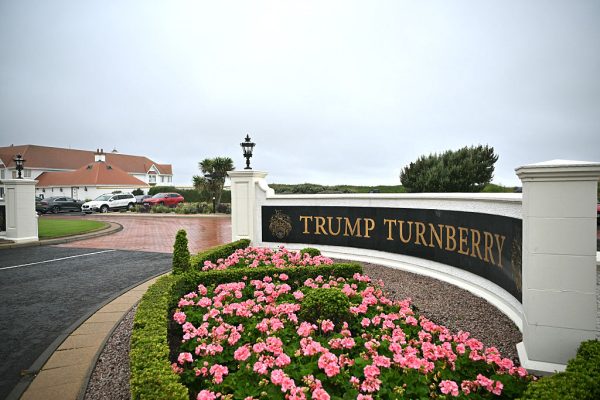
To understand the severity of the current crisis, one must review the Turnberry Agreement reached last July. The deal, finalized at Trump’s Turnberry Golf Resort in Scotland, was seen at the time as an important breakthrough to ease U.S.-EU trade tensions.
Under the agreement, U.S. tariffs on most European goods were set at 15 percent, significantly lower than the 30 percent threatened during Trump’s April “Freedom Day” tariffs. In exchange, the EU agreed to large-scale U.S. investment and economic reforms in Europe favorable to U.S. exports. This mutually beneficial arrangement was once regarded as a new starting point for U.S.-EU economic relations.
However, within just a few months, the agreement’s fate became uncertain. German MEP Manfred Weber stated clearly: “At this stage, approval is impossible.” His position reflects the growing opposition within the European Parliament.
Europe takes a hard line: sovereignty non-negotiable
Bernd Lange, Chair of the European Parliament’s International Trade Committee, provided detailed reasoning for suspending the agreement. He noted that given U.S. threats over Greenland, Europe “has no choice” but to pause the ratification process.
Lange said bluntly: “By threatening the territorial integrity and sovereignty of EU member states and using tariffs as a coercive tool, the US has undermined the stability and predictability of EU-U.S. trade relations. Until the U.S. decides to return to cooperation rather than confrontation, we have no choice but to suspend consideration of the two Turnberry-related legislative proposals.”
French President Emmanuel Macron delivered a hardline speech at the World Economic Forum in Davos, stating that the U.S.’s “endless accumulation of new tariffs” is “completely unacceptable, especially when these tariffs are used as leverage to pressure territorial sovereignty.” His remarks reflect European anger at U.S. unilateralism and a firm commitment to protect EU sovereignty and dignity.
Feb. 7: a key trade deadline
The current situation is pushing U.S.-EU relations toward a critical deadline: Feb. 7, 2026. Previously, in response to Trump’s “Freedom Day” tariffs, the EU had drawn up a retaliatory list, planning tariffs on €93 billion ($1.09 trillion, £81 billion) worth of U.S. goods.
During Turnberry negotiations, the EU agreed to temporarily hold off on implementing these retaliatory measures. However, this grace period ends on Feb. 6, meaning that unless the EU extends the deadline or approves a new agreement, the tariffs will automatically take effect on Feb. 7.
EU leaders, including Macron, are reviewing possible retaliation options, with the most notable being the so-called “Trade Bazooka” anti-coercion mechanism. This tool is designed to provide the EU with strong measures to counter economic coercion from third countries. Its activation would mark a new, more confrontational phase in U.S.-EU trade relations.
US response
Facing Europe’s hardline stance, US officials have shown a mix of strategies. Treasury Secretary Scott Bassett attempted to ease tensions at Davos, urging European leaders to “keep an open mind,” adding: “Relax, take a deep breath, don’t retaliate. The president will arrive tomorrow and convey his message clearly.”
However, other U.S. officials were more assertive. Commerce Secretary Howard Lutnick and U.S. Trade Representative Jamison Greer explicitly warned that the U.S. would not stand by if Europe retaliates. Greer stated: “In my experience, countries generally do well when they follow my advice; if not, things tend to get crazy.”
Global trade system under strain
The U.S. and the EU, a bloc of 27 member states, are each other’s largest trading partners. In 2024, total bilateral trade exceeded €1.6 trillion ($1.9 trillion, £1.4 trillion), accounting for nearly one-third of global trade. Such economic interconnection means any major trade conflict would have profound global consequences.
The current U.S.-EU trade conflict is not just a bilateral issue—it carries deep implications for the future of the global trade order. If these two traditionally free-trade economies enter a prolonged trade war, it may prompt other countries to adopt protectionist measures, ultimately harming global economic growth.
Historically, when Trump first announced tariffs, multiple political leaders, including in Europe, threatened retaliation. In the end, only China and Canada took actual retaliatory action, with Canada quietly withdrawing most measures last September, fearing harm to its own economy.
Canadian Prime Minister Mark Carney urged “medium powers” to unite, warning: “When we negotiate only bilaterally with hegemonic powers, we negotiate from a weak position. We accept the conditions offered and compete to see who is more compliant. This is not sovereignty—it is superficial sovereignty, effectively accepting subordinate status.”
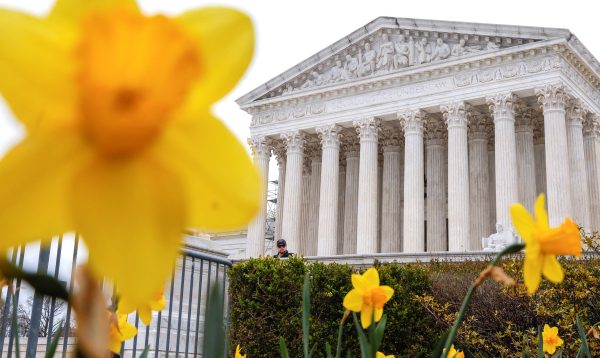
Behind the trade tension are important legal variables. The U.S. Supreme Court is set to rule on the legality of several tariffs announced by Trump last year. This ruling could fundamentally affect the trade dispute, adding further uncertainty to negotiations.
U.S. and EU leaders currently face critical choices. Europe’s suspension of the agreement is a strong response to U.S. threats but leaves room for negotiation. With the Feb. 6 deadline approaching, whether both sides can find a solution beforehand will shape the global trade landscape for months or even years to come.
Volatile financial markets, record-high gold prices, and global investor unease underscore the seriousness of this conflict. In an interconnected global economy, a full-scale trade war would harm both sides and inflict incalculable damage on the global economy.
The coming weeks will be crucial. Whether the parties escalate confrontation or return to the negotiating table will not only determine the trajectory of U.S.-EU relations but also the future of the global trade order.