By Li Muzi
Allegations related to organ harvesting in China, long the subject of international scrutiny, have drawn renewed attention among mainland internet users following the appearance of helicopters at or near hospitals and university campuses in multiple cities.
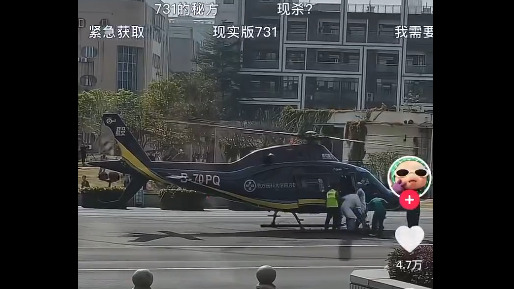
Videos circulating on Chinese social media platforms show helicopters landing or hovering near medical facilities in Guangzhou, Xiamen, and Qingdao. In each case, netizens speculated online that the aircraft may have been involved in transporting human organs. Many of the posts were later removed or restricted.
Helicopter spotted near Southern Medical University in Guangzhou
According to social media posts dated Jan. 17, a helicopter was seen landing near the Guangzhou campus of Southern Medical University. A video shared online and described by the uploader as “unedited” shows a helicopter preparing for takeoff while several individuals—some wearing white lab coats and others in plain clothes—load box-like items from a cart onto the aircraft. A person believed to be a security guard was also present.
The footage prompted a large number of highly charged comments in on-screen message overlays. Some netizens used phrases referring to “organs,” “fresh parts,” or “air transport,” while others questioned whose organs were being taken or expressed alarm and anger.
Success
You are now signed up for our newsletter
Success
Check your email to complete sign up
In the comment section, some users posted speculative claims about organ procurement and transplant procedures. Other comments escalated into extreme rhetoric. None of these claims could be independently verified.
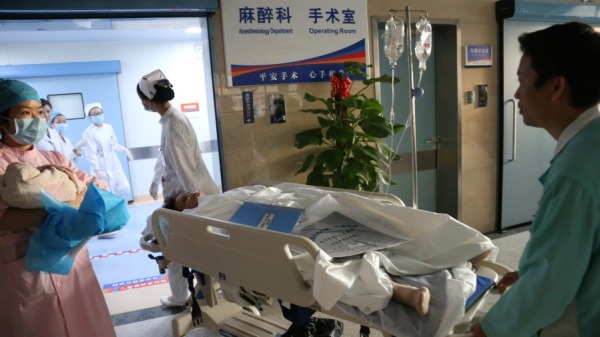
Xiamen hospital helicopter seen lifting a bag from rooftop
On Jan.15, videos emerged showing a helicopter lifting a white bag from the rooftop of Xiamen Hospital of Traditional Chinese Medicine in Fujian Province. Some netizens claimed the bag appeared to be moving and speculated online that it might contain a child.
One video shows a person on the rooftop positioning a white bag marked with a red cross before signaling to the helicopter, which then lowered a hook to lift the bag. Another video circulating online claimed to have enhanced the image, with the uploader asserting that a child could be seen inside the bag.
The videos generated widespread online discussion, with some users expressing shock and fear. Authorities have not publicly responded to the footage, and related posts were later reported to have been censored or removed.
Helicopter blocks traffic in Qingdao during emergency transfer
Videos shared online also show a helicopter landing at a busy intersection in Qingdao, Shandong Province, on Jan. 17, temporarily halting traffic. The helicopter, marked “Shandong Expressway,” was seen waiting as an ambulance arrived and personnel transferred an unspecified item onto the aircraft. The helicopter later reportedly landed on the rooftop of a medical university.
Some netizens questioned who or what was being transported, while others commented on the unusual scale of the operation. The purpose of the transfer was not confirmed.
In one video commentary, a blogger noted that helicopters had recently appeared in multiple cities, landing on roads or hospital rooftops, and questioned whether the flights were related to medical rescue operations or drills.
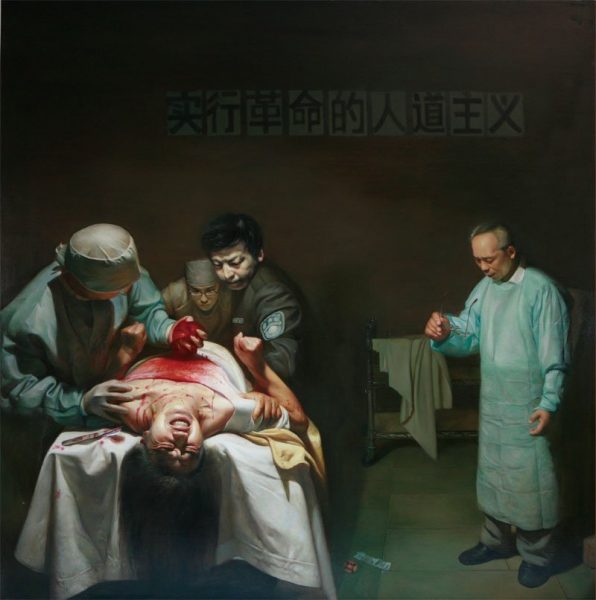
Reports of frequent helicopter activity at Xiangya Second Hospital
Separate videos posted on Douyin showed helicopters repeatedly taking off and landing on the rooftop of Xiangya Second Hospital, affiliated with Central South University in Changsha, Hunan Province. The footage again prompted online speculation about the purpose of the flights.
The individual filming the video remarked sarcastically on the frequency of helicopter activity at the hospital.
In 2024, an intern doctor at the hospital, Luo Shuaiyu, publicly accused the institution of involvement in organ harvesting before later dying under disputed circumstances after a fall. Materials later released online by his parents included claims that hospital officials had asked him to look for child donors. The hospital is directly overseen by China’s National Health Commission. These allegations have not been independently verified.
Hospital helipads and official explanations
Public records show that many large hospitals and regional medical centers across China are equipped with helicopter landing pads. Facilities with helipads are located in major cities including Beijing, Shanghai, Guangzhou, Shenzhen, Hangzhou, Chengdu, Xi’an, Kunming, Nanchang, and Changsha.
Some netizens said additional hospitals are currently constructing rooftop helipads, though related videos were reported to have been suppressed online.
State-run media have said the helipads are intended to create emergency “green channels” for critically ill patients. However, online discussions have questioned whether such facilities are primarily used for emergency care or serve other purposes.
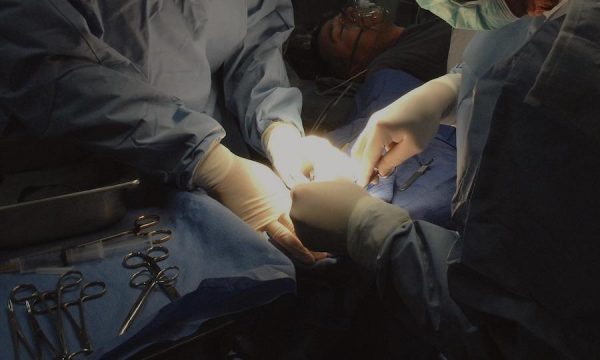
Commentary links organ harvesting allegations to broader tensions
On Jan. 14, former mainland journalist Zeng Jieming wrote on X, using the account name “Xiufeng Zhenren,” that the Chinese Communist Party is facing what he described as a simultaneous ideological and economic breakdown, leaving the regime on the brink of collapse. He argued that the alleged organ harvesting industry— which he compared to a late-stage cancer spreading rapidly through society — could become the final factor pushing the system over the edge.
Zeng said the issue resonates so deeply because forced organ harvesting represents, in his words, a crime that ordinary people find impossible to tolerate. He argued that it strikes directly at parents’ instinct to protect their children, creating a situation with no room for retreat. When, he wrote, political disengagement or even loyalty to the Communist Party offers no protection, and when the fear emerges that a person—or their child—could be killed once an organ match is found, many people would feel they have nothing left to lose.