By Fu Longshan, Vision Times
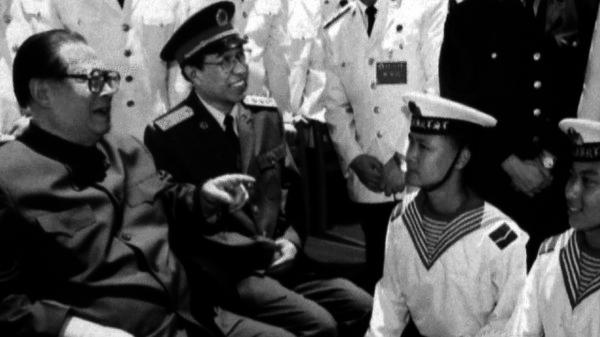
Xu Caihou (1943–2015), a native of Wafangdian in China’s northern Liaoning Province, was derisively nicknamed the “Northeast Tiger” within the People’s Liberation Army (PLA). Personally elevated by Jiang Zemin, Xu became one of Jiang’s key military loyalists used to exercise “behind-the-scenes control” and sideline then–party chief Hu Jintao.
By background, Xu was unremarkable, serving early in the Jilin Military Region. His decisive break came in 1992, when Jiang, seeking to purge the influence of Yang Shangkun and Yang Baibing, needed a dependable inner circle in the military. Xu’s rise was driven less by merit than by what insiders described as “absolute obedience” and political opportunism, propelling him to Beijing and onward to Director of the General Political Department (GPD) and Vice Chairman of the Central Military Commission (CMC).
RELATED: How Chen Yun And Li Xiannian Survived Mao And Controlled China’s Economy
A personnel system captured and monetized
Under the PLA system, personnel appointments below the theater-command level were concentrated in the GPD, firmly under Xu’s control. Division and brigade appointments required nomination through Xu’s apparatus before submission to the CMC office.
Success
You are now signed up for our newsletter
Success
Check your email to complete sign up
According to leaked internal meeting records, Xu and Guo Boxiong adopted a tactic toward Hu Jintao of “reporting outcomes without details.” If Hu sought to promote his own candidates, Xu and Guo would block them on technicalities, “insufficient seniority” or “failed grassroots evaluations,” forcing Hu into dead ends within the system.
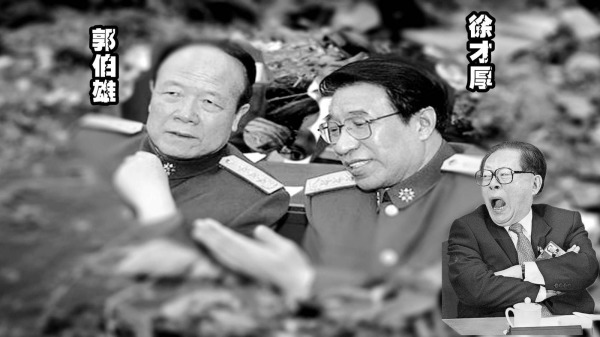
In practice, promotions were decided by who paid more, creating a bottom-up profit chain. Once Xu had sold a post at the prevailing “market price,” any alternative appointment threatened the income stream of the entire faction.
After decades of cultivation, Xu and Guo’s protégés dominated headquarters and major commands, forming what insiders called a closed “money alliance.” Hu Jintao, in CMC meetings, was often isolated.
Cash by the ton: Inside Xu Caihou’s hidden vaults
Leaked party records and insider accounts describe Xu as the PLA’s “top corrupt official,” not only in scale but in method. His cash-hoarding practices resembled a private bank and museum.
On the night of March 15, 2014, investigators raided Xu’s Beijing mansion on Fucheng Road. In a roughly 2,000-square-meter residence, the basement was stacked with RMB, U.S. dollars, and euros. The volume was so vast it could not be counted by hand; officers used electronic scales. Cash alone reportedly weighed over one ton. Piles of Hetian jade, emeralds, fine paintings, and antiques required more than ten military trucks to remove.
Xu also maintained a hidden storage room beneath the August 1 Building, the CMC’s headquarters and ceremonial center near the Military Museum, guarded by his secretary and a female soldier. Xu allegedly promised the soldier a promotion he never delivered. As his downfall loomed, she reportedly drove off with a van loaded with cash. Knowing the money’s origins, Xu did not dare report the theft.
Real estate games
Xu rarely registered assets in his own name, using proxies and relatives instead. Properties across Shanghai, Dalian, and Sanya were held through his wife, daughter, and extended family. One internal review recorded Xu protesting that he owned no Shanghai property, only for investigators to find a luxury apartment registered to his three-year-old grandson.
PLA insiders say Xu’s primary income came from selling offices, openly priced. During his decade controlling military personnel, the PLA became his personal “Xu estate,” including:
- Major General: RMB 5–10 million
- Theater-command commander: Up to RMB 20 million
- Division/regiment levels: From hundreds of thousands to several million, depending on the post
Most payments were delivered in cash, often left unopened, hence the need for trucks and scales. There were exceptions: Gu Junshan, former deputy head of the General Logistics Department, reportedly gifted Xu a Mercedes loaded with 100 kilograms of gold.
Xu’s brazenness stemmed from confidence in a Jiang-aligned protective umbrella, including Guo Boxiong, believing the military was his “independent kingdom,” beyond the Central Commission for Discipline Inspection’s reach.
Endgame without a verdict
In March 2014, Xu was taken from his hospital bed at the PLA General Hospital (301). Party records say he penned a lengthy confession in his final days; its contents remain classified. In 2015, while under indictment, Xu died of bladder cancer, becoming the first CMC vice chairman to fall and die before judgment.
A system with weak oversight and concentrated power is fertile ground for corruption. The Xu Caihou case did more than expose personal greed, it lifted the veil on a military patronage chain that treated national defense as private property. Little wonder critics say a force built on bought ranks struggles to fight.
Editorial note: Views expressed in this article are the opinions of the author and do not necessarily reflect the views of Vision Times.