By Gao Yun
On Wednesday Jan. 21, U.S. President Donald Trump said he has reached a “framework for a future agreement” with NATO regarding the future of Greenland. Based on this consensus, the United States will no longer impose the previously threatened tariffs on European countries—meaning the tariff measures that were scheduled to take effect on Feb. 1 will be suspended.
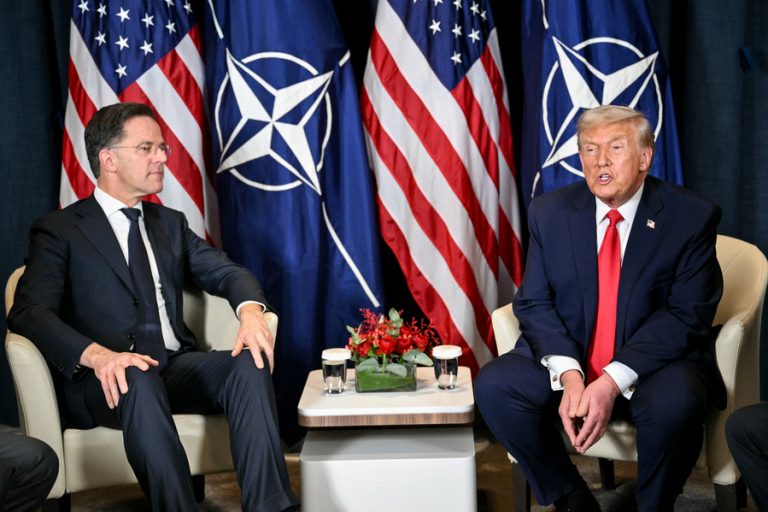
Trump posted from Davos, Switzerland, saying he held a very productive meeting with NATO Secretary General Mark Rutte, and that both sides have formed “a framework for an agreement on the future of Greenland—and in fact the entire Arctic region.”
Trump said that if the plan is ultimately finalized, it would be “an excellent outcome for the United States and all NATO countries.”
He added that further discussions are ongoing regarding the “Golden Dome” and Greenland-related issues, and that more information will be released as negotiations progress.
Success
You are now signed up for our newsletter
Success
Check your email to complete sign up
Earlier that day, Trump also drew attention while addressing the World Economic Forum in Davos. He emphasized that the United States would not use military force to obtain Greenland. He then said that U.S. ownership of Greenland would only strengthen the NATO alliance.
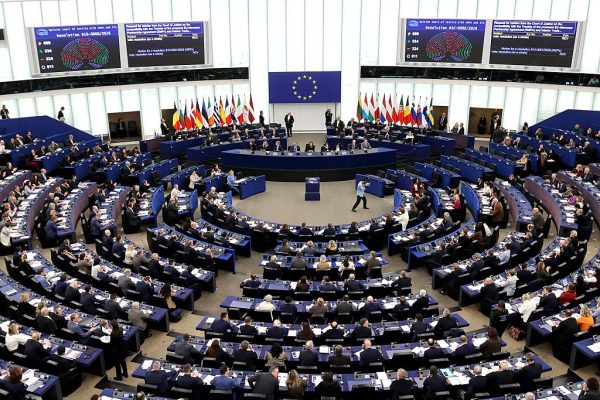
European Parliament announces freeze on EU–US trade agreement
Trump had previously unsettled Denmark and other European allies by imposing a 10 percent tariff over the Greenland issue. On Wednesday, Europe responded by announcing a suspension of approval for a trade agreement reached with Trump in July.
Bernd Lange, chair of the European Parliament’s Committee on International Trade, posted on X: “The EU–U.S. agreement is suspended until further notice!”
It is currently unclear whether the entire trade agreement has been frozen, or whether portions that had already taken effect will remain in force.
In July 2025, European Commission President Ursula von der Leyen held key talks with Trump in Scotland, resulting in a preliminary EU–U.S. trade agreement.
Before formal signing, large parts of the agreement were provisionally implemented. The deal originally served as a “ceasefire,” preventing the United States from imposing 30 percent tariffs on EU products starting Aug. 1, 2025, and averting a larger trade war between allies.
The European Parliament’s trade committee had planned to vote on the agreement on Jan. 26–27, but the vote has now been postponed.