By Li Deyan
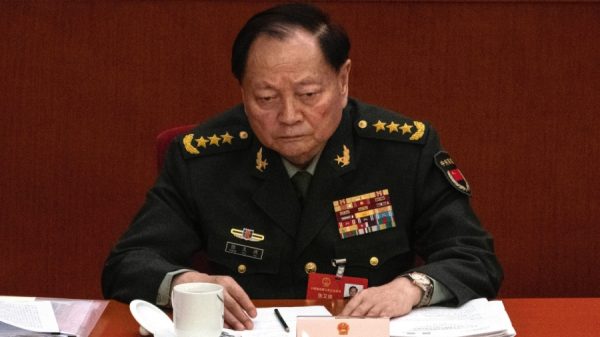
A recent Communist Party seminar for provincial- and ministerial-level officials has drawn attention amid signs of intensifying internal tensions within the Chinese Communist Party (CCP). Zhang Youxia, vice chairman of the Central Military Commission, was absent from the opening session, fueling overseas speculation about his situation. At the event, CCP leader Xi Jinping warned that China faces growing uncertainty and “unpredictable factors.”
Despite Xi’s repeated emphasis on anti-corruption, official data show that those tasked with enforcing discipline have themselves been implicated in widespread graft. In 2025 alone, more than 4,000 disciplinary inspection officials were investigated for corruption.
Xi warns of growing uncertainty at senior officials’ seminar
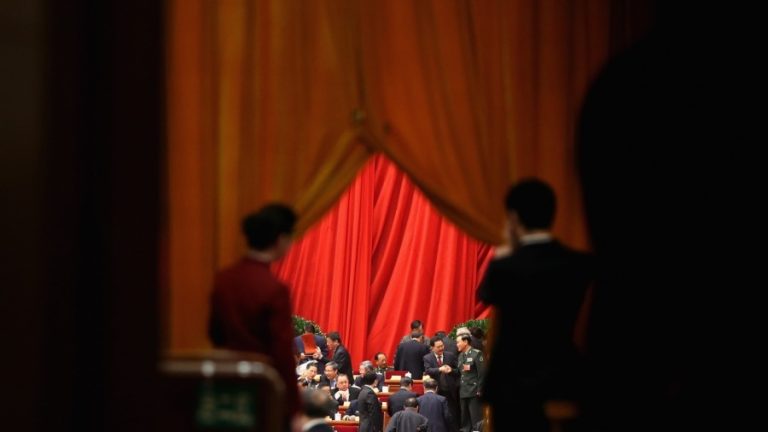
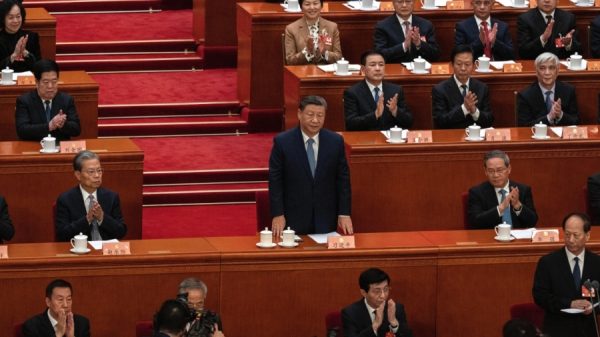
According to state news agency Xinhua, the CCP leadership on Jan. 20 held the opening session of a special seminar at the Central Party School for provincial- and ministerial-level officials, focused on the upcoming Fourth Plenary Session of the 20th Central Committee.
Footage aired by state broadcaster CCTV showed that four members of the CCP Politburo were absent: Central Military Commission Vice Chairman Zhang Youxia, Organization Department head Shi Taifeng, Vice Premier He Lifeng, and former Xinjiang Party Secretary Ma Xingrui. Liu Zhenli, a member of the Central Military Commission and chief of the Joint Staff Department, was also absent.
Success
You are now signed up for our newsletter
Success
Check your email to complete sign up
In recent days, Zhang’s absence from the seminar has prompted widespread discussion in overseas Chinese-language media, with multiple unverified reports claiming that Zhang and members of his family had been detained. The accuracy of those claims remains unclear. Against this backdrop, Xi’s remarks at the seminar attracted particular attention.
Xi said China is currently in a period where “strategic opportunities and risks coexist,” adding that “uncertainty and unpredictable factors are increasing.”
Australia-based independent commentator Jiang Wangzheng told overseas Chinese-language media that external pressures facing the CCP have become increasingly difficult to anticipate, particularly amid long-term strategic confrontation between China and the United States. He said recent developments involving U.S. actions against Venezuelan President Nicolás Maduro have also heightened Beijing’s sense of insecurity. At the same time, China faces mounting technological restrictions, leaving the country increasingly isolated in key sectors.
Jiang also pointed to deepening domestic economic challenges. China’s long-standing reliance on land-based fiscal revenue has weakened, local government debt remains difficult to resolve, and pension and healthcare systems are under strain. He said officially reported GDP growth relies heavily on statistical methods and propaganda, while underlying risks remain concealed and increasingly difficult to control.
Officials told to maintain ‘strategic resolve’
At the seminar, Xi called on officials to maintain what he described as “strategic resolve,” urging them to strengthen development certainty and sustainability. He also emphasized the need to “prevent and defuse various risks” and to safeguard national security and social stability.
Observers note that in recent years the CCP leadership has increasingly emphasized regime security amid mounting international pressure and widespread domestic discontent. As early as 2023, Xi introduced a series of new political slogans at a meeting of the CCP’s National Security Commission, including calls for officials to be prepared for “severe tests amid turbulent and even stormy conditions.”
Jiang said the CCP’s high-pressure governance itself has become a source of new risks. Xi’s repeated emphasis on “worst-case thinking” and preparing for extreme scenarios reflects, in Jiang’s view, a recognition that the Party’s confidence in controlling future developments is eroding.
A Beijing-based observer using the pseudonym Li Qiang told overseas Chinese-language media that Xi’s call for strategic resolve, certainty, and sustainability underscores that the CCP has reached a critical turning point. He said worsening bureaucratic inertia among officials has become increasingly entrenched and difficult to reverse, leaving the system on a downward trajectory.
Anti-corruption officials implicated as thousands face investigation
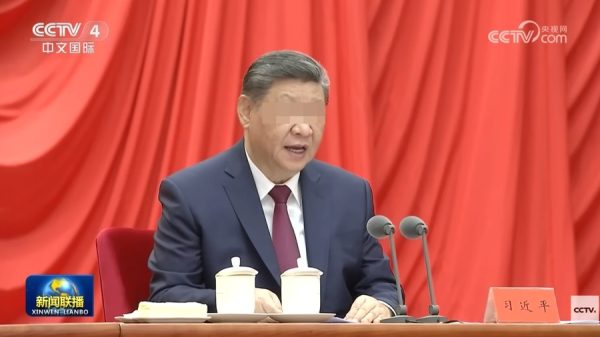
Since taking power at the 18th Party Congress in 2012, Xi has repeatedly vowed to combat corruption. On Jan. 12, 2026, Xi reiterated at the opening of the CCP’s Central Commission for Discipline Inspection (CCDI) plenary session that the anti-corruption struggle “remains grave and complex,” and that the task of eliminating the conditions that breed corruption remains arduous.
Statistics released by the CCDI and the National Supervisory Commission paint a stark picture. In 2025, disciplinary and supervisory authorities nationwide opened 1.012 million cases and punished 983,000 individuals, including 69 officials at the provincial-ministerial level or above. Authorities also investigated 33,000 individuals accused of offering bribes, with 4,306 cases transferred to prosecutors.
On Jan. 22, the CCDI website reported that in 2025 alone, disciplinary authorities opened cases against 4,119 disciplinary inspection and supervision officials, with 3,763 receiving punishment. Those disciplined included four officials at the provincial-ministerial level, 116 at the departmental level, and 746 at the county or division level.
The figures highlight a persistent pattern in which officials responsible for enforcing anti-corruption measures are themselves implicated in graft.
According to reports by Caixin, four senior disciplinary officials at the provincial-ministerial level were placed under investigation in 2025. They included Li Gang, former head of the CCDI inspection team stationed at the Organization Department; Wang Huimin, former head of the inspection team at the China Securities Regulatory Commission; Chen Xiaobo, former deputy secretary of the Hainan provincial discipline commission; and Long Xiang, former chairman of the Nanjing People’s Congress, who spent years in the Jiangsu and Nanjing disciplinary system.
Li Gang sentences to 15 years
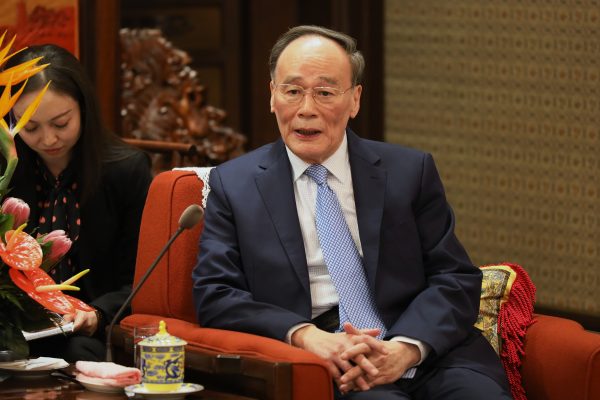
On Dec. 3, 2025, Li Gang was sentenced to 15 years in prison for accepting bribes totaling more than 102 million yuan.
In an earlier case, Dong Hong, former deputy head of a central inspection team, was sentenced to death with a two-year reprieve in January 2022 after being convicted of amassing more than 463 million yuan in illicit gains over two decades. Dong was widely known as a close associate of former CCDI chief Wang Qishan, a background that embarrassed the authorities. Official statements downplayed Dong’s seniority, referring to him only by a lower-ranking title, despite his previous service as a central inspection team leader and vice-ministerial-level inspector.
State media had previously quoted Dong as pledging to pursue “forceful anti-corruption” efforts during inspection tours. His case underscored, analysts say, the persistent contradiction between anti-corruption rhetoric and entrenched corruption within the system.
Canada-based Chinese writer and commentator Sheng Xue said that under the CCP system, anti-corruption campaigns have never been about institutional correction, but rather about redistributing power. She said Xi himself is not an outsider purging the system, but part of the same structure, adding that corruption under CCP rule remains systemic.
Editor’s Note: This article is based on Chinese state media reports, overseas Chinese-language media coverage, commentary by analysts, and publicly released disciplinary statistics. Claims regarding internal political developments and personnel matters cannot be independently verified.