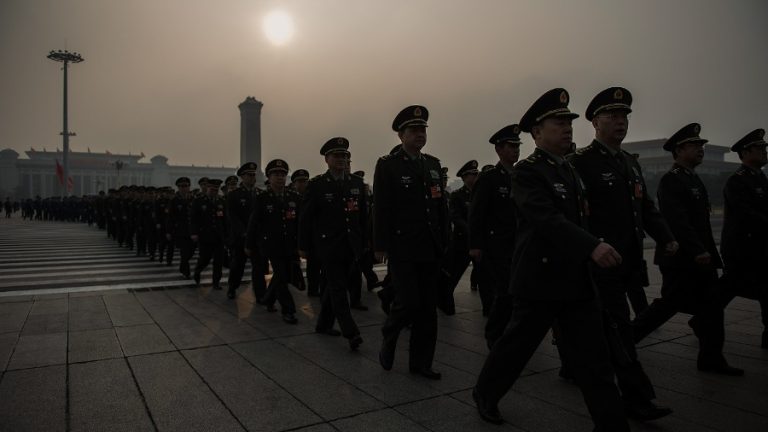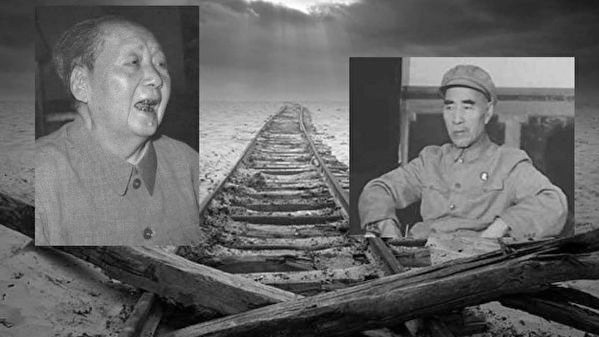
Mao Zedong’s handling of Lin Biao stands as a textbook example of internal political struggle within the Chinese Communist Party (CCP). The strategy—first sever the claws, then take the head—is now being closely replicated by today’s rulers in Zhongnanhai. To describe Zhang Youxia as a “second Lin Biao” is not merely rhetorical. It reflects striking parallels in their institutional positions, their evolving relationships with the supreme leader, and the grim sense of political inevitability surrounding their downfalls.
Lin Biao’s fate ended in catastrophe with the Sept. 13 Incident of 1971, when he died in a mysterious plane crash while fleeing China. Zhang Youxia’s officially announced removal, by contrast, shows that Xi Jinping has absorbed Mao’s lessons and opted for a preemptive, timed detonation. Yet history’s irony is cruel: after Lin Biao’s fall, Mao’s health and prestige collapsed rapidly. Now, with Zhang Youxia and 17 senior generals taken away, the command center of the People’s Liberation Army (PLA) has been hollowed out. When no combat-experienced commanders dare to speak honestly, what comes next?

From ‘ironclad confidant’ to ‘merit that threatens the throne’
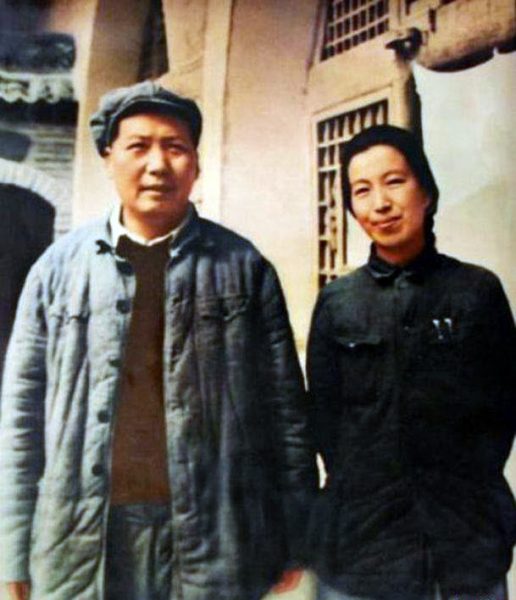
Lin Biao was personally designated by Mao Zedong as his successor, written into the Party Constitution itself. Mao once declared, “Whoever opposes Vice Chairman Lin, smash his dog’s head.”
Zhang Youxia, for his part, was long Xi Jinping’s most trusted “elder brother” within the military. The two families share revolutionary ties: Zhang’s father, Zhang Zongxun, and Xi’s father, Xi Zhongxun, were comrades in the Northwest Field Army. During Xi’s first two terms, Zhang was instrumental in stabilizing the PLA and purging the remnants of Xu Caihou and Guo Boxiong—both former vice chairmen of the Central Military Commission (CMC) disgraced for corruption.
Both men began as the supreme leader’s closest allies. Yet both ultimately amassed such prestige within the armed forces that they formed power centers independent of the top leader—triggering the dictator’s deepest instinct: suspicion.
‘Combat veterans’ versus the civilian security clique
Success
You are now signed up for our newsletter
Success
Check your email to complete sign up
Lin Biao was a legendary battlefield commander, but in the late Cultural Revolution he openly disdained Jiang Qing, Zhang Chunqiao, and other civilian radicals. This contempt convinced Mao that Lin intended to use military power to intervene directly in politics.
Zhang Youxia, together with PLA Chief of Staff Liu Zhenli, represented a similar combat-experienced faction. They reportedly bristled at the growing interference of civilian and internal security figures such as Cai Qi and Wang Xiaohong—head of the Ministry of Public Security—in military decision-making.
According to an internal meeting record circulating within Party circles, Zhang Youxia opposed some of Xi Jinping’s “unrealistic” military adventurism, including extreme pressure scenarios in the Taiwan Strait. Xi’s civilian entourage interpreted this not as professional caution, but as hoarding troops and defying orders.
Identical purge patterns: cutting down the wings
Before moving against Lin Biao, Mao first struck Lin’s inner circle—the so-called “Four Marshals”: Huang Yongsheng, Wu Faxian, Li Zuopeng, and Qiu Huizuo.
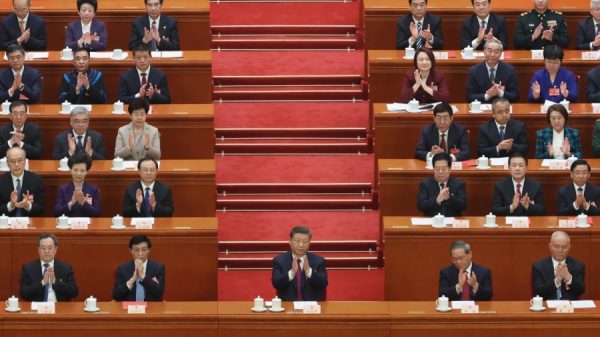
Xi Jinping has followed the same script. First came the arrest of Defense Minister Li Shangfu—Zhang’s presumed successor. Then came reports of the detention of 17 generals from the CMC General Office and the Equipment Development Department.
This maneuver is known in Party parlance as cutting the hemline. By the time Zhang realized everyone around him had been taken, he remained vice chairman in name only—effectively under house arrest. The parallel to Lin Biao’s final isolation is unmistakable.
Mao’s destruction of Lin’s “Four Marshals”—
- Huang Yongsheng, Chief of the General Staff
- Wu Faxian, Air Force commander
- Li Zuopeng, Navy political commissar
- Qiu Huizuo, head of the General Logistics Department
—followed three ruthless steps.
1. Testing the waters: ‘throwing stones’
At the 1970 Lushan Conference (the Second Plenum of the Ninth Central Committee), Lin Biao’s camp pushed to reinstate the position of State Chairman and lavish Mao with praise as a “genius”—crossing Mao’s political red line.
Mao did not confront Lin directly. Instead, he published My Little Opinion, viciously attacking Lin’s adviser Chen Boda.
Impact: Mao forced Wu Faxian, Qiu Huizuo, and others to write self-criticisms. This “stone-throwing” was designed to crack Lin’s ironclad alliance and instill fear.
2. Diluting control: ‘mixing sand’
Mao knew Lin controlled the General Staff, Air Force, Navy, and logistics through these four men. Mao’s response was to mix sand into the machine: inserting officers outside Lin’s faction—such as Li Desheng—into the Military Affairs Group and key regional commands.
Political purpose: Much like Xi Jinping today installing figures such as Zhang Shengmin or deploying the Central Security Bureau to monitor the CMC, this ensured that Lin’s men were never alone—even on their own turf.
3. Undermining loyalty: southern tour and political conviction
In August 1971, Mao launched a southern inspection tour, quietly signaling to provincial leaders and military commanders that “someone is trying to split the Party—and Lin Biao bears responsibility.”
Mao publicly labeled Huang, Wu, Li, and Qiu as a “military club,” effectively sentencing them politically. Other officers immediately cut ties, isolating Lin’s military base beyond repair.
After Lin Biao: How the CCP bought time—and why Xi cannot
The September 13 Incident was the CCP’s greatest political credibility collapse since 1949. Lin Biao was Mao’s chosen successor, enshrined in the Party Constitution. His attempted escape and death amounted to a total repudiation of Mao’s claim as the “Great Leader.” If even your handpicked heir wants to assassinate you, what legitimacy remains?
According to insider accounts from Zhongnanhai’s medical team, Mao suffered severe physical decline after Lin’s fall, including neurological and cardiac failure. How did the CCP survive?
First, Mao pivoted to the United States. Nixon’s visit and Sino-American rapprochement provided a massive diplomatic victory that distracted from domestic disaster. Second, Zhou Enlai struggled to stabilize the shattered bureaucracy and foreign relations. Third—and most decisively—the regime relied on brutal repression: the Criticize Lin Biao campaign and nationwide purges enforced obedience through fear.
Then Mao turned to Deng Xiaoping. Deng rescued the Party by shifting its foundation from leader worship to material incentives. When deification failed, Deng declared that development is the hard truth. Economic growth became the price paid for public compliance. The CCP transformed from a revolutionary movement into an interest-based cartel.
It was in this period that collective leadership emerged. Learning from the Lin Biao debacle, Deng abolished lifelong tenure and reduced the risk that the collapse of a single strongman would bring down the entire system.

Xi Jinping’s dead end
Here lies the core question: Does Xi Jinping have any of these conditions today?
Xi now faces a crisis eerily similar to Mao’s late years—without Deng’s advantages. There are no surplus benefits left to distribute. The era of shared growth is over. Local governments are drowning in debt; the property sector is imploding; foreign capital is fleeing. Some provinces struggle even to pay civil servants. Without economic spoils, Xi cannot purchase loyalty.
Nor can he replicate Mao’s diplomatic escape. While Mao broke isolation by aligning with the United States, Xi now confronts a quasi–Cold War with the Western world. Diplomacy offers no positive reinforcement for domestic rule.
What remains is rule by fear. Yet Xi’s handling of Zhang Youxia and the 17 generals mirrors Mao’s playbook without Mao’s authority—or Deng’s wallet. With the fall of Zhang, a princeling general, Xi has become a true孤家寡人(lonely person)—an isolated ruler within the PLA.
Today, the CCP’s sole pillar of control is high-tech secret-police politics: Wang Xiaohong’s security apparatus combined with mass data surveillance.
Xi Jinping is attempting to construct a model of totalitarian rule without economic growth—a path without precedent in CCP history. With an unstable military, a collapsing property economy, and no diplomatic relief, his final card is war-driven diversion, such as a Taiwan operation.
But given the global anti-communist alignment and Taiwan’s rising international standing, is the CCP not sprinting headlong toward collapse?