Government dissolves estate committee after five-alarm fire
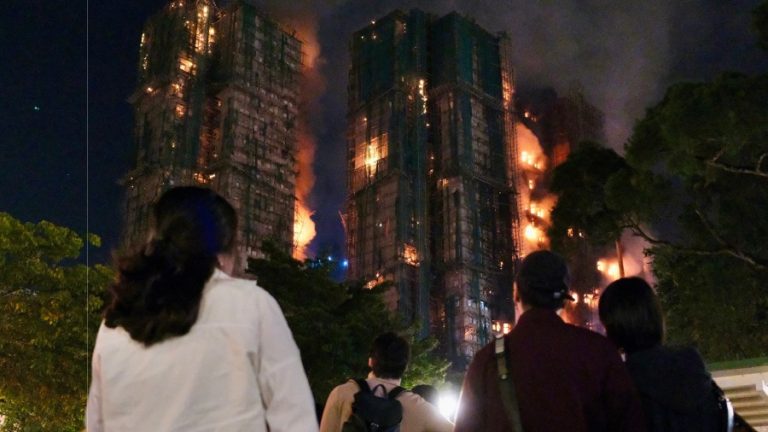
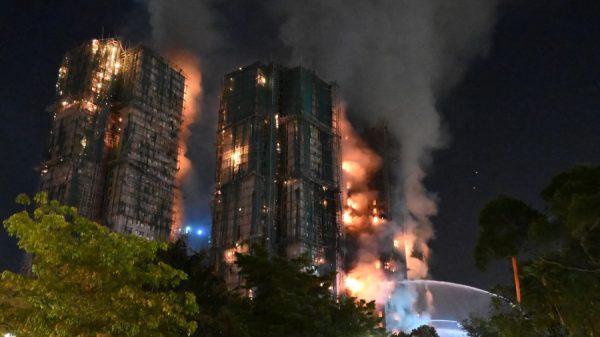
According to Vision Times (看中国), following a five-alarm fire at Hung Fuk Estate in Tai Po, the Hong Kong government claimed that the subsequent handling of affairs exceeded the capacity of the estate’s owners’ corporation. Citing statutory authority, the government dissolved the original management committee and handed control to Hopson Property Management Limited (合安管理有限公司).
In a recent submission to the Legislative Council, the Home and Youth Affairs Bureau disclosed that the newly appointed manager will hire professionals to audit the owners’ corporation’s accounts and move quickly to establish an online communication platform to maintain contact with residents and gather feedback on estate management.
Legal basis and court approval
Overseas Chinese-language media report that in December 2025, the Secretary for Home and Youth Affairs invoked Section 31 of Hong Kong’s Building Management Ordinance—the law governing owners’ corporations in multi-unit buildings—to apply to the Lands Tribunal for the dissolution of the management committee and the appointment of a manager. The tribunal approved the application on Jan. 6, 2026, formally installing Hopson Property Management, a subsidiary of the Chinachem Group, as the administrator.
Audits, handover, and resident communication
According to bureau documents, Hopson will not charge any management fee for this appointment. Instead, Chinachem Charitable Foundation Management Limited will donate a total of HK$10 million to cover the administrator’s expenses.
Hopson’s responsibilities include taking over from the previous management company, receiving all corporate documents, and commissioning professionals to conduct a detailed analysis to clarify the legal responsibilities and rights of both the owners’ corporation and individual property owners. The company will also hire specialists to examine the corporation’s financial accounts and establish, as soon as possible, an online platform to communicate with residents and collect opinions on estate management.
Success
You are now signed up for our newsletter
Success
Check your email to complete sign up
Broader revisions to building management law
On overall building governance, the Hong Kong government is planning the next phase of amendments to the Building Management Ordinance. Five preliminary directions for reform have been identified: raising voting thresholds for major repairs and large-scale procurement, improving proxy appointment and conflict-of-interest declaration systems, clarifying meeting procedures, and strengthening the powers of supervisory authorities.
Meanwhile, a pilot program for “joint management of multiple buildings” has seen 87 buildings sign letters of intent, including six that formally implemented the scheme in January 2026.

District governance, youth, and social programs
In district governance, the second phase of 455 “Care Teams” (关爱队)—government-organized community service groups—has been fully operational since October 2025. This year, one additional “Ethnic Minority Care Team” will be added in both the North District and the Islands District to address population growth.
On youth development, the government continues to promote its “Youth Hostel Scheme.” Available hostel spaces have increased dramatically from 80 at the start of the current administration to more than 3,700. The former Kai Tak Community Isolation Facility has been converted into a youth hostel named “Sail 1331” (启航1331), hosting cultural, artistic, and sports activities aimed at fostering exchanges among Hong Kong, mainland Chinese, and overseas youth.
In women’s and family policy, the 2025 Policy Address announced an increase in annual funding for the Women’s Development Fund from HK$20 million to HK$30 million. To address chronic non-payment of alimony, the government launched a pilot Alimony Mediation Scheme through the Community Care Fund. By the end of 2025, the program had handled 254 cases, benefiting more than 500 people, with participants generally affirming its effectiveness in resolving disputes.
Donations and temporary housing for fire victims
In response to the devastation caused by the Hung Fuk Estate fire, various sectors of society have mobilized to assist affected residents in overcoming immediate hardships and rebuilding their lives.
According to Ta Kung Pao, as of Jan. 19, the government-established “Tai Po Hung Fuk Estate Relief Fund” had received more than 290,000 individual donations totaling approximately HK$4.2 billion. Combined with the government’s initial HK$300 million seed funding, the fund’s rolling balance has reached roughly HK$4.5 billion.
Of these donations, 98 percent were contributions of HK$10,000 or less, suggesting that ordinary citizens constituted the overwhelming majority of donors. By contrast, more than 700 donations exceeded HK$1 million, coming from institutions or corporations.
In terms of housing arrangements, the government has assisted more than 4,400 affected residents in moving into transitional housing, interim accommodation, and youth hostels, enabling them to secure temporary shelter as quickly as possible after the disaster.

Death toll and public doubts
According to Taiwan’s Central News Agency (CNA), Secretary for Security Chris Tang Ping-keung told the media on the evening of Jan. 15 that, following dental and DNA testing, police had confirmed the death toll had risen to 168. Family members have been notified to confirm the victims’ identities. However, skepticism has persisted in the public sphere regarding the accuracy of the officially announced casualty figures.
Hung Fuk Estate consists of eight residential towers. The fire on November 26 last year affected seven of them. By the number of fatalities, the disaster ranks as the third deadliest fire in Hong Kong in nearly a century.