Recently, the Chief of Staff of the Ukrainian Presidential Office, Kyrylo Budanov, stated that under the pressure of sanctions Russia faces for waging war against Ukraine, China has seized the opportunity to strengthen its political, economic, and technological influence over Russia. In effect, he said, China is “absorbing” Russia into its own system, turning Moscow into a vassal of Beijing.
Budanov made these remarks during a panel discussion at the World Economic Forum (WEF) held in Davos, Switzerland. He pointed out that after Russia’s full-scale invasion of Ukraine, international sanctions caused severe shortages in the microchips and critical components needed by its defense industry. In the early stages of the war, Russia even had to extract old chips from consumer electronics such as washing machines and computers to maintain weapons production. Soon after, however, China rapidly filled this gap.
Budanov noted that although Moscow regards China as a reliable partner, the cost of this “friendship” is extremely high. Mainland China leverages the supply of electronic components, machinery, and other materials needed for weapons production to demand high profits from Russia. Data shows that Russia pays far more for these supplies than it would to other countries. Budanov said that while Russia is unwilling to admit it, it now has no other choice.

Moscow leans toward China
He emphasized that the greater the international pressure of sanctions on Russia, the faster Moscow leans toward China. He stated that the current trend has effectively “China absorbing Russia.” Budanov cited reports from foreign media last year suggesting that without China’s support, the war would have ended long ago.
In August of last year, Reuters quoted pro-Russian government sources reporting that without China’s assistance, Russia would be unable to produce a single missile or drone, and its overall economy would collapse.
Success
You are now signed up for our newsletter
Success
Check your email to complete sign up
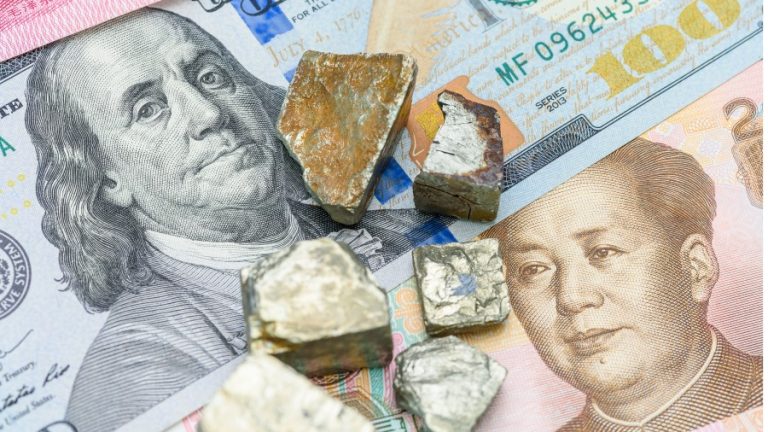
Bilateral trade data between China and Russia shows that trade volume has surged from $146.9 billion in 2021 to $254 billion in 2024. However, further investigation revealed that although total trade value has risen sharply, the actual quantity of imported goods has not increased and has even declined, indicating that China’s export prices to Russia continue to soar.
According to the latest research from the Bank of Finland’s Institute for Economies in Transition (BOFIT), specific examples show that the cost for Russia to purchase Chinese components is 87 percent higher than for other countries buying the same products. Today, China accounts for 57 percent of Russia’s total imports, demonstrating China’s absolute monopoly in the Russian market.
Although military and technological exchanges between China and Russia are increasingly close, Budanov also acknowledged that current intelligence has not found evidence of Beijing directly supplying Moscow with complete weapons systems.