By Jian Yi
A broadcast that landed like a signal
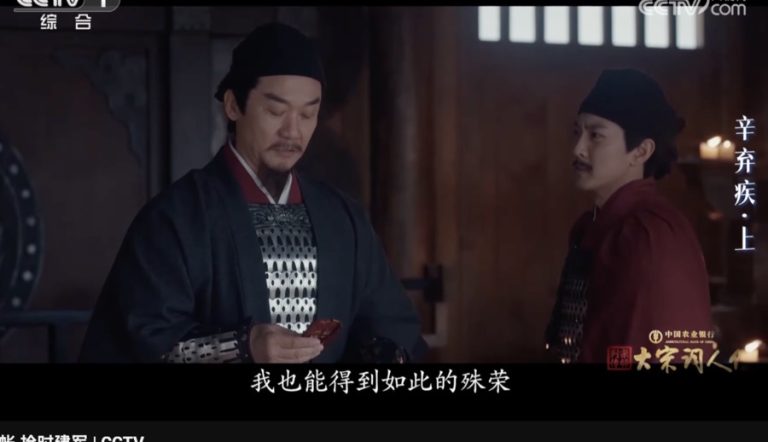
News of the downfall of Zhang Youxia and Liu Zhenli detonated across Chinese-language networks, unleashing a wave of speculation and anxiety about the direction of the Chinese Communist Party (CCP). Every gesture from Beijing has since been scrutinized for meaning. It was precisely at this most sensitive juncture that China Central Television (CCTV) released a segment whose dialogue struck many as unmistakably pointed.
The lines, delivered with barely veiled indignation, were quickly read as speaking for Zhang Youxia, Liu Zhenli, and their supporters within the People’s Liberation Army (PLA). The emotional force was unmistakable—resentment, humiliation, and anger barely concealed beneath historical costume.
“This golden edict—they mean to sever the very foundation of my Flying Tigers Army.”
“Your subordinate cannot accept this.”
Success
You are now signed up for our newsletter
Success
Check your email to complete sign up
“Back then, General Yue was bound hand and foot by twelve golden edicts. Hmph. Who would have imagined that today I, too, would receive such an ‘honor’?”
“The Flying Tigers Army can go without anyone—but it cannot go without you.”
The weaponization of history
These lines appeared in the Jan. 25 CCTV broadcast Xin Qiji (Part I)—a choice that is itself revealing.
Xin Qiji was not merely a poet of the Southern Song dynasty, but a commanding general famed for his authority within the ranks and his uncompromising loyalty to the state. To invoke him is to invoke the archetype of the sidelined patriot.
The “twelve golden edicts” referenced in the dialogue point directly to one of the most notorious episodes in Chinese political history. In 1141, Emperor Gaozong of Song (Zhao Gou) issued twelve successive imperial commands ordering the loyal general Yue Fei to withdraw from the battlefield.
As Shen Kuo recorded in Dream Pool Essays, these “golden edicts” were emergency military orders sent directly from the emperor, beyond the authority of the Secretariat or the Bureau of Military Affairs. Once issued, they were absolute.
Yue Fei was subsequently executed on fabricated charges—summed up by the phrase “mo xu you,” meaning guilt without evidence. His death has endured for centuries as the quintessential story of a loyal general destroyed by a suspicious and insecure ruler.
The Ming-dynasty scholar Li Dongyang later captured this calamity in his poem The Golden Edict, lamenting the collapse of morale, the betrayal of defenders, and the fatal weakening of the state itself.
CCTV is a propaganda organ, not a stage accident
To treat this broadcast as coincidence is to misunderstand how power operates in Beijing.
CCTV is not an ordinary media outlet, nor is it an entertainment company. It is the CCP’s primary propaganda instrument, operating under some of the most rigid censorship and approval mechanisms in the world. Every program, every line of dialogue, every historical reference is vetted for political safety.
Hu Jiwei, former editor-in-chief of People’s Daily, once laid bare the system’s logic: media exist to enforce “correct guidance of public opinion” and to serve as “the Party’s tamed tool.” Any deviation—any failure to “heed instructions” or “observe propaganda discipline”—is punished with bans, shutdowns, or political ruin.
Under such conditions, nothing airs by accident. Least of all a historical allegory so precisely aligned with a real-time political purge.

A message that finds its audience
There is no factual basis for equating Zhang Youxia with Xin Qiji or Yue Fei. The comparison collapses under scrutiny. Yet accuracy is not the point.
What matters is resonance. The dialogue gives voice to the anger and sense of betrayal felt by Zhang Youxia’s supporters—within the PLA and beyond. It articulates emotions that cannot otherwise be expressed, and in doing so, risks catalyzing further reactions inside an already destabilized military hierarchy.
At a minimum, it reveals how deeply contested Xi Jinping’s campaign against senior officers has become.
Corruption as the final blade
The program’s closing passage sharpens the implication. Citing the History of Song, it notes that in 1181 Xin Qiji was impeached and dismissed on two principal charges, one of them “corruption.”
Historically, the accusations against Xin Qiji consisted of three lines: “Spending money like sand, killing men like grass, and harboring ambitions to one day sit in the ‘Prince of Min’s Hall.’”
That final charge—aspiring to the throne—was an accusation of disloyalty, the ultimate political crime.
The parallel to contemporary China is unmistakable. Today, corruption allegations have become the standard justification for removing political and military rivals, particularly within the PLA and the Central Military Commission (CMC), the supreme military body chaired by Xi Jinping himself.

Discontent beneath the surface
This program was almost certainly not produced explicitly for the Zhang Youxia or Liu Zhenli cases. But production intent is irrelevant. CCTV alone decides what may be broadcast—and what must remain unseen—especially during moments of extraordinary political sensitivity.
The near-perfect alignment between the drama’s dialogue and the timing of Zhang Youxia’s reported detention has fueled widespread suspicion that opposition to Xi Jinping’s actions is emerging from within the Party-state. Xi’s move to neutralize nearly the entire leadership of the Central Military Commission has evidently generated profound resentment and alarm among elements of the CCP elite.
In a system where dissent is forbidden and silence is enforced, history has once again been pressed into service as a language of resistance. When nothing can be said directly, meaning is smuggled in through the past.