By Du Zheng
On Jan. 24, the Chinese Communist Party announced investigations into Politburo member and Central Military Commission Vice Chairman Zhang Youxia, along with Liu Zhenli, chief of the CMC’s Joint Staff Department, confirming days of speculation surrounding the two senior officers.
The move has drawn fresh attention to internal power struggles within China’s military and security apparatus, as well as questions over how far Xi Jinping is reshaping his inner defenses amid mounting pressure at home and abroad.
The author has previously argued that several of Xi’s military confidants—figures associated with the so-called “Fujian faction,” including He Weidong and Miao Hua—were forced out after losing an internal power struggle with Zhang Youxia. This latest development is seen by the author as a retaliatory move against Zhang. Yet the situation, in his view, is more complex and must be examined within a broader international context.
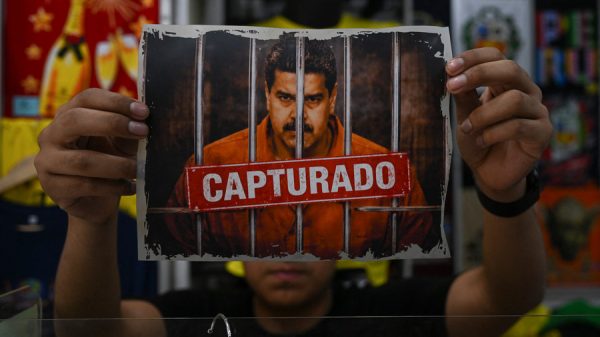
In early January 2026, one of the most striking international developments was the reported U.S. military operation in Venezuela that resulted in the detention of President Nicolás Maduro. Around the same time, as Beijing amplified rhetoric about a potential “decapitation strike” against Taiwan, many Chinese citizens privately expressed hopes that a similar scenario might unfold in Zhongnanhai.
Success
You are now signed up for our newsletter
Success
Check your email to complete sign up
In recent weeks, the song Unfortunately, It Wasn’t You by Taiwanese singer Fish Leong surged in popularity on Chinese platforms, often read by Chinese netizens as a veiled expression of such sentiments. Shortly afterward, users noticed that searching for “Zhongnanhai” on several online map services returned messages stating that the location could not be found in Beijing or redirected searches elsewhere, suggesting official intervention.
By late January, rumors of elite infighting intensified after Zhang Youxia and several other Politburo members failed to appear at important meetings. Negative speculation about Zhang’s fate spread rapidly. In China’s opaque political system, such rumors sometimes overlap with reality. After several days, the investigations were officially confirmed.
In the author’s view, crises in authoritarian systems often emerge from the interaction of internal and external forces, and the reported detention of Maduro may have acted as a catalyst for renewed infighting within the CCP.
State media and warnings about ‘insiders’
According to reports, U.S. forces detained Maduro and his wife in the early hours of Jan. 3, with assistance from an informant inside the Venezuelan government. The source, described as having close access to Maduro, reportedly tracked his movements and confirmed his location shortly before the operation.
Chinese state outlet Global People reported that global attention quickly turned to identifying the “insider” within the Venezuelan presidential palace. The focus ultimately settled on Javier Marcano Tábata, a major general who commanded Maduro’s close-protection detail and was described as his most trusted “night watchman.”
The report said Tábata, born in 1969, was seven years younger than Maduro and grew up with him in a working-class neighborhood in Caracas.
Against the backdrop of Beijing’s heightened sensitivity to “decapitation” scenarios—even extending to intervention in online map services—the state media’s emphasis on betrayal within Maduro’s inner circle appeared politically charged. The author suggests it may have functioned as an indirect warning aimed at China’s own top leadership.
In Beijing, Zhang Youxia has long been portrayed by outside observers as having a close, family-linked relationship with Xi Jinping, rooted in ties between their fathers. In recent years, however, persistent rumors have circulated of friction between the two. As a veteran “princeling,” Zhang has been widely described as uneasy with Xi’s consolidation of personal authority.
To prevent a potential “decapitation” scenario, the author argues, Xi’s first priority is guarding against internal threats. Beyond Zhang Youxia, this concern may extend to other long-time confidants. This, he suggests, helps explain why the Fifth Plenum of the Central Commission for Discipline Inspection, which concluded on Jan. 14, declared that the top priority for 2026 was to “remove those with divided loyalties.”
Around the same time, the U.S. Central Intelligence Agency released another video aimed at Chinese officials willing to provide intelligence, outlining ways to establish secure online contact.
For Beijing, preventing “insiders” from cooperating with external forces may appear increasingly urgent. In reality, the author argues, each of Xi’s security lines carries significant vulnerabilities.
The Central Guard Bureau and lingering doubts
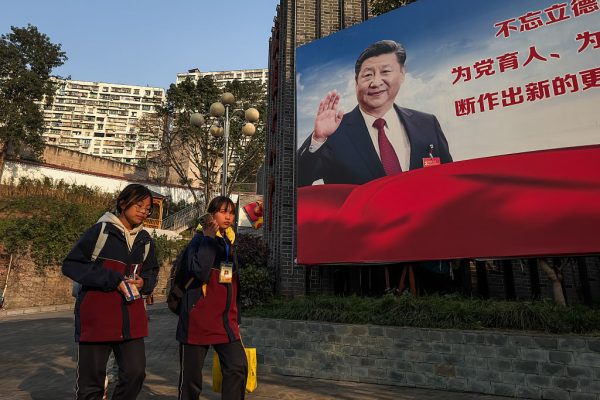
The Central Guard Bureau is Xi Jinping’s core security force. It operates under the Joint Staff Department of the Central Military Commission and is a corps-level unit subordinate to the CCP Central Office. Its primary responsibility is protecting national-level leaders and senior military commanders.
Because of its proximity to the leadership, the bureau has repeatedly been drawn into political turning points. During the 1976 Huairen Hall incident, it participated in the arrest of the Gang of Four.
In March 2012, Ling Gu, the only son of then–Central Office director Ling Jihua, died in a car crash in Beijing. Ling mobilized the Central Guard Bureau to seal off the scene. After Xi moved against Ling in 2014, branding him an ambitious schemer, the bureau’s leadership was purged.
Wang Shaojun, who had served as deputy director since 2009, became director in 2015, replacing Cao Qing. Personnel were subsequently reselected from active-duty special forces units. Between 2020 and 2021, the bureau underwent another major reshuffle, with both director and deputy directors replaced by officers from field armies.
Major General Zhou Hongxu, formerly deputy chief of staff of the Northern Theater Command Ground Force, was appointed director. Chen Denglu, a Fujian-born major general from the former 31st Group Army, became deputy director and political commissar of the Central Guard Regiment. The bureau is currently overseen by Cai Qi, director of the CCP Central Office and a close Xi ally.
Former bureau director Wang Shaojun died under unusual circumstances in April 2023, with his death announced months later. Observers linked the episode to internal purges, noting Wang’s ties to the Hu Jintao era.
Under Xi’s highly centralized rule, the bureau has over time come to function as a surveillance tool covering both current and former senior officials. Those closest to the leader, the author argues, may also be best positioned to turn against him.
Zhou Hongxu served in the 14th Group Army in Yunnan from at least 2005 until the 18th Party Congress in 2012, a unit previously linked to alleged coup plotting associated with Bo Xilai. During the early 1990s, when Zhang Youxia commanded a division within the same group army, Zhou was studying at a military academy and later served as a junior officer there. The author suggests Zhou’s rise may have been facilitated by Zhang.
Chen Denglu’s background in the former 31st Group Army has also drawn attention, given the downfall of several senior officers associated with the so-called Fujian faction. Although no action against the Central Guard Bureau has been reported, the reliability of those surrounding Xi remains an open question.
The Special Service Bureau and a parallel security line
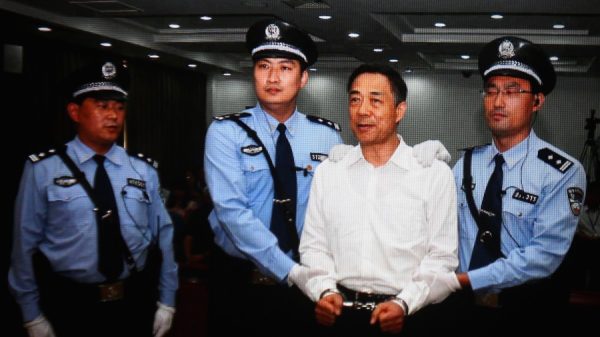
The Ministry of Public Security’s Special Service Bureau represents another layer of protection. Traditionally, it guarded vice–national-level officials and ranked just below the Central Guard Bureau.
Over the past three years, the bureau has seen rapid leadership turnover and shifts in its role. During Wang Xiaohong’s tenure, it at times directly participated in protecting Xi Jinping. Wang, a long-time associate of Xi from Fujian, concurrently served as public security minister, state councilor, and CCP Secretariat secretary before stepping down as bureau director in 2023.
His successors changed frequently. By July 2025, Ling Zhifeng—whose career was closely tied to Zhejiang province and figures associated with Premier Li Qiang—became the bureau’s third director in less than three years.
According to accounts circulating among political observers, the bureau at one point assumed primary responsibility for surveillance of senior leaders, a role traditionally handled by the Central Guard Bureau. After authority shifted back to Cai Qi, tensions reportedly emerged between competing security chains.
Public reports show Wang Xiaohong frequently accompanying Xi on overseas trips—an uncommon role for a public security minister. Yet reports in 2025 suggested that an attempt by Wang to rotate personnel guarding Xi’s office was vetoed by senior officials in the CCP General Office.
The author argues that struggles over protection and surveillance authority themselves constitute a security risk at critical moments.

Military unease around the capital
The Central Theater Command, responsible for Beijing and surrounding regions, has also been shaken by recent purges. Several senior commanders were removed over the past year, contributing to uncertainty within units tasked with defending the capital.
Following the downfall of He Weidong and Miao Hua, the investigations of Zhang Youxia and Liu Zhenli have further unsettled the military. The author has previously reported that resentment among lower-ranking officers, driven by corruption and elite infighting, could accumulate under pressure. In wartime conditions, such tensions could escalate into unrest.
The Beijing Garrison Command, another key defensive layer, has been without a commander for nearly a year—an unusual situation. Historically, incidents involving the garrison, including the 1994 Jianguomen shooting, have underscored the dangers of internal instability.

A climate of mounting resentment
Public discontent, military frustration, and bureaucratic grievances have intensified during Xi’s third term, amid economic strain, tighter political controls, and expanded internal purges. From late 2025 onward, waves of online “charging the tower” protests have appeared, with citizens finding increasingly coded ways to mock the political system and Xi himself.
Under these conditions, even fortified shelters and layered security may offer limited reassurance. History—both in China and elsewhere—shows that the most acute threats to highly centralized power often emerge not from outside forces, but from within.
Editor’s Note: This article is based on media reports, publicly available information, and analysis by political commentators. Allegations regarding internal power struggles, security arrangements, and intelligence activities have not been independently verified and are presented as the author’s analysis or interpretation.
(This article was originally published by Up Media and is reproduced by Vision Times with authorization. The views expressed are solely those of the author.)