By Fu Longshan
Yan’an’s myth of self-reliance—and the reality of financial collapse
In the Chinese Communist Party’s official historiography, Yan’an in the 1940s is portrayed as a beacon of “self-reliance” and revolutionary virtue. In reality, the Communist-controlled border regions were economically exhausted. Under sustained Nationalist military blockades and repeated Japanese “mopping-up” campaigns, the Yan’an fiscal system was near collapse.
Mao Zedong acknowledged this privately. According to internal records, he stated with brutal clarity: “If you want to get rich, you have to grow opium.” What followed was not improvisation but policy. Under internal code names such as “special goods” and “soap,” opium production was formally organized. Wang Zhen, a senior Red Army commander, oversaw cultivation and processing through his 359th Brigade. Responsibility for monetizing the product—turning narcotics into weapons, gold, medicine, and equipment across guerrilla zones and occupied territories—fell to Li Xiannian, then a regional military commander responsible for finance and logistics.
Li Xiannian’s fifth division: financing war through narcotics
As commander of the New Fourth Army’s Fifth Division—a Communist guerrilla force operating behind Japanese lines—Li Xiannian controlled a strategic corridor spanning Hubei, Henan, and Anhui. This region linked Yan’an with Nationalist-controlled areas and Japanese-occupied territory, making it an ideal logistical and commercial hub.
Li constructed an exceptionally disciplined internal financial apparatus. Publicly, he cultivated the image of an austere peasant leader. Internally, his ledgers were meticulous, calculating precisely how much quinine, radio equipment, or ammunition could be extracted from each tael of opium.
Success
You are now signed up for our newsletter
Success
Check your email to complete sign up
“Special goods” were exchanged with local Japanese and collaborationist forces for urgently needed medicines. Large quantities of refined opium were relabeled as “local produce” and moved through clandestine channels to Xi’an and Chongqing. During the Fifth Division’s most desperate periods, more than half of all non-grain expenditures were sustained by narcotics revenue.
This was not incidental corruption. It was a structural pillar of the Communist war economy.
Pan Hannian: the Shanghai exit port
This is the chapter the Chinese Communist Party has worked hardest to erase.
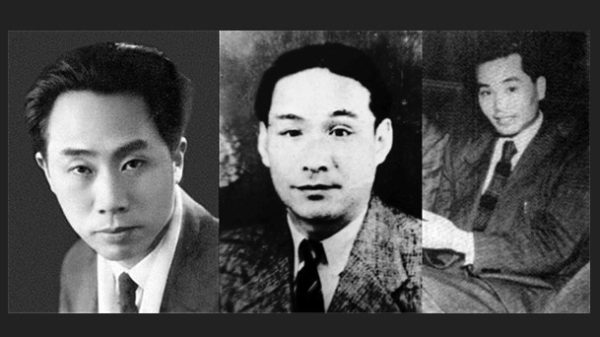
Pan Hannian, the CCP’s senior intelligence chief in Shanghai and Hong Kong, functioned as the external “exit port” for Li Xiannian’s opium operations. Pan dealt directly with the Kagesa Organization, a Japanese military intelligence unit, as well as Li Shiqun, head of the Wang Jingwei puppet regime’s secret police.
Opium refined in Li Xiannian’s rear areas was shipped along waterways controlled by the New Fourth Army and delivered to Shanghai. There, Pan Hannian sold it into Japanese-occupied markets—flooding occupied China with narcotics—while exchanging the proceeds for Western medicines, precision instruments, and high-value intelligence. These materials were then routed back to Li Xiannian’s bases in the Hubei–Henan border region.
At the same time, the Communist Party strictly banned opium consumption inside its own base areas, executing violators without exception, while aggressively exporting narcotics to enemy and rival territories.
Weaponizing opium against the nationalist economy
The opium trade served a second strategic objective: the deliberate erosion of the Nationalist government’s economic foundations.
Yan’an’s leadership pushed narcotics into Nationalist-controlled areas not merely for profit, but to extract gold, fabi (the Nationalist government’s legal tender), and U.S. dollars. Xi’an functioned as the main transit hub. Li Xiannian’s underground merchant networks exploited corruption among Nationalist officers—particularly within units under Hu Zongnan, a senior Nationalist general—to move opium step by step toward Chongqing.
The consequences were severe. Opium inflows drained scarce foreign exchange reserves, fueled inflation, intensified social decay, and hollowed out the wartime economy from within. This was economic warfare conducted with narcotics as a weapon.
After seizing power: eliminating the evidence
The historical record makes one point unavoidable: Yan’an was never a moral sanctuary. It was a tightly organized political-economic machine that negotiated with enemies, competed ruthlessly for resources, and subordinated ideology to survival.
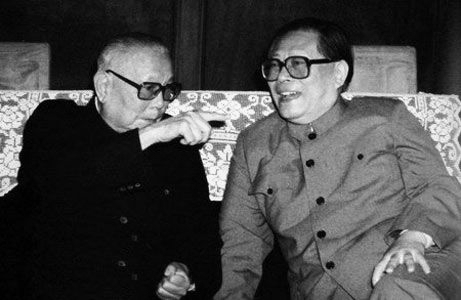
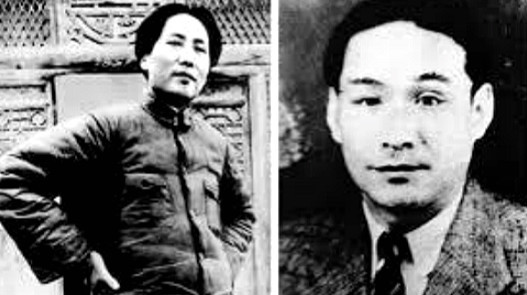
The relationship between Li Xiannian and Pan Hannian was the most sensitive of these hidden arrangements. When the Pan Hannian case—a major internal political purge—erupted in 1955, it was publicly framed as the exposure of an “internal traitor.” In substance, it was a political operation ordered by Mao Zedong to sever the Party’s ties to its most compromising wartime activities.
At that moment, Li Xiannian had just entered Beijing to take control of the Ministry of Finance, becoming a central executor of the purge.
In April 1955, Pan Hannian was secretly arrested during a meeting in Beijing. His real liability was not disloyalty, but documentation: original records detailing Yan’an-era “material exchanges” with Japanese forces and the Wang Jingwei regime—opium transactions in exchange for supplies and intelligence. Mao understood that if these materials surfaced, the CCP’s claim to have been the unquestioned “mainstay of resistance against Japan” would collapse.
By 1954, Li Xiannian had replaced Chen Yun, a senior economic planner, as minister of finance. As the former commander of the New Fourth Army’s Fifth Division, he knew exactly how dangerous those records were—because he himself had signed many of the relevant accounts.
Archival cleansing and the politics of silence
Under covert direction from Zhou Enlai, then China’s premier, Li Xiannian initiated a prolonged internal “archival reorganization” within the Ministry of Finance. Its purpose was singular: to eliminate all traces of the “special goods” trade.
Historical ledgers from former border-region banks, the Northwest Commercial Corporation, and New Fourth Army finance offices were sealed and reclassified as “top secret.” Only Mao Zedong, Zhou Enlai, and Li Xiannian were permitted access.
Entries explicitly labeled “opium,” “special goods,” or “local produce” were recoded as “coded operations,” stripping them of any narcotics reference. In the second half of 1955, entire batches of “expired files” were secretly burned under armed police supervision. These included Pan Hannian’s Shanghai trade lists and Li Xiannian–signed telegrams authorizing the receipt of Japanese-supplied medicines and the dispatch of opium.
To close the resulting fiscal gaps, Li ordered portions of narcotics income reclassified as “confiscated bureaucratic capital” or “overseas Chinese donations.”
Finance personnel with direct knowledge were subjected to political scrutiny. Many were labeled as having “historical problems” and sent to remote agricultural camps. Some disappeared entirely even before the Cultural Revolution. The objective was explicit: ensure there would be no living witnesses.
According to accounts, Li Xiannian once told his financial inner circle: “Some accounts are safer rotting in your stomach than written on paper.” This became his governing principle.
Pan Hannian was imprisoned in secret for three decades until his death. Officially branded a “traitor,” one of the decisive reasons for his elimination was that he knew too much—about opium, intelligence exchanges, and wartime transactions implicating multiple senior leaders still in power. Li Xiannian was among them.