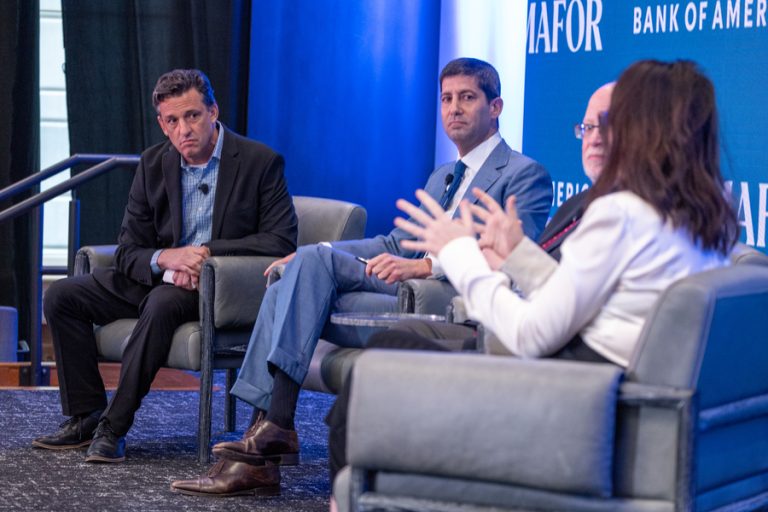
According to the Associated Press, U.S. President Donald Trump announced on Friday that he will nominate former Federal Reserve official Kevin Warsh as the next Fed Chair. If confirmed by the Senate, Warsh would succeed current Chair Jerome Powell in May this year. The decision is expected to bring significant changes to the Fed and could bring the traditionally independent institution closer to the White House.
Trump wrote on his social media platform Truth Social: “I have known Kevin for a long time, and I have no doubt he will go down in history as one of the greatest Fed Chairs, possibly the very best. More importantly, he is perfectly ‘tailored for this position’ and will not disappoint.” Warsh, 55, served as a Fed Governor from 2006 to 2011 and was one of the youngest governors in the institution’s history. After leaving the Fed, he worked as a fellow at the Hoover Institution and taught at Stanford University’s Graduate School of Business.
From ‘hawkish figure’ to Trump’s choice
In terms of stance, Warsh is not a traditional “dove.” During his time at the Fed, he frequently opposed low-interest-rate policies and warned of inflation risks following the 2008–2009 financial crisis.
This made him appear not to be a natural ally of Trump, who has long advocated for substantial rate cuts and at times suggested that the Fed’s benchmark rate should drop to around one percent, while it currently hovers near 3.6 percent.
However, Warsh’s position has shifted in recent years. In several speeches and commentary articles, he began supporting lower interest rates. In January 2025, he wrote in the Wall Street Journal that large-scale deregulation and fiscal spending cuts under a Trump administration would help curb inflation and create conditions for rate reductions.
Success
You are now signed up for our newsletter
Success
Check your email to complete sign up
This shift helped him ultimately prevail in the candidate competition, defeating others including White House economic advisor Kevin Hassett, BlackRock executive Rick Rieder, and current Fed Governor Christopher Waller.
Trump strengthens influence over the Fed
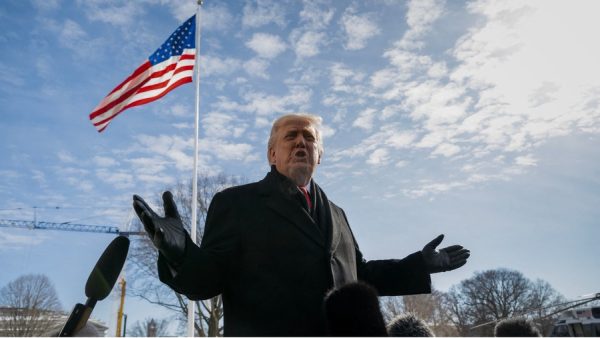
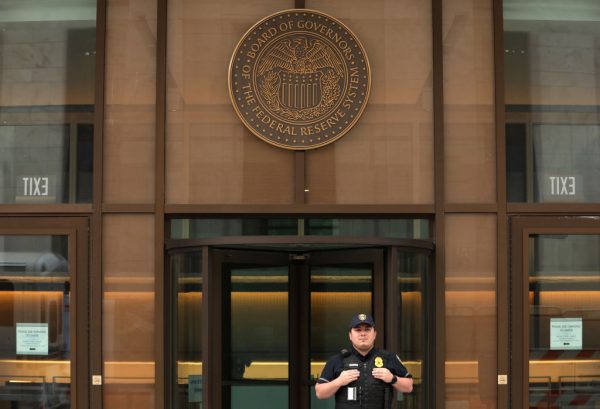
Multiple media outlets noted that Warsh’s nomination is seen as an important step by Trump to exert more influence over the Fed. The Federal Reserve is one of the few U.S. federal institutions that maintains significant independence, and Trump has long expressed dissatisfaction with its policies.
The AP pointed out that during his first term, Trump frequently criticized Powell for not cutting rates quickly enough and attempted to remove several Fed officials. Last August, he even tried to remove Governor Lisa Cook, but faced legal challenges, with the Supreme Court recently leaning toward allowing her to remain.
If Warsh is confirmed, Trump would have the opportunity to place him directly in the chair after Powell’s term ends, giving the White House greater influence over monetary policy.
Double challenge: market and politics
According to CNBC, despite the political undertones of Warsh’s nomination, the market response has been relatively calm. Analysts note that he has credibility on Wall Street and is unlikely to become a mere “mouthpiece” of the White House.
David Bahnsen, Chief Investment Officer of Bahnsen Group, said: “Regardless of who is elected, short-term rate cuts may happen. But in the long run, Warsh still has a degree of independent judgment.”
However, as Chair, Warsh would also face practical constraints. Fed rates are set by a 19-member committee, of which 12 have voting rights, and there is still significant internal disagreement over whether to cut rates. Moreover, if markets perceive the Fed as overly dovish due to political pressure, it could trigger a sell-off in U.S. Treasuries, ironically pushing long-term rates higher.
In addition, political resistance in the Senate cannot be ignored. Republican Senator Thom Tillis has stated that he will block any new Fed nomination until the Justice Department completes its investigation into the Fed.
A Chair who could trigger a ‘policy shift’
Warsh was once a close aide to former Fed Chair Ben Bernanke. Bernanke described him in his memoir as “politically astute, market-savvy, and one of my most trusted advisors.”
In recent years, however, Warsh has become increasingly critical of the Fed. He has publicly called for “institutional reform” and criticized the Fed for allowing inflation to run unchecked in 2021–2022, calling it “the most severe policy error in 45 years.”
In an interview with CNBC last year, he stated bluntly: “Today’s Fed is not the same institution I joined in 2006.”
If he ultimately assumes office, this former insider could become a key figure in driving a major shift in the Fed’s direction.