Alleged investigation of Zhang Youxia draws global attention
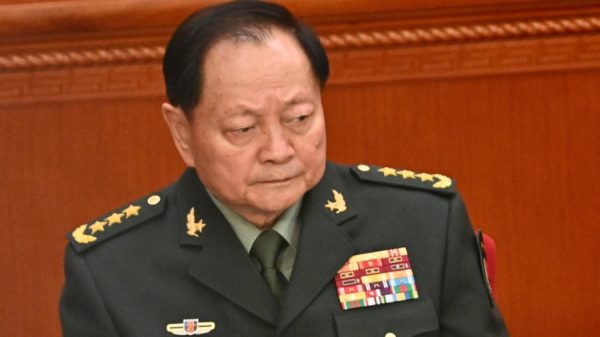
The sudden investigation of Zhang Youxia, vice chairman of the Chinese Communist Party (CCP)’s Central Military Commission, has drawn international attention. On Jan. 29, a letter said to have been prepared in advance by Zhang began circulating online. Analysts say the document contains extensive internal detail, follows the internal logic of the CCP political system, and closely corresponds with recent developments surrounding China’s military leadership.
Independent scholar Wu Zuolai said the letter was written in anticipation of a possible arrest as part of an internal CCP military purge. Posting the text on Facebook, Wu said his source told him that Zhang believed he might be detained by Xi Jinping and therefore drafted the letter in advance, instructing that it be released through overseas media if he were taken into custody.
Those who circulated the letter said copies were also sent to the Xi Office, the Central Commission for Discipline Inspection (CCDI)—the CCP’s top anti-corruption body—and other relevant authorities. They urged readers to judge the letter’s authenticity for themselves and called for its wide dissemination, arguing that the information it contains aligns with the CCP’s internal operating mechanisms and serves as a counterweight to official propaganda portraying Zhang through allegations spread via overseas mainstream media.
According to those involved, circulating the letter is intended to enable deeper understanding of the CCP’s opaque internal political and military operations.
‘If I am arrested, this letter should be made public’
What follows is the full text of the alleged letter attributed to Zhang Youxia:
Success
You are now signed up for our newsletter
Success
Check your email to complete sign up
I am calm as I write this. If anything happens to me, this letter should be made public.
If I am arrested, others will inevitably be arrested as well. This will not be because we have committed disciplinary or legal violations, but because Comrade Xi Jinping and I hold fundamentally different views on how the Central Military Commission chairman responsibility system should be understood.
Zhang cites major disagreements with Xi Jinping over the use of force to unify Taiwan, strategic cooperation with Russia, and the rapid promotion of senior PLA officers.
Such disagreements, he writes, should be normal within the Party and the military and resolved through “scientific methods and democratic centralism”—the CCP’s formal decision-making doctrine. Instead, he argues, extraordinary measures have been chosen. He recalls Zhao Ziyang’s words before the 1989 crackdown: “We are old; it does not matter anymore.”
Rejection of a military coup—and warning of civil war
Zhang states that although he has the capacity to carry out a military coup, he will not do so. Any such action, he warns, would spiral into civil war, with innocent soldiers as the first victims. If unconventional measures are taken against him, he says he will not resist.
“Right and wrong, justice and injustice—public conscience is the scale,” he writes. “History, I believe, will also record the truth clearly.”
He expresses hope that Xi Jinping will reflect, warning against pushing matters to extremes and hinting at forces beyond individual leaders that are watching events unfold.
Zhang asserts that any arrest would resemble a coup in form: secretly plotted by a handful of individuals, without collective discussion by the CCP Central Committee Politburo, yet implemented and announced in the name of the Central Committee.

Historical Parallels: 1989, Deng Xiaoping, and the chairman responsibility system
Zhang challenges the narrative of discipline and legality, invoking the 1989 Tiananmen crackdown. “In 1989, it was Deng Xiaoping who violated discipline and law, not Zhao Ziyang,” he writes.
He warns that if he is arrested, Xi Jinping could push China toward a North Korea–style system: single-minded pursuit of forceful unification with Taiwan and the frequent use of the PLA to impose martial law.
He anticipates charges centered on opposition to the chairman responsibility system—the principle that grants the CCP leader ultimate authority over the military. Zhang argues that he opposes not accountability, but the transformation of the system into a patriarchal, micromanaged structure.
“Even Mao Zedong did not control the military to such an extent,” he writes.
Turning the people’s army into the Party’s army, he argues, is one thing. Turning it into a personal household army is another—and terrifying. He likens the current political culture to the Cultural Revolution, warning that propaganda today produces resentment rather than worship.
Personal power, PLA promotions, and cultural Revolution logic
Zhang describes “rocket-style promotions” within the PLA that breed unconditional loyalty and gratitude, encouraging soldiers to sing about being “good soldiers of Chairman Xi.” Unlike the Mao era, he notes, today’s information environment prevents genuine mass worship.
He describes his visible discomfort at events where officials rise and applaud Xi Jinping, comparing the scenes to North Korea under Kim Jong Un.
Overseas speculation about power struggles between Xi and Zhang, he says, circulated for years. He dismissed intelligence briefings on the topic, but argues that if he is arrested, the problem lies with the system itself—one that could ensnare anyone.

Taiwan, war, and the moral cost of leadership
Zhang emphasizes that Party leadership does not mean control of every detail, but collective rule through shared strategies and norms. He argues that the chairman responsibility system should operate under collective leadership, with the chairman acting as supreme commander only in wartime.
More gravely, Zhang accuses Xi Jinping of actively seeking a major war, driven by a desire to personally command it. He calls conflicts in the South China Sea and along the China–India border unnecessary.
“I have experienced war,” Zhang writes. Leaders launch wars, soldiers die, and leaders later reconcile—something he says “no human being should do.”
He recalls fallen comrades buried where they died, their families unable to afford visits. Creating such tragedies in peacetime, he says, was Deng Xiaoping’s sin.
Constitutional power and the road to Tiananmen
Zhang asserts that Deng amended China’s constitution in 1982 to establish the chairman responsibility system precisely to concentrate personal power—something that did not exist under Mao.
Deng, he writes, concealed this change because it served authoritarian ends. Xi Jinping’s later constitutional revision followed the same pattern: elite decisions ratified by a coerced National People’s Congress after the Politburo had already settled matters.
Because of this system, Zhang argues, Deng was able to purge Hu Yaobang and Zhao Ziyang and send tanks into Chang’an Avenue.
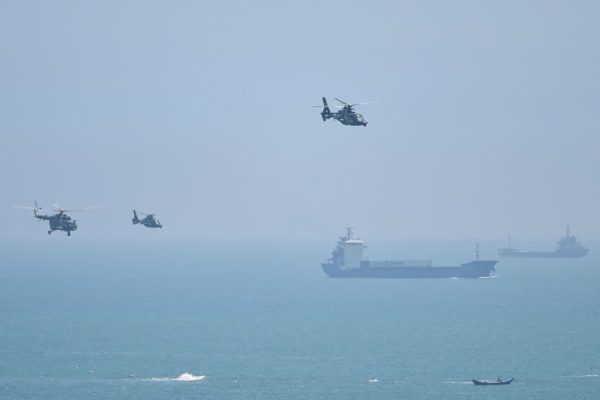
Warning against war over Taiwan
Zhang advises Xi for the sake of both country and family, noting their shared upbringing. A war over Taiwan, followed by conflict with the United States and Japan, he warns, would dwarf past conflicts.
Tens or hundreds of thousands of soldiers could die. China’s coastal infrastructure could be destroyed within hours. Assets would be frozen. The Party-state could collapse. If war led to mutiny or regime overthrow, Zhang asks, would there be bloody reckoning against those who launched it?
The military exists to defend the people, he writes—not to serve as a tool for endless war.
Internal CCP struggles and the Third Plenum
As long as Zhang remains in the CMC, he claims, he can restrain Xi. If he is arrested, other senior officers—including Zhenli—will follow, potentially pushing China toward permanent militarization or martial law, worse than the Cultural Revolution.
He traces the conflict to before the Third Plenum, citing shock promotions and norm-breaking that generated deep dissatisfaction. At the plenum, Zhang says he and Zhenli opposed Xi’s plan to exploit Russia’s war in Ukraine to seize Taiwan.
Elders intervened. The so-called Beidaihe Consensus later circulated online, accurately predicting that Xi would not seek another term at the 21st Party Congress and that power would be moderately decentralized.
But, Zhang writes, everything later unraveled.
Final reflections and appeal
Standing Committee members such as Cai Qi and Li Qiang, he argues, owe their authority solely to Xi and favor authoritarianism. The people bear the cost, as during the pandemic.
Zhang concedes his own errors: supporting constitutional revision and misjudging Russia’s strength. A Taiwan war, he warns, would repeat the tragedy.
He fears fabricated charges—treason, corruption—despite being entitled to retire honorably. Corruption accusations, he says, are routine. At his age and rank, wealth is meaningless.
Footage of General Xu Qinxian’s trial moved him deeply. A general who refuses to fire on civilians, he writes, is a true soldier.
Zhang ends with a simple appeal to Xi Jinping: step down at the 21st Party Congress, do not launch wars, respect the international order, and genuinely reform.
“If I am arrested,” he concludes, “I hope this letter is made public.”
Reactions and questions of authenticity
Vision Times is unable to independently verify the authenticity of the alleged letter.
Independent political commentator Cai Shenkun said he also obtained the document and read it publicly on his self-media program. Some readers found it highly credible; others believed it was written by someone deeply familiar with CCP inner workings.
Cai said the letter aligns with CCP internal logic and current developments and is intended to counter deliberate external propaganda. He added that authorities have assembled numerous accusations against Zhang, including claims reported by The Wall Street Journal alleging leaks of nuclear weapons secrets.
Many experts have expressed doubts about these allegations.
Henry Gao, a law professor at Singapore Management University, wrote on X that while accusations could be fabricated for many reasons, leaking U.S.-bound nuclear secrets made little sense. He described the case as a high-level information war aimed at pressuring Zhang’s allies within the Party and the PLA.
Francesco Sisci, director of the Appia Institute in Rome, told Newsweek that Zhang’s alleged fault was unlikely to involve espionage, but rather Xi Jinping’s belief that someone might be organizing resistance—or a coup.
Dennis Wilder, a former CIA analyst and senior fellow at Georgetown University, said bluntly: “This is not about corruption, and it is not about leaks. This is a purge triggered by the excessive power of a general.” Many observers see the case as a classic move by Xi Jinping to eliminate a subordinate whose influence had grown too great.