By Xiao Ran
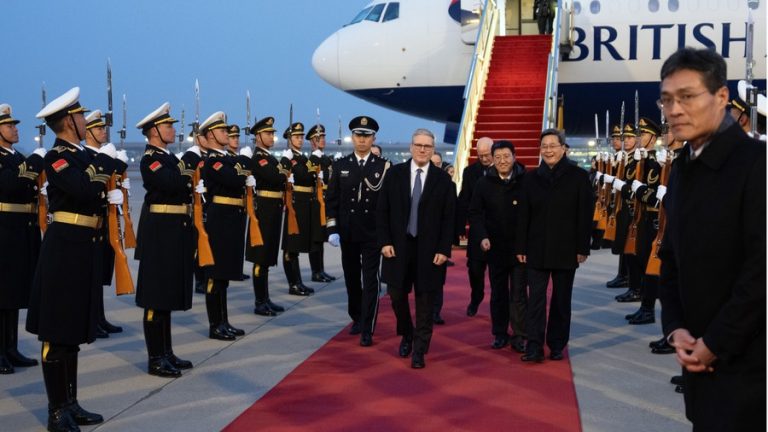
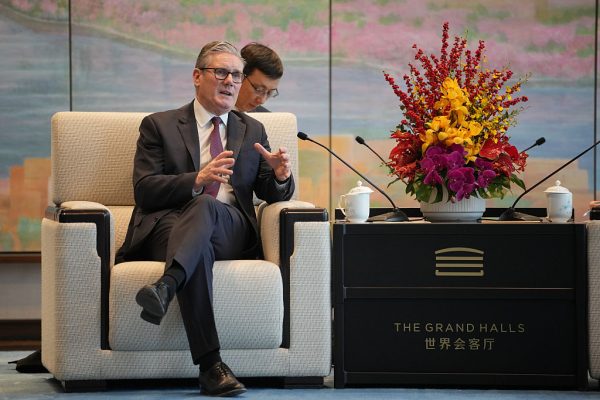
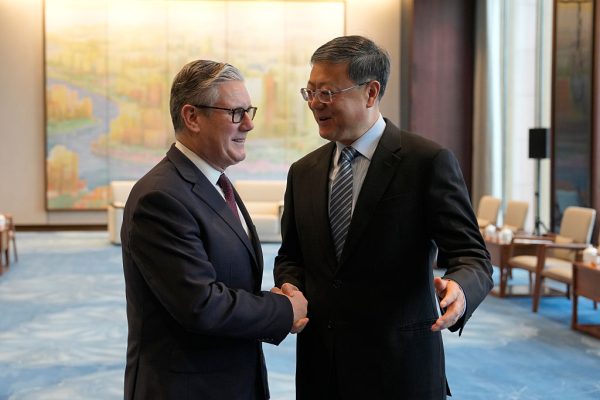
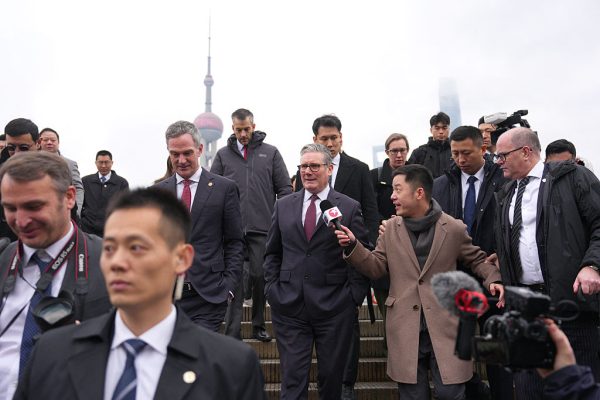
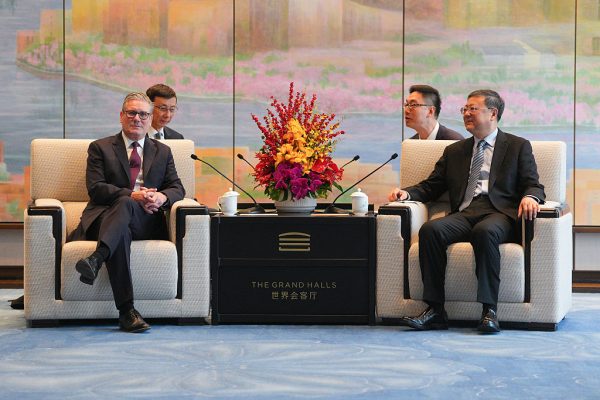
UK Prime Minister Keir Starmer arrived in Beijing on Jan. 28 for his first official visit to China, marking the first formal trip by a British leader in eight years. The visit is intended to restart commercial dialogue, promote trade and investment, and ease relations strained by years of tension over Hong Kong, espionage allegations, and broader geopolitical disputes involving the Chinese Communist Party (CCP), China’s ruling party-state.
Yet even before Starmer landed, Britain had already delivered what The Wall Street Journal described in a Jan. 28 editorial as a “major gift” to Beijing: approval of China’s construction of Europe’s largest “super embassy” in central London. Granted just days before the visit, the decision has been widely interpreted as a unilateral concession to the CCP leadership under Xi Jinping, sharpening scrutiny of whether Starmer can extract anything in return—most urgently, the release of Jimmy Lai.
Former Canadian diplomat Michael Kovrig, speaking from hard personal experience with Beijing’s coercive tactics, has issued a blunt warning.
According to The Times of London, the embassy site is the former Royal Mint Court, near the Tower of London and the City of London financial district. The approval followed more than a year of government review and immediately provoked fierce backlash across Britain’s political spectrum.
Success
You are now signed up for our newsletter
Success
Check your email to complete sign up
Shadow Foreign Secretary Priti Patel accused Starmer of “selling out national security,” charging that he had handed the heart of London to a Chinese Communist Party “giant spy center.”
The government has insisted that the risks are manageable, citing mitigation measures such as monitoring fiber-optic cables carrying sensitive financial data to prevent eavesdropping. But the approval directly cleared the path for Starmer’s China visit. He is expected to relaunch the “UK–China CEO Council,” bringing together British firms including AstraZeneca, BP, HSBC, Jaguar Land Rover, and Rolls-Royce with Chinese counterparts such as the Bank of China, China Mobile, and BYD, with particular emphasis on the pharmaceutical sector.
Energy Secretary Ed Miliband has framed the approach as pragmatic, arguing that Britain must cooperate with China on issues such as climate change while confronting areas of disagreement with Beijing’s political system.
Jimmy Lai and the question of political bargaining
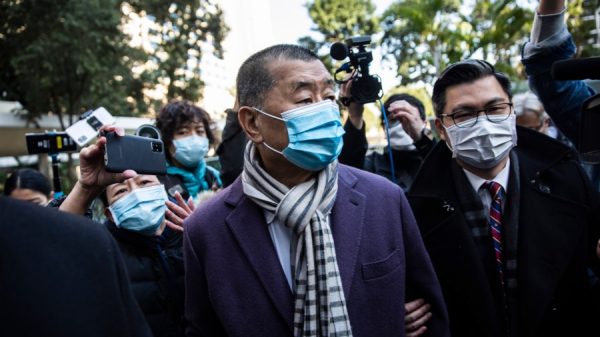
The Wall Street Journal editorial raised the prospect of a tacit deal centered on the fate of Jimmy Lai, the Hong Kong media tycoon and British citizen. Lai, 78, has been convicted under Hong Kong’s National Security Law—a CCP-imposed statute introduced after the 2019 protests—and faces a possible life sentence. His health has visibly deteriorated in detention.
The editorial warned that Beijing could avoid a tragedy akin to that of Liu Xiaobo, the Nobel Peace Prize laureate who died in custody. It also noted that if Starmer—already polling weakly—returns empty-handed, with Lai still imprisoned, the political cost could be felt in elections later this year.

Michael Kovrig: a warning from inside CCP ‘hostage diplomacy’
Michael Kovrig: Starmer must be tough—a strategic warning before entering a “toxic environment”
Michael Kovrig, a former Canadian diplomat and adviser to the International Crisis Group, was arbitrarily detained for nearly three years in retaliation for Canada’s arrest of Huawei executive Meng Wanzhou. His case became one of the clearest and most notorious examples of the CCP’s use of “hostage diplomacy,” a tactic increasingly associated with Beijing’s foreign policy under Xi Jinping.
That experience has given Kovrig an unusually direct understanding of how the party-state operates, how it frames foreign relations, and how it deploys the language of “rule of law” while subordinating courts to political command.
Kovrig has consistently argued that the CCP does not conduct foreign relations on the basis of international norms or mutual trust, but through coercive “political transactions.” Diplomatic actions, he says, are routinely subordinated to domestic power struggles and internal political imperatives.
He has stressed that his detention was not an aberration, but a microcosm of the CCP’s systematic use of arbitrary detention as an international bargaining tool. In his assessment, this practice is not improvised but highly institutionalized—designed to intimidate foreign governments, mobilize public pressure abroad, and force concessions on core interests.
Claims of governing “according to law” in foreign-related cases, he said, collapse quickly when they conflict with political demands. Judicial processes are instrumentalized, and individual rights are left with virtually no protection.
Western misjudgment and the cost of engagement
On Western China policy more broadly, Kovrig has been unsparing. For decades, he said, democratic governments misjudged the CCP, placing excessive faith in engagement while underestimating the regime’s rigidity and ideological exclusivity.
Economic cooperation and diplomatic goodwill, he warned, do not moderate Beijing’s behavior; they are more often read as weakness, inviting greater pressure.
Kovrig has therefore urged democratic countries, including Canada, to draw explicit red lines, coordinate closely with allies, and abandon fragmented, go-it-alone approaches. Only when coercive behavior carries a tangible cost, he argued, can practices such as hostage diplomacy be restrained.
This, he said, is not merely a matter of national interest but one that directly affects the credibility and security of the international order.
Sheng Xue: Britain’s strategic retreat
Sheng Xue: Britain dismantles its own walls—a collective collapse of Western civilizational confidence
Sheng Xue, a democracy activist who has closely followed the “super embassy” controversy, described Britain’s approval as a naked political trade-off. In her view, London has exchanged its own security, institutional credibility, and moral bottom line for Starmer’s “red carpet moment” in Beijing.
The site—adjacent to the City of London and critical data infrastructure—had long been flagged by British intelligence agencies as a potential “electronic black hole,” protected by diplomatic immunity and capable of integrating intelligence collection, technical surveillance, united front operations, and transnational repression by the CCP.
Sheng warned that the embassy would strengthen Beijing’s control over Chinese communities, students, and dissidents in Britain and across Europe, transforming London into a regional command hub.
She accused Britain of willfully ignoring the CCP’s unchanged pattern of infiltration and repression. As early as 2019, she noted, British parliamentary hearings had confirmed allegations of forced organ harvesting. Granting approval regardless, she argued, amounts to erecting an “institutional monument” to perpetrators.
A synchronized western slide
Sheng placed the decision within what she sees as a synchronized Western retreat. France’s eagerness for Chinese capital and Canada’s talk of constructing a “new order” with the CCP, she said, reflect a shared “strategic illusion” that treats authoritarian power as a source of stability.
By contrast, she characterized former U.S. President Donald Trump’s decoupling strategy as more clear-eyed, arguing that Europe’s concessions are accelerating Beijing’s erosion of sovereignty and democratic institutions.
Sheng was blunt in her assessment of Starmer’s visit, calling it a “collective kneeling display” by democratic states under CCP pressure. Three decades of experience, she said, show that economic concessions do not buy moderation; they invite deeper political penetration.
If the visit fails to secure concrete progress on human rights cases such as Jimmy Lai’s, she warned, it will only embolden Beijing’s arrogance and further weaken the West’s already fraying defenses.
International reaction and the strategic test ahead
The United States has voiced concern over the embassy approval, warning that it could facilitate espionage. Within the European Union, divisions are evident: France has leaned toward welcoming Chinese investment, while Germany has adopted a more cautious posture toward Beijing.
Kovrig has renewed calls for tighter coordination and unified deterrence among Western governments. Sheng, by contrast, has expressed deep pessimism, arguing that the moment signals collective decline and will make it even harder for small and medium-sized countries to resist CCP coercion.
Starmer’s China visit may yet prove a defining test. If it produces tangible results—above all, progress toward Jimmy Lai’s release or meaningful economic agreements—it will be hailed as a diplomatic success. If it produces nothing, it will reinforce a harsher lesson: that concessions to Beijing are often one-sided and strategically barren.
Kovrig and Sheng converge on a single warning: engagement with the Chinese Communist Party, absent firmness and moral red lines, does not stabilize the international order—it accelerates its unraveling.