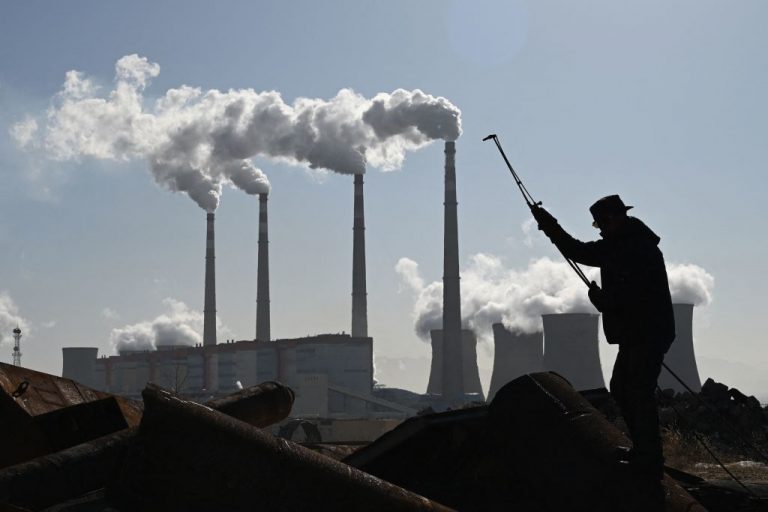
As China’s industrial slowdown deepens, a new wave of production halts is rippling through the steel sector. According to industry data, 44 out of 95 independent electric arc furnace (EAF) steel mills on the Chinese mainland will suspend operations between Feb. 1 and Feb. 8, accounting for nearly half of all such producers. Several additional mills are scheduled to shut down after Feb. 8, extending the disruption further into mid-February.
The sudden scale of the shutdowns has sparked alarm across Chinese social media. One netizen wrote: “Forty-four steel mills shut down! Has iron ore been cut off? Steel furnaces usually can’t stop even 360 days a year, yet now they’re going dark together.”
RELATED: Dalian Bank Faces Retrial After 180 Million Yuan in Client Funds Vanish
Nearly half of EAF steel mills offline
According to data from MySteel, a well-known Chinese commodities research platform operated by Shanghai Steel Union E-Commerce Co., Ltd., most of the shutdowns are concentrated in early February, coinciding with the Lunar New Year period. From Feb. 1 to Feb. 8 alone, 44 steel mills, 47.83 percent of those surveyed, will suspend production, while nine more mills plan to halt operations after Feb. 8, with the latest shutdown scheduled for Feb. 15.
Among the mills announcing production suspensions or maintenance shutdowns are Hangda Steel (Yekong Group), Chengshi Steel (Dugang Group), Qujing Hengtai, and Sichuan Dugang Steel. Hangda Steel is expected to reduce output by approximately 90,000 metric tons, while Chengshi Steel may cut production by 170,000 tons. Other producers, including Panjin Steel Pipe, Fangda Special Steel, Ping’an Steel, and Longteng Special Steel, have also announced partial shutdowns or maintenance plans.
Success
You are now signed up for our newsletter
Success
Check your email to complete sign up
In the Sichuan-Chongqing region, 12 of 17 major steel mills are scheduled to halt production during the Lunar New Year, while four have already been shut down long-term. Analysts also expect most EAF steel producers in Hubei Province to suspend operations. Meanwhile, Shagang Yongxing previously planned blast furnace maintenance beginning in December 2025, and Jigang Group’s steel production lines have been completely shut down for several years.
RELATED: From Industrial Heartland to Economic Void: Why China’s Northeast Is Vanishing
Furnaces that ‘never stop’ halted
The scale of the stoppages has raised eyebrows because steel furnaces, particularly electric arc furnaces, are typically designed for near-continuous operation due to the high cost of restarting them. Some netizens speculated whether raw material shortages were to blame, with one writing that “steel furnaces normally can’t stop 360 days a year,” and suggesting that iron ore procurement may have become difficult under international pressure.
However, others pushed back on that theory. X user “richie winson” argued: “It’s not an iron ore problem, it’s overcapacity and unsellable output forcing shutdowns. The more they produce, the more inventory piles up, and the bigger the losses.”
He also attributed the situation to the fallout from the U.S.–China trade war, noting that Washington has tightened steel and aluminum tariffs not only on China, but also on Canada and Mexico, “preventing them from being used as transshipment channels for Chinese steel.”
Overcapacity, not shortages
Industry observers largely agree that demand collapse, not supply disruption, is the core issue. Electric arc furnace mills primarily rely on scrap steel and electricity rather than iron ore, and are generally considered more flexible and environmentally friendly than traditional blast furnace operations. Yet even these lower-emission producers are now being forced offline.
RELATED: Shanghai in Decline: Empty Streets, Vanishing Consumers, and Dwindling Traffic
Netizens repeatedly linked the steel shutdowns to China’s prolonged property slump. One commented: “The real estate sector died years ago, related industries were bound to follow.” Another wrote: “This reflects serious bottlenecks in China’s housing market and infrastructure spending.”
The transformation of former steelmaking hubs into tourist attractions has also become symbolic of the industry’s decline. As one user pointed out, even Wuhan Iron and Steel Corporation (WISCO) has repurposed parts of its former blast furnace facilities into public tourism zones. According to Jimu News, WISCO launched its cultural tourism project in 2022 and officially opened it to visitors in February 2023.
Prices at record lows
Market data underscores the severity of the downturn. A Tencent News report from November last year described China’s steel market as locked in a brutal supply-demand imbalance. Despite production cuts, prices have continued to slide. By early November 2025, rebar futures fell to 3,044 yuan per ton, while hot-rolled coil dropped to 3,265 yuan per ton, both near ten-year lows.
The steel industry is now widely described as trapped in a “three highs, three lows” dilemma: High output, high costs, high inventories, combined with low demand, low prices, and low profitability.
As shutdowns spread and confidence erodes, analysts warn that the steel sector’s struggles may be a bellwether for broader industrial distress, signaling that China’s economic slowdown is no longer confined to property developers, but is increasingly engulfing its heavy manufacturing base as well.