By Vision Times TV
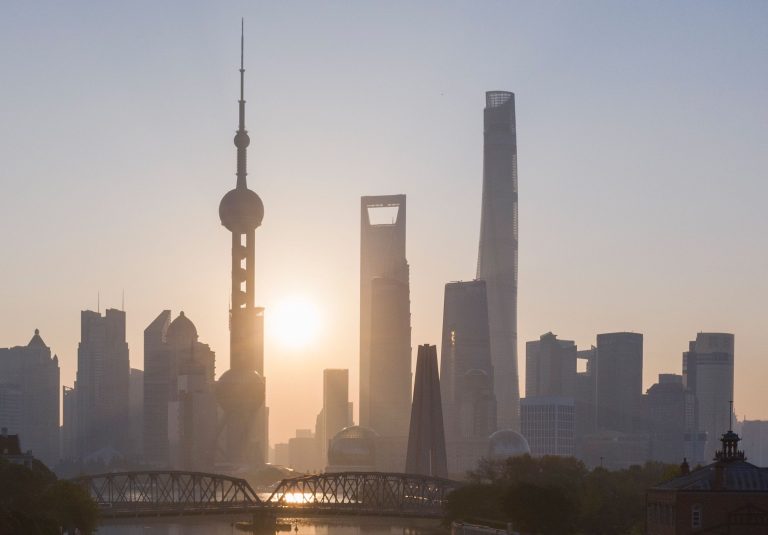
At the start of 2026, neon lights along East Nanjing Road and Huaihai Road in Shanghai were still glowing, but just steps away from these flagship arteries, side streets tell a different story: Row after row of storefronts plastered with “For Lease” signs, deserted malls, and hollowed-out commercial blocks. Once hailed as China’s commercial hub, Shanghai has been suffering from a visible economic downturn in recent years. To make matters worse, the trend is only gaining speed across major Chinese cities.
“Shanghai really has no people anymore. Back in the day, coming to the pedestrian streets on weekends you couldn’t even squeeze through; it was just a sea of heads,” says one blogger in a viral video. Now look at this, my god, aside from security guards and shop owners, you couldn’t hit a person even if you threw a stick.”
They add, “It’s terrifying. That whole stretch near Guangxi North Road and East Nanjing Road—places that used to have lines every single day, now it’s completely empty. Rents are too high, tenants can’t handle the pressure, and everything has been vacated.”
According to industry data, average vacancy rates in Shanghai’s Grade-A office buildings and high-end shopping malls have climbed toward 23 percent, with rents continuing to slide even in core commercial districts.
Success
You are now signed up for our newsletter
Success
Check your email to complete sign up
RELATED: Monthly Pay Sinks Below 2,000 Yuan as Jobs and Businesses Vanish in Shenzhen
A milk-tea shop owner who shut down her final location after five years said, “Don’t open a shop, absolutely don’t. It’s not that money is hard to make. People just don’t want to spend. Even those who have money are tightening their wallets.”
Once-packed landmarks now silent
“This is the Dimmy Shopping Center at People’s Square. It used to be sacred ground for Shanghai’s trendsetters, every post-90s kid knew it. Back then, its foot traffic was no less than Nanjing Road,” the blogger notes, adding, “Coming back now, every store is closed. Completely empty. A security guard told me there’s a ‘New Dimmy’ about 250 meters away, so I went to take a look.”
The blogger said the new complex is dominated by anime and cosplay merchandise, an attempt to pivot toward niche subcultures. Yet even there, foot traffic was sparse. “Once-bustling shops now have no customers at all. It’s probably not just Shanghai, other cities are likely going through the same wave of closures.”
RELATED: From Industrial Heartland to Economic Void: Why China’s Northeast Is Vanishing
“I’m a 27-year-old woman drifting in Shanghai, married with no kids,” the blogger says. “Finding a job is truly harder than reaching the sky. I’ve been unemployed for four months now. I graduated over five years ago and worked in administrative roles, but now even HR tells me admin positions prefer fresh graduates.” She adds, “I always knew this day would come, but facing it for real still makes you panic.”
In the comments section, one user wrote: “A friend of mine works in HR. She says if a candidate is married but childless, it’s basically automatic elimination, no need to continue the interview.”
Chidless married women are seen as unstable employees, as if they decide to become mothers it will impact the company’s workflow. However, this approach exacerbates the anti-natal social and economic atmosphere.
Dwindling traffic, vanishing jobs
“Have you noticed how Shanghai has way fewer people now? I went downstairs to eat and every restaurant on the street was empty. The market aunties say grocery shoppers are down by half. Delivery riders are confused too. Before they could do 50 orders a day, now they can’t even hit 20,” she notes. “From Shanghai to Chengdu, from south to north, everyone’s saying people are gone. Where did these hundreds of millions go?”
Milk-tea shops no longer draw lines. Cinemas have cut screenings in half. Breakfast stalls and barbershops under residential buildings are posting transfer notices one after another. Even the subway has changed. “These days, even rush hour isn’t crowded,” notes the blogger. “Seats that used to be fought over — you can just pick one now.”
Some speculate migrant workers have returned to their hometowns, but residents in smaller cities say their malls are empty too.
Laid off after 18 years on the job
“I was laid off, born in 1984, 41 years old, middle-aged, female,” another Shanghai resident tells the blogger. Those three labels together, those who know, know. But I’m not here to sell misery. I want to talk about how I swam ashore after the foreign-funded ‘big ship’ I spent 18 years on finally sank.”
“In 2007, I joined a foreign bank as a management trainee. I had my glory days — worked my way up to branch president, managing over 4 billion yuan in assets. Later I moved quietly into risk control.”
At first, she felt wronged. But walking out of the office for the last time, she realized one chapter had ended, and another had begun. “Being laid off isn’t failure. It’s just what happens when the broader environment turns downward,” she says.
Another resident says, “My husband and I are both 42. I’ve been full-time for over three years. He works half the year, rests half the year. We have two kids in elementary school.” She adds, “People tell us to go back to our hometowns, but after drifting in Shanghai for over a decade, we’ve already paid off our mortgage here.”
Though her husband occasionally delivers food to earn extra cash, the money isn’t enough to sustain them for long. “He went out one morning and only got a few orders,” she said.
A shrinking city
“People are disappearing, and we’re still talking about a ‘soft landing’ for housing prices? If marriage and birth rates keep hitting new lows, by 2045 our population could drop to 500 million,” writes one blogger, adding, “Without people, who are these homes even for? If no one buys, what are you propping up?”
Another blogger added: “There are tons of homes in Shanghai that can’t be rented out. The streets aren’t crowded anymore. The hottest jobs now are ride-hailing, designated driving, and food delivery, but even making 10,000 yuan a month, after rent and utilities, there’s barely anything left.”
Across interviews and street footage, a consistent theme emerges: Consumption has stalled. Even Shanghai, which was long regarded as China’s most resilient commercial hub, is showing signs of fatigue via empty shops, shrinking foot traffic, and vanishing jobs.