By Lu Ke
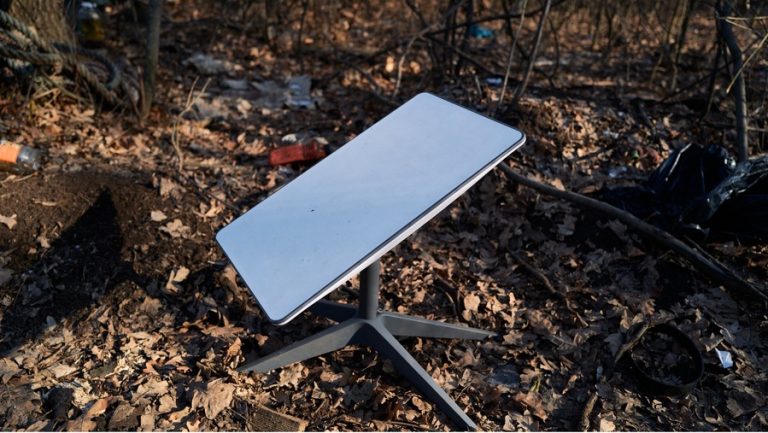
According to Reuters, Elon Musk, founder of Tesla and SpaceX, said on Feb. 1 that measures recently implemented by SpaceX appear to have successfully curbed Russia’s unauthorized use of its satellite internet system, Starlink. At the same time, Ukraine’s defense authorities said they are accelerating work on longer-term technical solutions to prevent future misuse by Russian forces.
Ukraine’s military relies heavily on Starlink’s satellite connectivity for battlefield communications and certain drone operations. Ukrainian officials disclosed this week that Starlink terminals were discovered mounted on drones used in Russian long-range attacks, prompting heightened concern in Kyiv.
Ukraine said it has begun cooperating with SpaceX to block the possibility of Russian forces using Starlink to guide drones.
Musk responds as Kyiv moves toward an ‘authorized terminal’ system
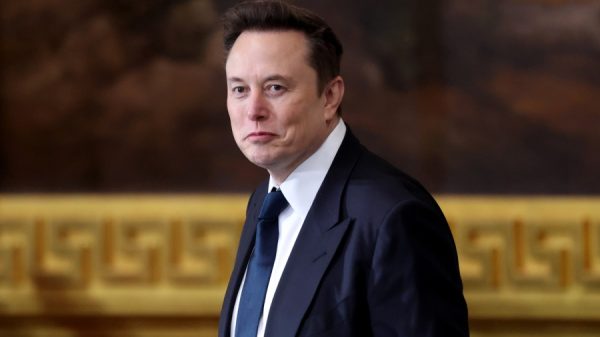
In a post on social media platform X, Musk wrote: “It seems the steps we have taken to stop unauthorized use of Starlink by Russia have been effective. If more needs to be done, please let us know.”
Success
You are now signed up for our newsletter
Success
Check your email to complete sign up
Earlier, Ukraine’s Minister of Digital Transformation, Mykhailo Fedorov, who also plays a coordinating role in defense-related technology matters, said on X that Ukraine is developing a new system to ensure that only authorized Starlink terminals can operate within the country.
“Ukraine and @Starlink have taken the first steps and quickly achieved results in countering Russian drones,” Fedorov wrote. “The next step is to implement a mechanism that allows only authorized terminals to function within Ukraine.”
In a statement issued in February 2024, SpaceX emphasized that it had never sold or shipped Starlink equipment to Russia and had “no business dealings of any kind with the Russian government or its military.”
Starlink was first activated in Ukraine in the early days of Russia’s full-scale invasion in 2022, after an urgent request from Kyiv. It has since been widely described as a critical lifeline for maintaining Ukraine’s communications capabilities.
SpaceX seeks approval for massive satellite deployment to support AI computing
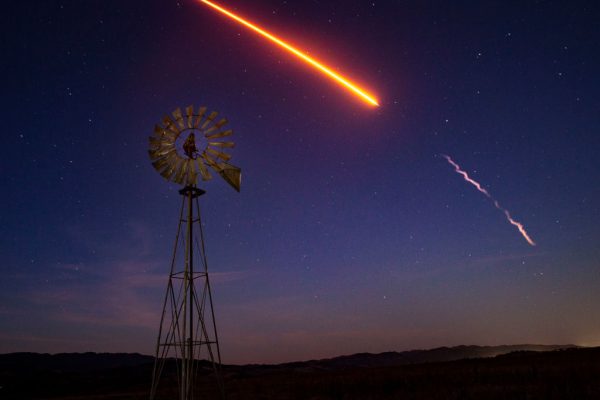
Separately, the BBC reported that SpaceX has submitted an application to the U.S. Federal Communications Commission (FCC) seeking approval to deploy up to one million satellites in low Earth orbit to support the massive computing demands of artificial intelligence.
The proposal introduces the concept of “orbital data centres,” which SpaceX argues would be the most cost- and energy-efficient solution to meet the rapidly growing needs of AI computation. The company said traditional ground-based data centers are increasingly approaching their processing limits as AI applications expand.
Starlink’s existing network currently consists of nearly 10,000 satellites in orbit. While the system has drawn criticism for contributing to space congestion, Musk has repeatedly rejected those claims. If approved, the new plan would increase the number of satellites by orders of magnitude, though no specific timeline was provided in the filing.
SpaceX said the system could provide computing capacity for “billions of users worldwide” and described it as a first step toward a “Kardashev Type II civilization,” one capable of fully harnessing the energy of a star.
“These satellites will be spaced very far apart and will be nearly impossible to see,” Musk wrote on X. “The vastness of space is far greater than people imagine.”

Environmental and safety concerns persist as astronomers warn of growing risks
Like existing Starlink satellites, the proposed “orbital data center” satellites would operate in low Earth orbit at altitudes ranging from 500 to 2,000 kilometers. SpaceX said the approach would be more environmentally friendly than traditional data centers, which consume vast amounts of electricity and require significant water resources for cooling.
However, experts previously told the BBC that sending computing hardware into space is itself costly and poses major technical challenges, including heat dissipation, power supply, and protection against radiation. The growing volume of space debris also presents a tangible risk to orbital infrastructure.
Industry observers have warned that the continued surge in low-Earth-orbit spacecraft significantly raises the probability of collisions, potentially damaging satellites and increasing the risk of debris falling back to Earth.
In 2024, several astronomers publicly complained that radio signals emitted by the Starlink network were “blinding” telescopes and severely interfering with scientific observations. Musk has consistently denied that his satellites occupy excessive orbital space or crowd out competitors.
Editor’s Note: This article is based on reporting by Reuters and the BBC, as well as public statements by Ukrainian officials and Elon Musk on social media platforms. Claims regarding battlefield usage of Starlink-equipped drones cannot be independently verified and are attributed to the cited sources.