By Xiao Ran, Vision Times
As global geopolitical instability accelerates under U.S. President Donald Trump’s second term, dubbed “Trump 2.0,” Western governments have recently launched high-level diplomatic engagement with Beijing. Keir Starmer, the British prime minister’s visit to China and the signing of new trade cooperation agreements were described by officials in London as a “pragmatic move” aimed at stabilizing relations and securing economic benefits.
But among Hong Kong exile communities in the UK, and some Western strategic observers, such “depoliticized” economic diplomacy is increasingly viewed as coming at the expense of values and security, sending what they describe as a dangerous signal. Hong Kong lawmaker Ho Wing-yau, now living in exile in Britain, told Vision Times that upon learning of the prime minister’s China visit and trade deal, his immediate reaction was “strong dissatisfaction.”
RELATED: Can Starmer’s China Visit Free Jimmy Lai? Testing the Limits of CCP Bargaining
In his view, as the leader of a country that signed the Sino-British Joint Declaration, the British prime minister neither publicly condemned the CCP for breaking its promises to Hong Kong nor spoke up for Hongkongers still facing repression. This “selective silence,” Ho said, has left many Hong Kong people disappointed and even heartbroken.
Success
You are now signed up for our newsletter
Success
Check your email to complete sign up
Echoing this sentiment, Hong Kong legislator Chin Po-fun also told Vision Times that her “first feeling” about the agreement was that it was “very cheap,” because it offered no real benefit to the British economy. She criticized the Labour government for approving the construction of a Chinese “super embassy” before the trip, then arriving in Beijing without daring to raise the case of imprisoned media tycoon Jimmy Lai, or even acknowledging the broader fate of political prisoners.
‘Pragmatism’ vs. democratic commitments
Ho Wing-yau noted that since the implementation of the Hong Kong National Security Law, many pro-democracy figures have been sentenced and jailed, while Hong Kong’s freedoms and rule of law have fundamentally deteriorated. Against this backdrop, Britain’s decision to deepen economic cooperation with China stands in sharp contradiction to its long-standing claims of supporting democracy, human rights, and legal principles.
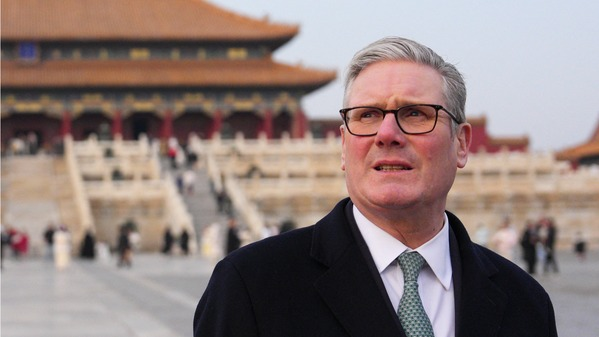
“Britain not only failed to speak up for dissidents, it didn’t even dare to demand the release of British citizen Jimmy Lai,” said Ho, calling such behavior “pedantic, weak, and even hypocritical.” He also argued that this approach damages Britain’s moral credibility internationally and shakes the confidence of Hongkongers living in the UK who once believed in government promises.
Chin Po-fun further warned that the planned “super embassy” creates psychological pressure and security fears among Hongkongers in Britain, saying it “will become a spy and cross-border law enforcement base.”
A transactional relationship
These criticisms align closely with the assessment of former Canadian diplomat Michael Kovrig, who has issued a recent analysis of the surge in Western visits to Beijing. Kovrig argued that such diplomacy is not driven by genuine “pro-China” sentiment, but rather by short-term, transactional hedging amid uncertainty over U.S. strategic direction by seeking limited concessions in exchange for economic “dividends” and temporary stability.
However, he warned that while such moves may appear rational individually, collectively they could produce severe consequences. The CCP, he said, uses these high-level visits to project global dominance, suppress criticism of its human rights abuses and coercive diplomacy, and gradually turn “political silence” into an unspoken condition for market access.
Britain’s approval of the Chinese “super embassy” project in London has generated widespread unease within the UK’s Hong Kong diaspora. Ho Wing-yau admitted he is “of course worried,” stressing that the issue involves not only national security but also the personal safety and freedom of speech of exiled Hongkongers. Chin Po-fun said the embassy controversy had long planted deep concerns in her mind: “All the worries were already there, it wasn’t created only this time.”
Both lawmakers emphasized that Britain still has institutional checks and balances, including cross-party opposition in Parliament and civil lawsuits, meaning they are “not overly pessimistic” at this stage. Kovrig cautioned that authoritarian regimes’ overseas diplomatic and economic presence often extends beyond traditional diplomacy, potentially involving transnational surveillance, influence infiltration, and intimidation of dissident communities.
He argued that all cooperation with China must pass one fundamental test: Whether it could later be “weaponized” against democratic societies.
Psychological warfare
For many Hongkongers in Britain, shifts in UK-China policy have already created psychological impacts. Ho acknowledged that the current situation “more or less affects Hongkongers in the UK, especially those who often participate in rallies, marches, and activism.” Yet he said he refuses to live in constant anxiety: “For things beyond my ability to control, I will face them with a go-with-the-flow mindset, otherwise it only adds pressure to life.”
Kovrig similarly warned that authoritarian influence rarely advances through sudden confrontation, but rather through gradual boundary-blurring expansion that causes societies to adapt unknowingly to new “bottom lines.” This is why, he stressed, public vigilance and institutional resilience remain crucial.
Abandoning principles
Ho said he has “not much expectation” for the current Labour government, but still retains confidence in Britain’s long-established democratic system. He urged lawmakers across party lines to continue speaking out for Hongkongers and other dissident communities, safeguarding freedom and security.
Chin Po-fun emphasized that those who remain in Hong Kong deserve respect: “They have not given up under such difficult circumstances.” Those who left, she said, must also not abandon the struggle for Hong Kong’s future.
Kovrig concluded with a national-level warning: engagement with China is unavoidable, but it must be grounded in sober risk assessment, industrial and security safeguards, and deeper cooperation with like-minded democratic partners.
Any “pragmatism” that sacrifices principles for short-term economic temptation may ultimately become structural vulnerability. As these voices suggest, the cost of retreating under the banner of pragmatism may far exceed any immediate gains by currying favor with the CCP.