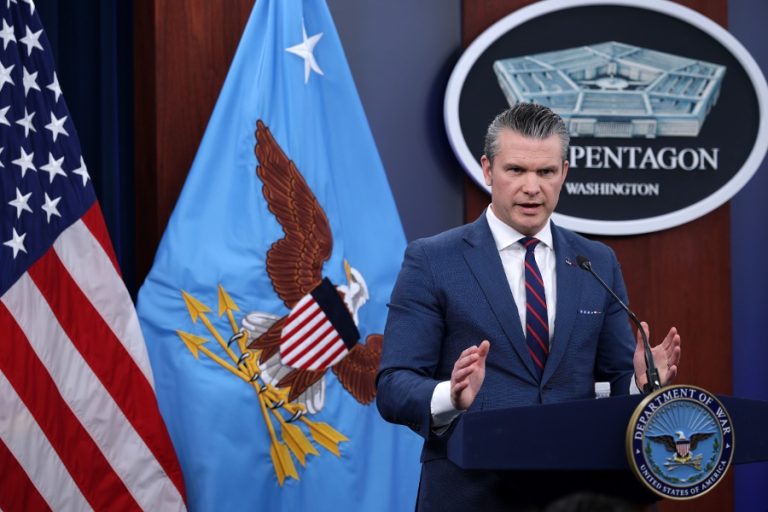
U.S. Defense Secretary Pete Hegseth announced on June 18 that the Pentagon will conduct a comprehensive six-month review of American troop deployments across Europe in a move that could reshape Washington’s military footprint on the continent and alter the balance of responsibilities within NATO.
Speaking at a meeting of NATO defense ministers in Brussels, Hegseth said the review will examine troop levels, base locations, and the future structure of U.S. military operations in Europe. The assessment will be guided by American national security priorities as well as the extent to which European allies contribute to their own defense.
According to Hegseth, the level of U.S. military support provided to individual countries may increasingly reflect their defense commitments and willingness to share security responsibilities.
The announcement is part of a broader Trump administration effort to reassess U.S. military deployments worldwide. It also reflects Washington’s long-standing push for European allies to contribute more to collective defense rather than relying heavily on American military resources.
Pressure on NATO to shoulder more burden
During the meeting, Hegseth reiterated calls for NATO members to boost defense spending, arguing that the decades-old model in which the United States bears the primary burden for European security is no longer sustainable. He said the alliance must modernize its defense capabilities and embrace what he described as a “NATO 3.0” approach to collective security.
Success
You are now signed up for our newsletter
Success
Check your email to complete sign up
He said European governments should invest more heavily in their own military capabilities while the United States shifts greater strategic attention toward the Indo-Pacific region, where Washington sees emerging security challenges and intensifying geopolitical competition.
Hegseth also criticized some NATO partners for failing to meet alliance defense spending targets while continuing to depend on American security guarantees. He further expressed disappointment that certain allies reportedly declined to provide access to military bases or airspace during recent U.S. military operations involving Iran.
According to Hegseth, future access to reliable basing arrangements and overflight permissions will be among the factors considered during the deployment review.
Europe seeks stability during transition
The United States currently maintains approximately 80,000 troops across Europe, with major deployments concentrated in Germany, Italy, the United Kingdom, Poland, and Spain. Following Russia’s full-scale invasion of Ukraine in 2022, Washington expanded its military presence on NATO’s eastern flank and deployed additional forces to reassure allies concerned about regional security threats.
RELATED: EU Warns of a New ‘China Shock’ as Chinese Overcapacity Floods European Markets
Recent signs suggest the Pentagon has already begun adjusting its level of support for NATO operations. Reuters reported that the United States has reduced some contributions of high-end military assets, including fighter aircraft and drones, as part of a broader effort to encourage European allies to strengthen their own defense capabilities.
The deployment review is expected to determine whether additional adjustments to troop numbers or force distribution are necessary in the coming years.
European officials responded cautiously to the announcement. German Defense Minister Boris Pistorius stressed that any future troop reductions should be coordinated closely with allies to avoid creating gaps in Europe’s defense posture. He argued that European nations will need time to build the military capacity required to assume greater responsibility for regional security.
Meanwhile, NATO Secretary General Mark Rutte sought to reassure allies that Washington’s review does not signal a withdrawal from Europe. Instead, he characterized the move as an effort to rebalance responsibilities within the alliance while maintaining NATO’s collective defense commitments. “The United States is not leaving Europe,” Rutte said, emphasizing that transatlantic cooperation remains central to the alliance’s long-term strategy.
Poland pushes for expanded US presence
Even as Washington evaluates its overall European force posture, some NATO members are seeking a larger American military presence. Polish Defense Minister Władysław Kosiniak-Kamysz said Warsaw has once again expressed interest in hosting a permanent U.S. military base. According to the minister, Hegseth was receptive to the proposal, and both sides discussed options for strengthening America’s long-term military presence in Poland.
As of now, no final decision has been announced, though the Pentagon’s six-month review is widely viewed as a significant step in the Trump administration’s effort to reshape U.S. global military strategy. The outcome could influence troop deployments, alliance planning, and defense spending priorities across NATO for years to come.
As Washington seeks to balance commitments in Europe with growing strategic demands in the Indo-Pacific, the future size and location of America’s military presence on the continent is likely to remain a central issue for both U.S. policymakers and European allies.