By Yang Tianzi
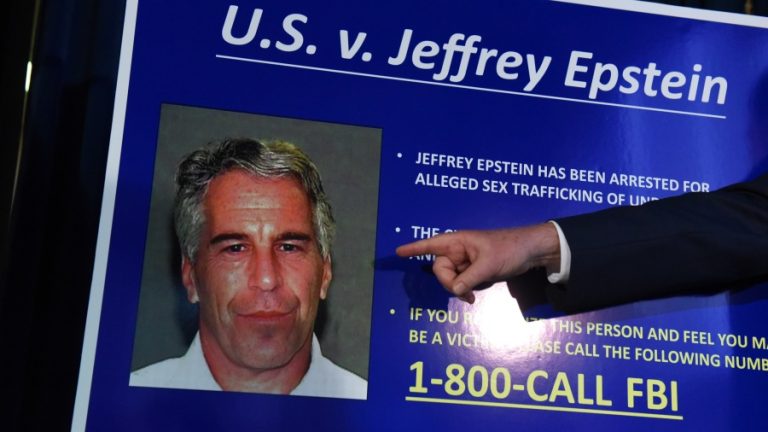
Last Friday, Jan. 30 the U.S. Department of Justice (DOJ) and the Federal Bureau of Investigation (FBI) took an unprecedented transparency measure, releasing millions of declassified documents related to the late billionaire Jeffrey Epstein. The newly released “Epstein files” include detailed prison records, psychological evaluation reports, and, shockingly, previously unreleased autopsy photos and emergency scene footage that are extremely graphic. These materials provide crucial and harrowing new evidence for reconstructing the truth about Epstein’s final days at the Metropolitan Correctional Center (MCC) in New York.
Graphic footage reveals the death scene and emergency response
The most attention-grabbing portion of the released files is a series of on-site photos archived by the FBI’s New York field office. The 23-page report, titled “Investigation into Epstein’s Death,” is marked entirely as “unclassified.” After reviewing the unredacted files, the BBC Verify team noted that the materials contain 20 visually striking photos documenting the handling of Epstein after he was found unresponsive.
Several photos are timestamped Aug. 10, 2019, 06:49 local time, roughly 16 minutes after Epstein was discovered unresponsive in his cell. The images show Epstein lying on a stretcher while medical personnel conduct emergency resuscitation. Although the exact location of the photos is not fully confirmed, considering Epstein was rushed to a nearby hospital at 06:39 and later declared dead there, it is highly likely the images were taken in the hospital emergency room or during transport.
In addition to the resuscitation images, the files include three close-up photos of Epstein’s body taken at the hospital. These images, clearly labeled, show close views of his head and neck, with one photo showing a distinct neck injury consistent with the official conclusion of suicide by hanging. Notably, although each photo is labeled with the deceased’s name, some labels misspelled “Jeffrey” as “Jeffery.”
Success
You are now signed up for our newsletter
Success
Check your email to complete sign up
The graphic nature of the photos is extreme, and most media outlets chose not to publish them directly. The BBC Verify team used reverse image search to confirm that the images had never circulated online before Jan. 30 of this year, establishing their uniqueness and authenticity as newly declassified evidence.
Autopsy report details: neck fractures and forensic conclusions
Alongside the photos, the DOJ released an 89-page official autopsy report from the New York Office of Chief Medical Examiner (OCME). The report provides pathological evidence of Epstein’s death and aims to address lingering conspiracy theories surrounding the cause.
The key medical evidence involves scans of Epstein’s neck injuries. The forensic examiner noted two fractures in his thyroid cartilage. While such injuries can occur in strangulation cases, they are not uncommon in elderly individuals who die by hanging. This detailed medical record, submitted by the DOJ, further supports the official determination that Epstein died by suicide.
Psychological evaluations and the contradictory suicide watch timeline
The FBI’s declassified report also details Epstein’s psychological state and detention timeline from his arrest on July 6, 2019, for sex trafficking and conspiracy charges, until his death on Aug. 10. The six-page timeline reveals critical missteps in prison management regarding suicide monitoring.
Records show that Epstein had an apparent suicide attempt on July 23, 2019, after which he was immediately placed on Suicide Watch. At the time, Epstein reportedly attempted to shift blame to his cellmate, former police officer Nicholas Tartaglione—facing four murder charges—claiming Tartaglione tried to kill him.
However, the subsequent psychological assessments were puzzling. On July 24, during a meeting with a prison psychologist, Epstein expressed a strong desire to live, stating he “had no interest in suicide” and that “suicide would be a crazy act.” In a follow-up evaluation on July 25, he added: “I’ve invested too much in this case. I have my life, and I want to go back to it.”
Based on these evaluations, Epstein was removed from Suicide Watch, setting the stage for the later tragedy.
Fatal lapses in prison management
The newly released files also reveal severe management failures at MCC. DOJ documents show that although Epstein was removed from Suicide Watch, the prison warden had explicitly advised against single-cell confinement. The warden stressed strict cell monitoring, including patrols every 30 minutes and additional unscheduled checks.
In practice, however, the rules were ignored. Epstein’s cellmate was released the day before his death, leaving him alone, in direct violation of the guidance. Worse, records show that guards responsible for his area failed to conduct scheduled checks at 03:00 and 05:00 on the fatal night of Aug. 9, 2019.
Adding to the failure, the surveillance cameras in Epstein’s cell area malfunctioned at critical moments. This chain of “coincidences”—single-cell confinement, missed patrols, and camera failure—ultimately led to Epstein’s death without supervision, until morning staff discovered his body during routine checks.
Public reaction
The document release also included a confusing twist. The FBI report exists in two versions: one, the detailed 23-page unredacted version; the other, a heavily redacted 17-page version. The redacted version removes the psychologist’s reports, detention timeline, and even blocks the images. It remains unclear why both versions were included in the same declassified batch, raising questions about the government’s document review process.
The release comes amid ongoing public attention on the Epstein case. While Epstein is dead, investigations into his sex trafficking network continue. Though the files largely support the official suicide conclusion and expose serious prison system failures, for those who believe Epstein was murdered, the missing surveillance footage and guard violations remain troubling.
The DOJ’s release provides crucial historical documentation, but fully unraveling the Epstein case may require further investigations and additional disclosures. This case continues to be one of the most controversial and confounding in American judicial history.