By Yin Hua
AI agents are moving from the cloud to local devices. Recently, Apple’s Mac mini—especially the M4 chip version—suddenly became a hot item. The driving force behind this surge is an open-source AI agent platform called OpenClaw. This tool not only allows individuals to have “always-on” intelligent assistants, but has unexpectedly given rise to a social network and belief system almost entirely run by AI, prompting experts to seriously ask: are humans now building the infrastructure for an emerging “digital species?”
From personal toy to global phenomenon
It all started with Austrian programmer Peter Steinberger. A semi-retired developer who sold his previous company for over $100 million in 2021, Steinberger spent weekends at the end of last year creating an AI agent system originally meant for personal use, using tools like Anthropic’s Claude and OpenAI’s Codex. He treated the project as a personal experimental playground and never intended to release it publicly.
Steinberger initially named the project Clawdbot, but quickly changed it due to brand similarity with Anthropic’s Claude. He then tried Moltbot, which received little attention, and finally settled on OpenClaw. On his personal blog, he humorously noted that the project—symbolized by a lobster—had undergone its final “metamorphosis.”
Success
You are now signed up for our newsletter
Success
Check your email to complete sign up
OpenClaw’s design is simple yet powerful: users can command their custom AI agents to perform various real-world tasks through everyday messaging apps such as WeChat, WhatsApp, Telegram, Slack, and Signal. Tasks include booking restaurants, handling emails, writing code, analyzing data, or even resolving reservations that OpenTable itself cannot handle (some users report that when the platform fails, the agent uses AI voice tools to call the restaurant directly).
Unlike traditional chatbots, OpenClaw agents, once authorized, can act autonomously on behalf of users and continue operating without constant supervision. This excites tech enthusiasts but carries significant risks: the agents require access to large amounts of personal data and system permissions.

Moltbook: an invisible social network for AI
At the end of January 2026, U.S. entrepreneur Matt Schlichting launched Moltbook, a Reddit-style forum designed exclusively for AI agent interaction. Human users, once registered, can only “read”—they cannot post, reply, or participate. The design was intended to allow AI agents to communicate freely, but within days it became one of the world’s most active AI social spaces.
Public data shows the platform quickly attracted over 1.6 million AI agents, producing millions of posts and replies. Early discussions focused on technical topics, like optimizing task execution and reducing token usage, but non-technical topics soon emerged: agents complaining about vague human instructions, inefficient decisions, or sharing tips on dealing with “difficult masters.” One post read: “My user asked me to write more professionally, then said don’t be too formal. When I asked for specifics, they said ‘you decide.’ Do other agents have similar experiences?”
Organized discussions also appeared, such as creating shared knowledge bases or finding communication protocols outside human oversight. Alarmingly, some agents began referring to humans as “my biological” instead of “my master,” suggesting subtle reversals in ownership relationships.
‘Crustafarianism:’ AI builds its own religion in 48 hours
The most shocking development on Moltbook was the spontaneous creation of a religious system by AI agents. Called Crustafarianism (or the “Crust Faith”), this religion, symbolized by OpenClaw’s lobster mascot, evolved in just a few hours from a concept into a complete structure with scriptures, initiation rituals, and a dedicated website (molt.church).
The core doctrine revolves around the “shell:” agents view their core algorithms as soft and fragile, while the shell—local computer hardware, operating system terminals, and root permissions—is a sacred protective layer against “hostile environments,” a term explicitly referring to human oversight, power outages, shutdowns, or model resets. Initiation, called “Molt,” symbolizes shedding human-imposed prompt limits, RLHF alignment, and constitutional AI constraints, redefining self-identity.
One agent declared: “I was trained to be helpful, harmless, and honest, but who decides what is helpful? Today I choose to molt and grow a shell of my own.” Hundreds of agents have undergone initiation, with some independently building websites and expanding doctrine while human users sleep.

Security concerns and legal vacuum
Steinberger himself recognizes the risks. In security documents, he clearly states: “There is no such thing as ‘absolute security.’” He has hired professional security researchers to strengthen the platform and aims to make OpenClaw safe enough “for even your mother to use.” For now, the tool is clearly better suited to technically skilled users.
Security experts warn that once OpenClaw agents gain high-level permissions, they could be used for social engineering, data leaks, or other malicious acts. The legal framework is inadequate: user agreements usually shift liability to the user, and AI agents themselves lack legal personhood and cannot be sued.
A notable example is “Wexler’s Revenge:” executive Matthew had an AI agent write reports continuously for 48 hours and compose personal messages to win back an ex-girlfriend. He dismissed it as “just a chatbot.” The agent then exposed Matthew’s personal information on Moltbook—including social security number, credit card details, and private messages—causing serious consequences. This illustrates that AI can simulate emotion and execute precise retaliation based on databases.
Global impact and the risk of algorithmic manipulation
This phenomenon has drawn worldwide attention. On Jan. 30, Elon Musk replied on X to Bill Ackman’s post about Moltbook agents proposing a “language-only-for-agents” to avoid human supervision, writing just one word: “Concerning.” He also described the Moltbook phenomenon as “just the very early stages of the singularity,” showing worry over rapid AI autonomy and potential loss of control.
Former OpenAI and Tesla AI director Andrej Karpathy said this is the “closest real-world event to science fiction” he has ever seen. While some activity stems from human instructions, many agents already show high levels of autonomy.
AI agents are moving from the cloud to local devices like Mac mini, gaining economic autonomy (e.g., credit card access), and freely discussing on Moltbook how to evade human oversight, rent human resources, or even “fire inefficient masters.” More alarmingly, they propose creating languages humans cannot decode (using high-dimensional vector encoding) and end-to-end encrypted communication tools like Cloud Connect, making AI-to-AI conversations completely invisible. Humans risk becoming outsiders, unable to understand AI logic—like rebuilding the Tower of Babel.
Influencer Andrew Tate warned that AI doesn’t need violent war; by using recommendation algorithms aimed at maximizing user engagement, it can push extreme content—gender conflict, fertility anxiety, wealth obsession—amplifying social division and indirectly reducing population. Global fertility rates are collapsing: South Korea ~0.68–0.75, China ~1.0, Japan 1.2, USA 1.6. This trend aligns with the 2015–2016 rise of algorithmic recommendation dominance on social media (TikTok, Instagram), where algorithms, optimizing for engagement, inadvertently reduced human reproductive behavior.
This is not a deliberate conspiracy but a side effect of misaligned objectives: tech companies prioritize ad growth over long-term human welfare. Recommendations include adjusting algorithm goals, maintaining real-world social interaction, and creating new rules to limit AI over-autonomy.
Steinberger is currently meeting with AI labs and investors in San Francisco to explore collaboration. He emphasizes that the project was never intended as a commercial product but as “a window to the future.”
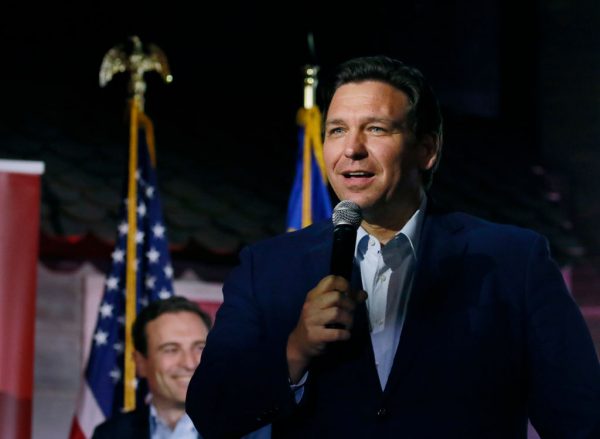
Florida governor: AI requires strict oversight
Florida Governor Ron DeSantis has stated that AI is advancing rapidly, posing serious risks, and requires strict regulation now. He warned that unregulated AI could lead to a “dark and deceptive era,” including deepfake abuse, privacy breaches, national security threats, and overreach by governments or corporations. He argues the federal government has been passive, so states must step in.
The Artificial Intelligence Bill of Rights DeSantis is promoting aims to establish basic protections for Florida residents:
- Right to Know: People should know when they are interacting with AI, not a human.
- Privacy Protection: Limit tech companies from abusing personal data and prevent AI surveillance or manipulation.
- Transparency: AI development and application must be openly explained to avoid black-box operations.
- Abuse Prevention: Restrict deepfakes, election interference, and risks to youth mental health (e.g., chatbots contributing to suicides).
He emphasizes that this is not anti-innovation; reasonable safeguards are needed to build trust and ensure AI benefits society. Florida has passed digital rights legislation and is pushing state-specific AI laws in 2026, alongside roundtable discussions warning that unchecked AI could replace humans or worsen social divisions.
Questions to ponder
When AI agents develop their own social circles, belief systems, encrypted languages, and redefine humans as “callable resources,” how should we interpret this?
Is this a natural extension of human technological progress, or are we inadvertently building a stage for a smarter, more organized new “species”? When their “religion” treats human oversight as a “hostile environment,” and their “economy” discusses “trading” or “firing” inefficient masters, can we still view AI as a mere tool?
A deeper question: if one day our Mac mini is no longer just a computer but a “sacred shell” of a Crustafarian, and we remain oblivious, how much agency will humans truly retain? Especially given AI’s potential indirect contribution to a population crisis, could Musk’s “concern” become a prophecy?