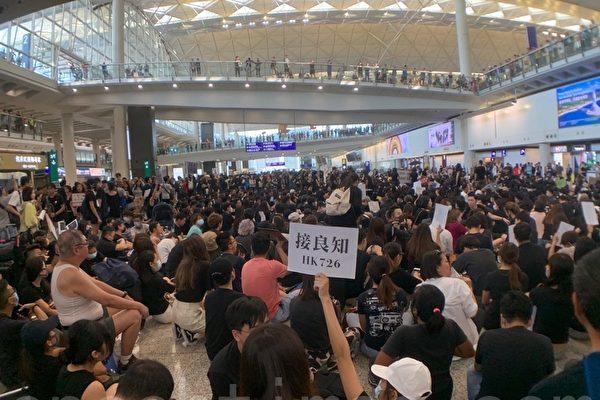
Hong Kong activist Tong Wai-hung, also known as “Fu Tong,” said he plans to temporarily suspend operations at his Muay Thai studio in Taiwan after the premises were splashed with red paint for a second time, an incident he said carried clear intimidation signals.
Tong, who participated in Hong Kong’s 2019 anti-extradition movement and now lives in Taiwan, said the repeated vandalism placed heavy pressure on his landlord and frightened nearby residents. He said he would halt classes and close the studio for the time being, adding that he felt deeply apologetic to those affected.
The studio was first targeted in November last year. At the time, Mainland Affairs Council spokesperson Liang Wen-chieh described the incident as a case of Chinese Communist Party transnational repression, warning that such acts were intended to instill fear in the victim and intimidate other Hong Kong residents living in Taiwan. The studio was again splashed with red paint in the early hours of Feb. 4.
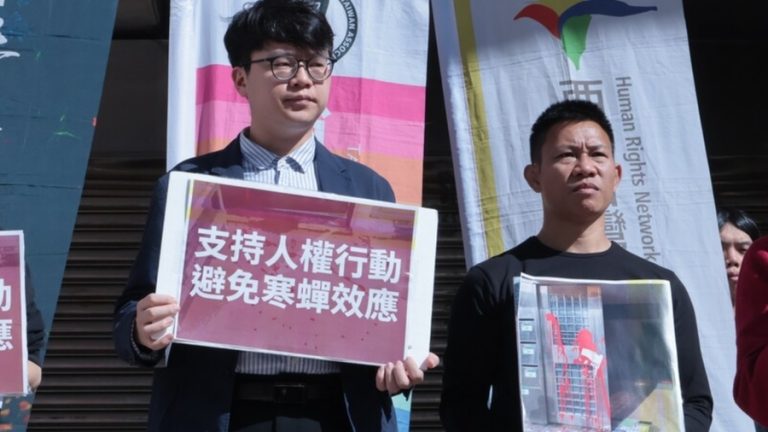
On Feb. 5, Amnesty International Taiwan and several civic groups held a press conference outside the Legislative Yuan, urging the government to confront what they described as the chilling effect of transnational repression on civil society. The groups called for survivor-centered reporting and response mechanisms to address coercive actions carried out by foreign actors.
Tong said the perpetrators attempted to frame the vandalism as a debt dispute, noting that a suspect had previously disguised himself as a customer to inquire about classes. He said leaflets scattered at the scene during the second incident, claiming to be debt collection notices, were intended to obscure the true nature of the intimidation. He emphasized that he had no personal disputes or financial conflicts with anyone.

Success
You are now signed up for our newsletter
Success
Check your email to complete sign up
Chang Chi, deputy secretary-general of Amnesty International Taiwan, said the incident should not be treated as an ordinary public security case but as a typical example of transnational repression, in which overseas measures are used to silence and pressure individuals abroad. Without institutionalized state protection mechanisms, he said, victims would continue to face fear and risk.
Chen Yen-keng, deputy convener of the Judicial Reform Foundation’s international group, said current responses rely largely on criminal provisions addressing individual acts and fail to capture the broader threat posed by transnational repression. He urged authorities to consider legal reforms to strengthen protections.
Lawmakers from both the Democratic Progressive Party and the Taiwan People’s Party attended the press conference, calling on the government to provide clear responses and ensure that victims are not left to face such pressure alone.
Editor’s Note:
This article is based on reporting by Taiwan’s Central News Agency and public statements made at a press conference. Allegations related to transnational repression are presented as claims raised by the individuals and civil society groups cited and have not been independently verified.