By Fu Longshan
On the evening of March 5, 1953, at 9:50 p.m., Joseph Stalin died. What followed was startling. The men who had ruled the Soviet Union at his side seemed to exhale in unison. Witnesses reported Lavrentiy Beria leaving the room briskly, even waving animatedly at Nikita Khrushchev. One scholar later captured the moment with brutal clarity:
“Very much like a group of children finally freed from diapers.”
Yet the most shocking detail lay not in their relief, but in what preceded it. Stalin had lain on the cold floor for more than ten hours before anyone intervened. During that time, Beria, Khrushchev, Georgy Malenkov, and Nikolai Bulganin all came to the dacha. Their conclusion was astonishingly simple:
“We must not disturb Comrade Stalin’s rest.”
Success
You are now signed up for our newsletter
Success
Check your email to complete sign up
Thus, the most powerful men in the Soviet state earned a grim distinction. They became the first Soviet leadership so terrified that they could not even help a fallen, elderly ruler.
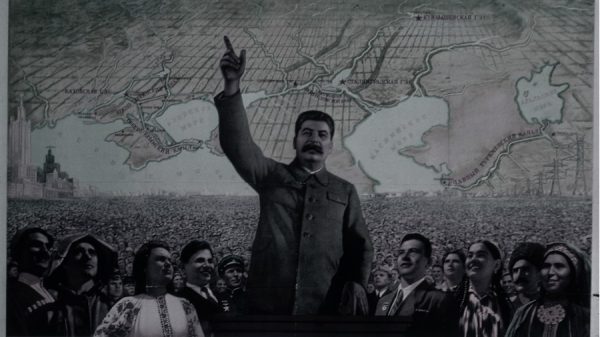
A humiliating and neglectful death
How did Joseph Stalin—the longest-ruling and most feared leader in Soviet history—end his life in such humiliation and neglect?
Official Soviet records list the cause of death as a stroke. From Stalin’s collapse on March 1 to his death five days later, events unfolded with tragic inertia. On the night before he fell unconscious, Stalin had summoned Beria, Khrushchev, Malenkov, and Bulganin to his dacha. The five men drank and talked until deep into the night, parting only after 3 a.m.
The first person to discover something was wrong was a dacha guard. Stalin’s routine was notoriously erratic. He drank heavily, worked late, and rarely slept before dawn, usually rising around noon.
But on March 1, Stalin did not emerge for his midday meal. The guard hesitated. Stalin’s temper was legendary, and disturbing him carried real risk. Hours passed. By evening, unease turned into alarm. Summoning his courage, the guard opened the bedroom door.
Stalin lay motionless on the floor. A puddle of urine soaked into the rug. The room was in disarray.
The guard immediately alerted the so-called Four-Man Group—Beria, Khrushchev, Malenkov, and Bulganin. When they arrived, their reaction was as revealing as it was grotesque. After deliberating, they reached a chilling consensus:
“If Stalin wakes up and finds us seeing him in such a humiliating state, the consequences could be terrible.”
This fear was entirely rational. In his final years, Stalin treated doctors as potential enemies. Physicians who displeased him were imprisoned, accused of espionage, or worse.
Instead of calling for medical help, the four leaders scolded the guard:
“Comrade Stalin is merely resting. Why did you disturb him?”
They lifted Stalin onto a sofa, fussed briefly, and then left. The guard was left alone with a dying dictator.
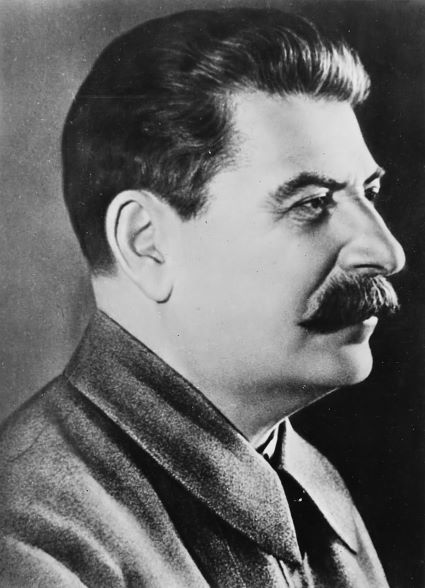
Two days pass
By the morning of March 3, two full days had passed. Still terrified, the guard contacted the Minister of State Security, Semyon Ignatiev. Ignatiev deflected responsibility to another official, Starostin, who promptly passed it back to Beria. Responsibility ricocheted upward and sideways, but never settled. Everyone feared becoming the one blamed—if Stalin survived.
Later that morning, the Presidium arrived at the dacha with doctors. Even then, paralysis reigned. After conferring, they decided Stalin was uncomfortable on the sofa and moved him to the bed. Minutes later, they decided the opposite and moved him back again. Only after this farce did the doctors finally diagnose a stroke.
The following day, the guard again contacted the leadership. Meaningful treatment began only after Stalin’s daughter arrived. Injections were administered. Examinations were performed. Precious time had already been lost.
Stalin’s son Vasily arrived drunk. Storming into the room, he shouted at Khrushchev and the others:
“You scoundrels! You’ve done this to my father!”
In the final days, Stalin briefly regained consciousness several times but could no longer speak.
On the evening of March 5, his breathing weakened further. Beria stepped forward and asked:
“Comrade Stalin, do you have any final words for us?”
Stalin suddenly opened his eyes, raised a finger, and pointed directly at the men around him. Moments later, he died.
Why did Stalin die so utterly alone?
The answer lies not in chance, but in the system he built. Had he been discovered promptly on March 1 and doctors summoned immediately, he might have survived. Instead, fear governed every decision. Responsibility became poison. Everyone waited for someone else to act.
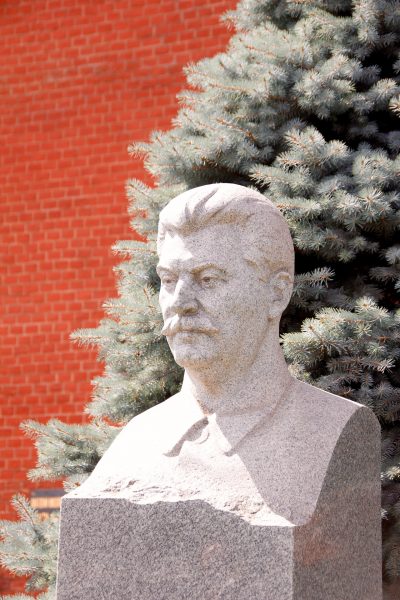
Who to blame?
Can those around him be blamed? Within Stalin’s inner circle, terror was logic. Anyone in their position would have hesitated.
Stalin once imprisoned and tortured a doctor who warned him that his health was failing and urged him to rest. Advice itself was treated as a threat.
He habitually intoxicated subordinates to test their loyalty, judging them by drunken remarks. During the Great Purge, countless officials were condemned as “disloyal” and disappeared into prisons. By his final days, Stalin trusted only the Four-Man Group.
But proximity did not guarantee loyalty. Beria was executed. Khrushchev rose to power and later denounced Stalin, a move some historians interpret as personal revenge. Khrushchev’s son had surrendered during the war, and Stalin personally signed the execution order. Khrushchev pleaded for his son’s life in the Kremlin and was rebuffed. The humiliation lingered.
Even Stalin’s son Vasily was not spared after his father’s death. Within a month, Bulganin expelled him from the military. He was imprisoned for “disorderly conduct,” briefly released in 1960, and re-arrested a year later. Eleven months into his second imprisonment, Vasily died of alcohol poisoning—though observers questioned how alcohol reached him behind bars. Khrushchev reportedly remarked:
“If you hadn’t insisted on going to the front, the children of Politburo officials wouldn’t have followed you there.”
The comment suggested that Vasily’s recklessness had cost others their lives, a final reminder of how Stalin’s shadow extended beyond the grave.
In the end, Stalin’s cultivated image of greatness could not protect him from abandonment. The fear he imposed on others ensured that, when he collapsed, no one dared help. Doctors delayed. Officials deferred. And when he finally died, the men around him felt relief rather than grief.
Stalin’s final hours expose a brutal political truth: absolute power annihilates trust. His reign of terror left him isolated at the moment of greatest vulnerability, condemned to die neglected and alone—and leaving his own son to spiral toward destruction in the aftermath.
Editor’s Note: According to publicly available sources, Joseph Stalin collapsed in the early hours of March 1, 1953, at his Kuntsevo dacha. He was not attended to until late that night, around 10–11 p.m., when guards finally entered the room. During this period, no doctors were summoned.Some accounts in this article reference Nikita Khrushchev’s son, Leonid Khrushchev.
This claim remains historically disputed. Mainstream scholarship holds that Leonid died in combat in 1943 and never surrendered to German forces. Assertions that he defected and was later executed by the Soviets are widely regarded as postwar rumors or political propaganda. That said, the details of Stalin’s final hours are corroborated by multiple sources, including Robert Service’s Stalin, Simon Sebag Montefiore’s Stalin: The Court of the Red Tsar, Oleg Khlevniuk’s research, Khrushchev’s memoirs, the Soviet 1953 medical bulletin, and other declassified documents.