By Yang Tianzi
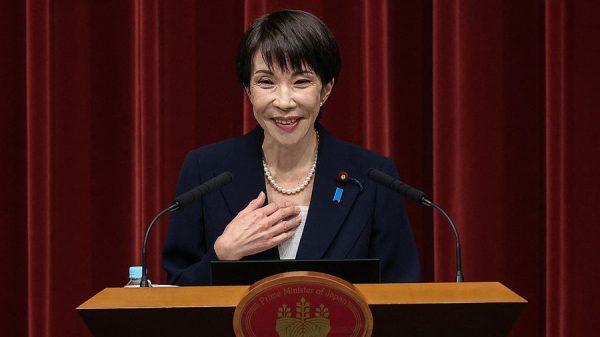
Japan’s political system has entered a historic phase. In an outcome unmatched in the postwar era, the Liberal Democratic Party (LDP), led by Sanae Takaichi, secured 316 seats in the House of Representatives. The result places the party above the two-thirds supermajority threshold and establishes a new postwar record for single-party representation.
This victory provides Takaichi with exceptional political authority. Her government can now pursue its agenda without reliance on coalition partners, allowing greater speed and coherence in policymaking. On tax reductions, expanded defense spending, and constitutional revision, the administration possesses latitude unavailable to most previous governments.
The election also conveys a clear political signal. Japanese voters delivered a strong endorsement of Takaichi’s conservative orientation at a time of rising international pressure. At 64, she is expected to be formally elected prime minister on February 18 during a special session of the Diet, becoming Japan’s first female prime minister—an institutional milestone paired with an unprecedented consolidation of governing power.

Why her first trip matters
At her victory press conference, Takaichi confirmed plans to travel to the United States on March 19 to meet President Donald Trump at the White House. As her first overseas trip as prime minister, the visit is designed to define the trajectory of U.S.–Japan relations under her leadership.
Success
You are now signed up for our newsletter
Success
Check your email to complete sign up
Takaichi said the talks would involve “in-depth discussions on global issues,” signaling an agenda that places alliance coordination and international strategy at the forefront. The choice of Washington and the timing of the visit underscore her intention to anchor Japan’s foreign policy in close alignment with the United States from the outset.
President Trump responded with public congratulations, describing Takaichi as a “widely respected and popular leader” and praising her “decisive and wise” decision to call early elections. He expressed confidence in her ability to advance a “conservative, peace-through-strength agenda,” highlighting ideological convergence between the two leaders. His remarks, including praise for Japan’s voter turnout and a pledge of “strong support,” point toward a phase of intensified political and strategic coordination within the alliance.
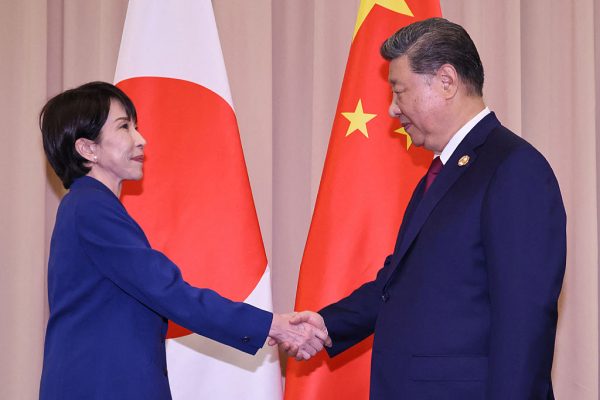
Takaichi positions the U.S.–Japan alliance as the foundation of her foreign policy and seeks to extend its reach through a network of trilateral security partnerships. She has called for strengthening frameworks such as Japan–U.S.–South Korea, Japan–U.S.–Philippines, and Japan–U.S.–Australia.
These arrangements aim to transform alliance cooperation into a region-wide deterrence structure across the Indo-Pacific. Takaichi has also emphasized closer ties with European partners including Italy and the United Kingdom, along with engagement with countries in the Global South. Her approach reflects a strategy of coalition-building that links regional security with broader global alignment.
Takaichi has drawn attention to the tenth anniversary of the “Free and Open Indo-Pacific” concept introduced by former Prime Minister Shinzo Abe in 2016. The framework promotes freedom of navigation, rule of law, and market-based economic principles throughout the Indo-Pacific region.
Over the past decade, the concept has gained international traction, with the United States, Australia, India, and other partners incorporating its language and strategic logic into their own regional policies.
As one of Abe’s political successors, Takaichi has pledged to advance the framework with greater intensity. In an environment of sharpening geopolitical competition, she treats the “Free and Open Indo-Pacific” as a central organizing principle of Japan’s security strategy. She has emphasized that a stable domestic political foundation strengthens Japan’s ability to act decisively on the international stage.
Centralizing intelligence, screening foreign capital
On national security, Takaichi announced plans to establish a National Intelligence Agency, marking a significant reorganization of Japan’s intelligence system. The initiative seeks to consolidate intelligence collection and analysis functions currently spread across multiple ministries, strengthening coordination and strategic capacity while enhancing cooperation with international partners.
She also proposed the creation of a Foreign Investment Review Committee to tighten oversight of inbound capital. The policy reflects a growing emphasis on economic security, particularly in sectors involving critical technology and infrastructure. Under Takaichi’s approach, investment policy becomes a component of national security decision-making.
At the same time, she committed to accelerating revisions to Japan’s three core security documents—the National Security Strategy, the National Defense Strategy, and the Defense Buildup Program—and submitting related legislation to the Diet. Together, these documents define Japan’s defense posture, and their revision reflects a reassessment of strategic requirements under current regional conditions.
Takaichi reaffirmed her commitment to constitutional revision, stating that “the Constitution defines the ideal form of the nation, and we will continue to advance constitutional reform.” Central to this effort is Article 9, which limits Japan’s military role and has shaped postwar security policy for decades. The LDP has long argued that revising Article 9 would allow Japan to maintain military capabilities consistent with contemporary security realities.
The two-thirds supermajority in the House of Representatives provides a crucial procedural foundation for this effort. Constitutional amendment still requires approval by the House of Councillors and ratification through a national referendum, processes that involve political uncertainty. Even so, Takaichi’s posture signals a determination to move constitutional revision from long-standing aspiration toward legislative action.
On domestic policy, Takaichi emphasized what she described as “responsible proactive fiscal policy” and pledged to eliminate the consumption tax on food within two years. Japan’s consumption tax stands at 10 percent, with a reduced 8 percent rate applied to essential goods. Full removal of the food tax would ease household burdens, particularly for lower-income families.
The pledge complements her security agenda by addressing cost-of-living pressures. At the same time, Japan’s fiscal environment imposes clear limits. Public debt exceeds 250 percent of GDP, the highest level among advanced economies. The durability of Takaichi’s program will depend on how effectively her government balances tax relief, defense expansion, and fiscal sustainability.
What comes next
Sanae Takaichi’s electoral victory opens a new chapter in Japanese politics. With a supermajority mandate, she is positioned to advance a comprehensive agenda: deeper strategic alignment with the United States, expanded Indo-Pacific security coalitions, strengthened intelligence and economic security institutions, and constitutional revision centered on Article 9.
Her planned March 19 meeting with President Trump will serve as the first outward confirmation of this direction. It signals a Japan prepared to act with greater speed, greater cohesion, and a more explicit security posture within the U.S.-led alliance framework.