Commentary by Sung Kuo-cheng, originally published by Up Media
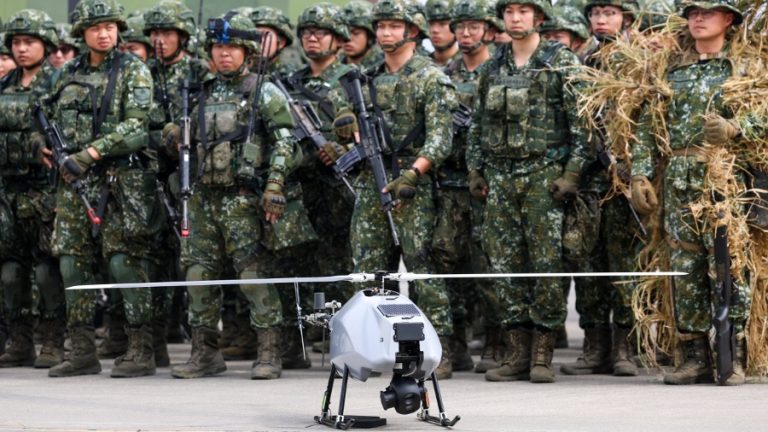
In recent years, the international community has generally sought to understand China’s external actions through the lens of “rational costs,” assuming that Xi Jinping would not undertake high-risk military adventures. However, Russia’s invasion of Ukraine, the sudden implementation of Hong Kong’s National Security Law, the militarization of the South China Sea, year-round military exercises surrounding Taiwan, and frequent PLA aircraft incursions around the island all serve as reminders that the decision-making logic of authoritarian leaders differs fundamentally from that of democratic governments and cannot be explained using the same behavioral models.
Under a democratic system, decision-making is centered on public accountability and performance legitimacy. Democratic leaders derive their authority from elections and must maintain economic growth, social stability, and public welfare to preserve their legitimacy to govern. If their policies fail, they risk being voted out of office in the next election.
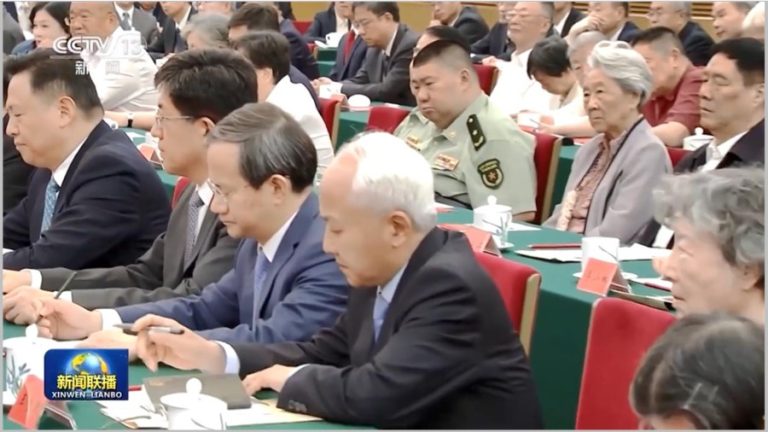
Under an authoritarian system, leaders are selected by a small group rather than through popular elections. Economic prosperity, citizens’ lives and property, and even a peaceful external environment can all be sacrificed under the banner of “politics in command.” If an authoritarian leader such as Xi Jinping believes that a particular crisis—including war—could strengthen internal control, eliminate potential political rivals, or fulfill a historic ambition, then even a thirty-year economic setback may be considered acceptable. Under the principle of the Communist Party’s absolute leadership, the logic of war can always be justified.
The issue is not simply whether Xi Jinping is prepared to launch a war immediately. Rather, Taiwan can no longer underestimate Xi’s strategic intentions through an overly optimistic belief in maintaining the status quo. Nor can Taiwan afford to embrace a simplistic anti-communist mindset, assuming that the Chinese Communist regime will inevitably collapse and that the United States will automatically come to Taiwan’s defense, allowing Taiwan to rest easy.
Success
You are now signed up for our newsletter
Success
Check your email to complete sign up
Here I would like to quote a famous remark by former U.S. President Ronald Reagan: “Renewal begins with reflection.”Only by clearly understanding Xi Jinping’s ambitions toward Taiwan and reflecting on Taiwan’s own vulnerabilities can Taiwan truly safeguard itself.
Xi’s war intentions are not driven by a single factor. Rather, they are shaped by the combined effects of systemic structural pressures, contradictory internal crises, and the will of an absolute dictator. In such a decision-making environment, war may not be the “best option,” but it may become the “politically necessary option.” Therefore, the foremost task for Taiwan and the democratic world is not to speculate whether Xi will initiate a conflict, but to prepare for every possible scenario in which he might. Peace is never something that falls from the sky, nor is it the imagined paradise envisioned by a handful of pro-Beijing politicians. It rests on a realistic understanding of threats and adequate preparations to meet them.
When an authoritarian regime faces irreversible structural crises at home, external aggression is often launched not because the regime possesses sufficient strength, but because it seeks to shift the burden of crisis outward—transforming a domestic legitimacy crisis into a nationalist struggle against an external threat. This is precisely why Xi Jinping’s willingness to resort to war should not be underestimated.
Systemic structural pressures
American political scientists Michael Beckley and Hal Brands, in their book Danger Zone: The Coming Conflict with China and related academic work, introduced the concept of the “Peak Power Trap.” They argue that a nation’s appetite for war often becomes strongest after its power has peaked and begins to decline. In other words, an authoritarian great power that has reached its zenith and is entering a period of deterioration may be more aggressive than one that is still steadily rising.
One should not assume that Taiwan becomes safer simply because China’s economy is weakening. On the contrary, the period in which China is widely perceived as having reached its peak and begun to decline—generally characterized as the latter half of the 2020s through the early 2030s—may constitute the most dangerous window for a conflict in the Taiwan Strait. This is what Beckley and Brands describe as the “Danger Zone.”
Historically, many wars have not been launched when the aggressor was at the height of its power, but rather during periods of decline. When a country’s political system evolves into a form of rigid authoritarianism, it tends to generate a sense of collective anxiety within the ruling elite—a fear that if the system collapses, no one within it will escape the consequences.
China’s internal structural difficulties are compounded by what is perceived as a tightening network of regional efforts to counter or contain China. Under such circumstances, the survival instinct of an authoritarian regime may be more likely to push it toward irrational risk-taking as a means of breaking a strategic deadlock.
When economic performance can no longer provide political legitimacy, authoritarian systems often resort to what the author describes as “the opium of nationalism.” This ideological dependence encourages the regime to shift the basis of its legitimacy toward a grand historical mission and the goal of national rejuvenation, thereby reinforcing and perpetuating nationalist sentiment. In this context, the narrative of “national reunification” can become a political painkiller essential to the regime’s survival.
Faced with severe domestic challenges—such as rising unemployment, a property-sector bubble, local government debt crises, and persistent deflation—an authoritarian regime may view the initiation of an external conflict, particularly a cross-strait war that has been framed as a matter of “national reunification,” as a means of strengthening domestic unity, justifying tighter social controls, and transforming class-based grievances into a perceived struggle for national survival.
Under the United States’ “Trident Strategy” and Japan’s “three-line containment” approach, Beijing’s leadership may develop a growing sense of collective anxiety that time is no longer on China’s side. The combination of perceived historical urgency and a narrowing strategic window could significantly increase the incentives for military adventurism under Xi Jinping.
A defining characteristic of authoritarian systems is the absence of effective error-correction mechanisms and accountability structures. Under what the author calls China’s current system of “new militarism combining old and new elements,” no internal force—whether opposition groups, more cautious voices within the military, or private-sector entrepreneurs—possesses either the legal authority or the practical power to say “no” to the country’s top leadership.
Once the state activates its war-preparation apparatus and policies of military-civil fusion, society, technology, and supply chains become increasingly tied to the machinery of mobilization. At that point, the political cost of stopping such a massive system may become greater than the cost of continuing forward.
China’s structural challenges, combined with an increasingly restrictive regional environment, may therefore create conditions in which the survival instincts of an authoritarian regime push it toward non-rational risk-taking in an effort to break out of an increasingly constrained strategic position.
Contradictory internal crises
Over the past four decades, the Chinese Communist Party’s governing legitimacy has rested on an unwritten “performance contract”: citizens would forgo meaningful political participation in exchange for continuous economic growth and improving living standards. This arrangement is often summed up by the phrase “keeping quiet and getting rich.” However, this bargain has now been effectively broken.
1. Taiwan is not merely a territorial issue, but a ‘strategic lever’
Many analysts argue that if China’s domestic situation deteriorates and its economy weakens, Xi Jinping will lack the capacity to launch an attack on Taiwan. The author contends that this is a dangerous form of self-deception. History shows that authoritarian regimes may become more inclined toward external conflict precisely when internal contradictions are reaching a breaking point.
From the perspective of an authoritarian system, Taiwan is not simply a territorial issue. Rather, it serves as a strategic lever. When internal pressures within the system become overwhelming, resolving the Taiwan issue can be used to restructure the regime’s political legitimacy and prolong its rule. In this framework, what the author calls “salvation legitimacy”—the legitimacy derived from confronting a national crisis—can be substituted for “performance legitimacy,” which is based on economic success and effective governance.
Under the weight of mounting domestic challenges, the “Taiwan issue” thus becomes, a strategic tool through which China could attempt to overcome what it perceives as a worsening strategic position and reshape the international order.
Xi Jinping is not primarily focused on Taiwan’s economic output, nor on the island’s approximately 36,000 square kilometers of territory. Instead, he is allegedly seeking a broader geopolitical gamble: to push the United States out of the Western Pacific, weaken the U.S.-Japan alliance system, create a strategic outlet for China’s increasingly constrained economy, and establish a China-led regional order—as a closed, CCP-dominated empire.
2. The full eruption of an economic ‘legitimacy deficit’
China is currently facing the dual pressures of deflation and a real-estate bubble, resulting in what economists often describe as a negative wealth effect and asset contraction. People are increasingly discovering that no matter how hard they work or compete, the value of their assets continues to decline. As a result, resentment among the lower and middle strata of society accumulates and intensifies. The Chinese authorities must therefore engage in diverting public attention and shifting responsibility for the crisis elsewhere.
In his book The Precariat: The New Dangerous Class, British labor economist Guy Standing identifies the emergence of what he calls the “precariat.” The term combines “precarious” and “proletariat” and refers to people living in unstable economic conditions, lacking long-term security or prospects. This group resembles what some Chinese commentators call “unfinished-generation youth” (烂尾娃)—young people whose expectations for education, employment, and upward mobility have been frustrated.
Each year, millions of Chinese university graduates are unable to enter high-paying sectors, while high-tech and military-civil fusion industries are incapable of absorbing the enormous number of job seekers. A large population of highly educated but disillusioned unemployed youth represents one of the greatest potential threats to any authoritarian system—a possible source of a future Generation Z-driven challenge to the regime.
From the perspective presented here, once economic promises lose credibility, the regime’s challenge becomes how to attribute public hardship to external hostile forces and make “recovering Taiwan” a new source of political legitimacy.
3. Using war to reshuffle the military
It’s important to reflect on the recent political purges within China’s military establishment, ranging from former defense ministers such as Li Shangfu and Wei Fenghe to senior figures within the Central Military Commission, including Zhang Youxia and Liu Zhenli. These actions, while officially framed as anti-corruption efforts, also reflect Xi Jinping’s deep concerns regarding military loyalty.
Xi’s trust deficit stems from broader bureaucratic and military dissatisfaction, compounded by younger generations becoming increasingly disengaged from official expectations. To break perceived institutional deadlock and reassert absolute control over the armed forces, Xi may be inclined to initiate a real military conflict that would enable a comprehensive reshuffling of the military hierarchy.
Under wartime conditions, any internal dissent or questioning of leadership decisions could be labeled as disloyalty or even treason, allowing the leadership to use emergency powers to suppress opposition within the system.
4. The pressure-cooker effect
For years, China has relied on digital authoritarianism, grid-based social management systems, and extensive domestic security spending to contain internal social tensions. Issues such as local government fiscal crises, public protests over livelihoods, financial-sector failures, and other forms of social discontent have been compressed and contained within what resembles a high-pressure cooker.
Local governments are facing fiscal crises as revenues from land sales—the foundation of China’s “land finance” model—have dried up. This has begun to directly affect the salaries and benefits of personnel within the grassroots stability-maintenance apparatus, including police officers, internet censors, and lower-level civil servants. When the screws holding together the stability-maintenance system begin to loosen and the pressure cooker is on the verge of exploding, Xi Jinping may seek a total wartime mobilization to keep the lid firmly shut.
Once a war against Taiwan is launched, Beijing could openly shift China’s economy into a comprehensive rationing system and impose curfews and wartime controls. Under a wartime framework, most social protests and livelihood-related grievances would lose their perceived legitimacy. This is an extreme yet highly effective strategy for political crisis management.
5. Window anxiety: better to fight earlier than later
Xi Jinping may believe China’s structural problems—including rapid population aging, a shrinking labor force, and increasing technological restrictions imposed by Western countries—are irreversible. In other words, China may be approaching or have already reached what some analysts call “Peak China.”
If Xi concludes that China’s economy will be weaker, society more unstable, and security cooperation among the United States, Japan, Taiwan, and the Philippines more robust in five or ten years, then an authoritarian risk assessment could produce the logic that “if we do not fight now, we will be even less able to win later.”
This is the “window anxiety.” When the fear that a strategic opportunity is rapidly closing reaches its peak, that may become the moment when Xi decides to push the button for war.
READ MORE:
- Xi Jinping’s Hand-Picked Baoding Chief Ousted by a Rival Faction
- Xi Heads to Pyongyang as North Korea Doubles Down on Nuclear Ambitions
Absolute dictatorial will: the ‘dictator’s trap’
The greatest black-swan risk in an authoritarian state is the political personality of its leader.
As Xi Jinping pursues what critics describe as a path toward becoming a leader for life, his sensitivity to the acquisition and loss of power may intensify. In the author’s view, it is not enough for Xi to be the unquestioned center of authority; he seeks to become the absolute and exclusive center of authority. Such a concentration of power inevitably fosters an extreme culture of fear within the political system.
The decision-making circle surrounding Xi—including the Politburo Standing Committee formed after the 20th Party Congress, which is widely viewed as being composed largely of loyalists—may prioritize satisfying the leader’s preferences rather than providing candid assessments. Subordinates, motivated by political security and career advancement, may increasingly filter out negative information. As the Chinese saying goes, “what those above favor, those below pursue even more zealously.” The result, according to the author, is an ever-expanding blind spot in Xi’s understanding of reality.
This phenomenon creates what the author calls a “dictator’s trap”—an information cocoon that makes it difficult for Xi to accurately assess the costs and risks of military action against Taiwan. The reports reaching him may emphasize that the People’s Liberation Army is fully prepared for victory, that Taiwan’s will to resist is weak, and that Western countries would be unwilling to intervene because of economic interests.
Such highly distorted information, the author argues, could make Xi far more susceptible to the irrational conclusion that victory is virtually guaranteed.
Strength is Taiwan’s only way forward
According to the author, during the May 14, 2026, Beijing meeting between Xi Jinping and U.S. President Donald Trump, Xi delivered what was described as one of his most direct, candid, and forceful statements on Taiwan in recent years.
Xi reportedly warned Trump to “handle the Taiwan issue with the utmost caution,” adding in what the author characterizes as a threatening tone:
“If handled properly, overall China-U.S. relations can remain stable. If handled improperly, the two countries could experience confrontation or even conflict, pushing the entire China-U.S. relationship into an extremely dangerous situation.”
The author interprets these remarks as a form of authoritarian coercive pressure, designed to frame the Taiwan issue as one in which any American intervention would risk triggering a catastrophic U.S.-China war. The objective, according to this analysis, is to encourage a gradual U.S. strategic retreat and thereby create additional time and space for China to strike Taiwan within the defensive arc of the First Island Chain.
The author’s conclusion is that Xi Jinping’s determination to absorb Taiwan has only grown stronger and has not weakened.
If Taiwan continues to reassure itself with the assumption that a weaker Chinese economy means Xi will not attack Taiwan, the author argues, it risks lowering its guard during what may be the most dangerous strategic window. In this view, democratic assumptions cannot simply be imposed upon authoritarian decision-making. Authoritarian leaders operate according to a fundamentally different logic, and placing hope in favorable outcomes without preparation amounts to exposing oneself to unnecessary danger.
From the author’s perspective, resolving the Taiwan issue represents the only political remedy capable of restoring the Chinese Communist Party’s governing legitimacy after China’s entry into a period of historic economic stagnation and deflation. It would also, the author argues, allow Xi to surpass both Mao Zedong and Deng Xiaoping in historical stature and secure a lasting place in Chinese history.
The article concludes that when facing an authoritarian rival that does not operate according to democratic expectations, Taiwan’s only path forward is to “seek peace through strength.”
Sun Kuo-cheng is a senior researcher of international relations at Taiwan’s National Cheng Chi University. He specializes in China affairs and international strategic studies. This article was translated from the original Chinese with permission by Up Media.