By Ge Jianxiong
For many Chinese citizens under 40, the phrase “home raid” may carry little meaning. In contemporary China, there is no legal category by that name. Private residences and personal property are protected by law, and searches or confiscations require authorization from police or the courts.
During the Cultural Revolution, however, “home raids” were widely described as revolutionary action. In the early months of 1966, they spread rapidly across cities and towns. The People’s Daily praised the Red Guards’ activities as exemplary. Although students in Beijing initiated the first raids, the practice soon expanded nationwide, often shaped by local conditions.
What follows is one such account.
At the time, I was an English teacher at Gutian Middle School in Shanghai’s Zhabei District. The school was newly established, with only two junior high grades and several dozen teachers. Three staff members belonged to the Chinese Communist Party, just enough to form a branch. I served as deputy secretary of the teachers’ Youth League branch and had applied for Party membership.
Success
You are now signed up for our newsletter
Success
Check your email to complete sign up
When the Cultural Revolution began, the Party branch organized what it called a “leftist team” and formed a core leadership group. I joined that group, handling documentation and assisting the branch secretary.
In August 1966, after extensive state media coverage of Beijing Red Guards “Smashing the Four Olds,” similar mobilization quickly took hold in Shanghai. Reports soon emerged that Red Guards were conducting house searches.

One afternoon in mid-August, the branch secretary attended a district meeting. Upon returning, he relayed instructions: Beijing Red Guards were reportedly preparing to travel to Shanghai to conduct raids. To maintain order, distinguish “friend from foe,” and implement Party policy, local Red Guards would be mobilized to carry out coordinated actions under the supervision of relevant authorities and neighborhood officials.
He outlined procedures. Targets would be identified by authorities and verified by neighborhood cadres. There must be no mistakes and no unauthorized expansion. Items subject to confiscation included gold and silver valuables, cash, firearms, radio transmitters, and what were described as “counterrevolutionary evidence” or “restoration account books.” Inventories were to be prepared, and seized materials centrally stored. Families were to retain daily necessities, ration coupons, and small sums of cash to maintain basic living standards. Confession would be treated leniently; resistance would face harsher consequences. Verbal struggle was permitted, but physical violence was officially discouraged.
Five households were listed. One belonged to a former rice shop owner surnamed Zhou. Another was classified as a landlord family. A third had once served as a neighborhood head during the Japanese occupation. I no longer recall the remaining two.
A meeting of “revolutionary teachers” and student Red Guards followed. Those already labeled politically suspect were excluded. At that stage, the Party branch retained control, and most participants were students from families officially deemed to have “good class backgrounds.”
Teams were formed. Anticipating substantial confiscations at Zhou’s residence, a senior teacher led that group. A demobilized soldier joined the team assigned to the former puppet-era official in case weapons were found. Each team included a teacher responsible for recording seized items. All confiscated materials would be secured in a designated room under the supervision of a veteran Party member. I was assigned to coordinate among teams and report to the branch secretary. Without mobile phones, bicycles served as the main means of communication.
After dark, the teams set out. At one address, a neighborhood cadre met us outside and led us in. The household, labeled “landlord,” consisted of a single shack with bare walls. After announcing the purpose of the visit and explaining policy, the resident handed over a ring. Students shouted slogans and conducted a search. Finding little of value, they collected assorted buttons as symbolic spoils. When they demanded to see a “restoration account book,” the resident appeared confused and was struck for failing to comply. I reminded the student leader that physical violence was not permitted.
Some participants broke into walls and dug into the ground in search of hidden items. Nothing was found. We recorded the confiscated ring and left.

At Zhou’s residence on Xibaoxing Road, conditions differed. His former rice shop faced the street, with living quarters and a small courtyard behind. By the time I arrived, cabinets and trunks had been opened. Aside from clothing, small amounts of cash, and some jewelry, little had been uncovered. A student smashed open a can of tomato paste to check whether valuables were concealed inside.
In the courtyard, Zhou stood shirtless, hands raised, under questioning. Students demanded to know where gold and incriminating evidence were hidden. Some began prying up floorboards and damaging doorframes.
I requested a pause and spoke with him privately. I explained that resistance would lead to harsher consequences and that only specified items would be confiscated. Daily necessities would remain. An inventory would be prepared. If he failed to cooperate, further damage would follow. I also told him that organized Red Guards operated under supervision and issued receipts; unaffiliated groups might not.
After hesitation, he agreed to comply. He revealed two small gold bars hidden beneath a lock cavity, a stack of banknotes concealed in a pillow, and another gold bar sealed inside a bamboo pole. In total, he surrendered more than thirty taels of gold, jewelry, over 1,000 yuan in cash, wool garments, suitcases, and an electric fan.
It was past midnight. The school cafeteria delivered food. Given the quantity of items, transport was postponed until morning. Some students slept on the ground. Zhou and his family remained awake, tidying scattered belongings.
The next day, a factory truck transported the confiscated goods. In accordance with policy, I left the family over 100 yuan in cash, their Shanghai food coupons, used clothing, basic utensils, and one electric fan. National ration coupons were confiscated to prevent flight. Zhou signed the inventory and received a copy.
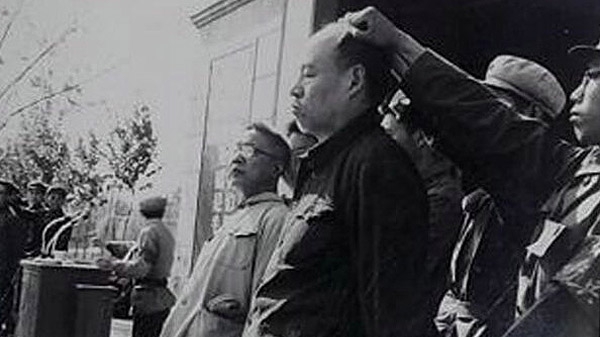
Other households yielded little. All confiscated items were stored at the school. As factional struggles intensified in subsequent months, spontaneous raids by various groups continued, often without documentation. Some homes were searched multiple times.
The definition of “counterrevolutionary evidence” became increasingly broad. Old account books, Republic of China-era certificates, old currency, photographs, and even printed materials mentioning later-purged figures could be labeled incriminating.
At our school, a teacher whose father had been branded a “counterrevolutionary” was denounced after a cut-up newspaper image of Mao was discovered among shoe-pattern clippings. She was subjected to a public “struggle session”.
Rumors circulated of people discarding gold into the Suzhou River. Banks reported long lines of citizens exchanging gold and silver for cash. After several days, banks suspended such transactions.
After the Cultural Revolution, Shanghai newspapers described legal disputes involving valuables entrusted to relatives without documentation. In some cases, courts intervened.
Years later, confiscated gold and silver were purchased by banks at state prices. Other items were sold through second-hand shops, with proceeds frozen pending final decisions. Huaihai Road shops were filled with fur coats, carved furniture, radios, and cameras. Prices were low, but few dared to buy.
I purchased a 1930s Underwood portable English typewriter for 25 yuan. I used it for years.
In 1979, while I was a graduate student at Fudan University, Zhou visited me. He said that during policy rectification, all items had been returned according to the inventory, including national food coupons. He mentioned a missing foreign stock certificate and asked if I remembered it. I did not.
Four decades have passed. Some participants are gone; others choose silence. These experiences, whether remembered or not, remain part of modern Chinese history.
Author’s note: This account is based on the writer’s personal recollections of events during the Cultural Revolution.